








Last Updated:
As users increasingly communicate through reaction culture, micro-commentary, memes, phrases like “clock it” fit perfectly into the internet’s fast-moving conversational style.




At its core, saying “clock it” is the modern internet’s equivalent of an exclamation point or a verbal high-five.
If you’ve spent any time online recently, especially on Instagram and TikTok, or around teenagers, you’ve probably heard the phrase “Clock it!”, often accompanied by a quick finger snap or clap. From reality TV shows to family dinners, this catchy expression has taken over conversations. But what does it actually mean, and where did it really come from?
To many Gen Z users, the phrase feels like just another viral internet expression sitting comfortably beside “it’s giving,” “mother,” or “slay.” But beneath the memes, reaction videos, and reality TV clips lies a much deeper cultural history that long predates social media trends, one that traces directly back to the underground spaces of Black and Brown LGBTQ+ subcultures.
What Does Clock-It Mean?
“Clock it” essentially means to notice something, figure something out, or call out a hidden truth. It’s a sassy way of saying “I see you” or “That’s spot on.” You might say it when someone points out an obvious but unspoken reality for example, spotting that someone’s excuses don’t add up.
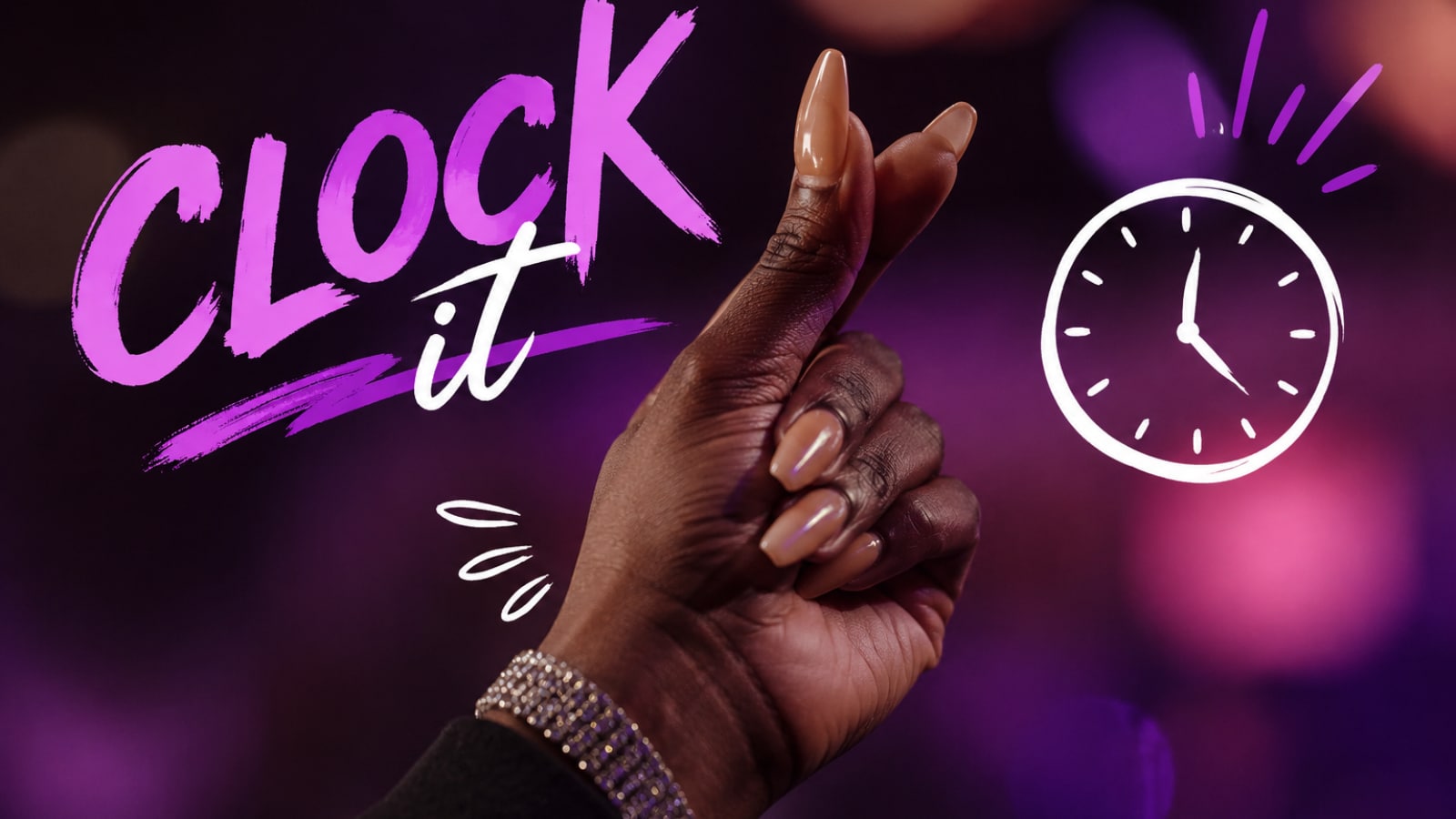
The accompanying gesture tapping the thumb against the middle finger is a miniature applause or silent nod of approval, also originating from ballroom. Many people mistakenly use their index finger instead, which changes its meaning.
The phrase has deep roots in ballroom culture, the vibrant underground scene created by Black and Latinx queer and trans communities in 1960s New York. In ballroom, “to clock” someone often meant noticing details about their appearance, gender presentation, or “tea” (gossip) that others might have missed.
The phrase exploded into wider popularity through shows like RuPaul’s Drag Race, TikTok creators, and moments like Love Island USA contestant Ace Greene’s viral diss track. However, as it spread, its connection to ballroom culture has often been overlooked or diluted.
From Ballroom Floors To TikTok Feeds: History of Clock-It Culture
The internet’s obsession with “clock it” accelerated through TikTok trends, reality television moments, and viral memes. Platforms turned the phrase into shorthand for spotting hypocrisy, calling out awkward behaviour, or reacting dramatically to gossip.
The finger-tapping gesture often accompanying the phrase also has roots in ballroom culture. As noted by The Washington Post, ballroom performers historically used finger taps as a quieter form of applause during events where traditional clapping was impractical.
But as the phrase spread online, many users began disconnecting it from its cultural origins entirely.
Leiomy Maldonado, ballroom icon and star of HBO Max’s Legendary, told Them that internet users frequently misunderstand both the phrase and the gesture, often combining them incorrectly or stripping them of their original meaning.
Decoding the Trend: What Does It Mean Across Generations?
At its core, saying “clock it” is the modern internet’s equivalent of an exclamation point or a verbal high-five. It is used when someone delivers a “no-notes” take on a situation.
The trend has become so pervasive that parents and educators are turning to family lifestyle platforms to decode what their kids mean when they use it. In youth slang, it functions as a verbal receipt. If a friend calls out a hypocritical behavior or accurately predicts how an event will unfold, the natural response is to tell them to “clock it.” It is an acknowledgment of precision, a way of saying, “You hit the nail right on the head.”
The Digital Applause: Alongside “clock it,” other physical and auditory cues from queer culture are seeing a massive resurgence online. The rising popularity of “fingerclaps” a rapid, sharp snapping of the fingers used to show agreement without interrupting, functions as the perfect physical counterpart to the phrase, providing a quiet but fierce sign of digital and real-world applause.
As younger users increasingly communicate through reaction culture, micro-commentary, memes, and irony, phrases like “clock it” fit perfectly into the internet’s fast-moving conversational style.
So the next time someone dramatically taps their fingers and says, “Clock it,” the internet may want to remember that the phrase did not begin on TikTok. It travelled there from ballroom culture, carrying decades of queer cultural history along with it.


