





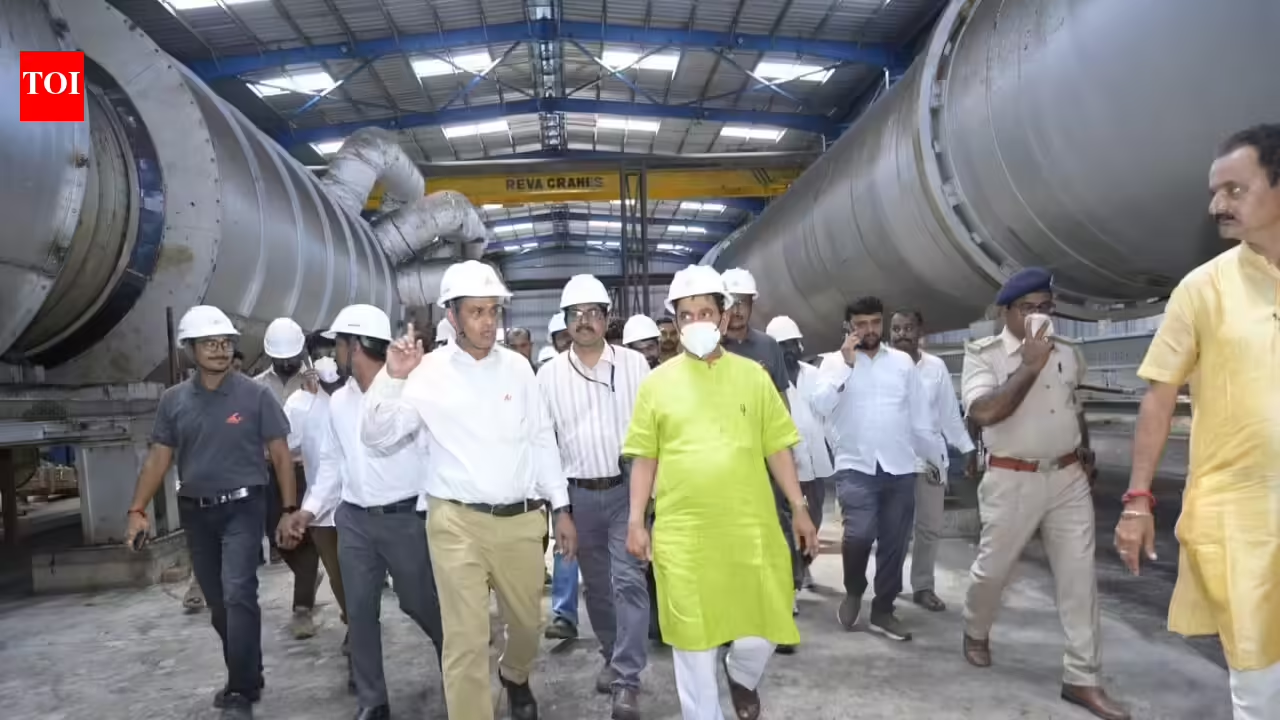
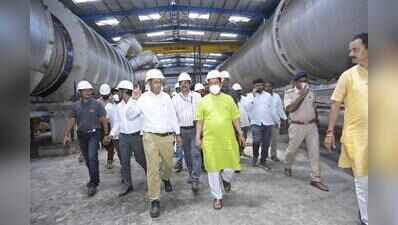
Hubballi: A waste-to-energy plant in Hubballi-Dharwad has completed a successful trial run and is expected to offer a long-term solution to the twin cities’ garbage problem.The project, described as an ambitious initiative of Union minister for new and renewable energy Pralhad Joshi, has come up in the Hubballi-Dharwad region in line with Prime Minister Narendra Modi’s vision of ‘Swachh Bharat’ and ‘Atmanirbhar Bharat’.Sources said that after Pralhad Joshi became a Union minister in 2020, and when a decision was taken to establish the country’s first waste-to-charcoal plant in Varanasi through NTPC, he pushed for setting up the second facility in Hubballi-Dharwad.The unit has been built on an 8-acre plot belonging to the HDMC near Old Gabbur and has the capacity to process 200 tonnes of dry waste per day. Sources said the conversion rate of waste to coal is around 30% to 35%. A 72-hour continuous trial run is under way and has produced around 250 tonnes of charcoal.The plant uses ‘torrefaction’ technology, wherein garbage is not burnt but heated at a specific temperature in a low-oxygen environment, converting it into ‘torrefied charcoal’ or eco-friendly ‘green coal’. Sources said this is the first such unit in Karnataka to use the technology.The fuel generated is being supplied to the Kudagi Thermal Power Plant in Vijayapura. An agreement has been signed to use the green coal produced here as fuel for NTPC’s Kudagi plant. The use of green fuel as an alternative to conventional coal is expected to cut carbon emissions significantly.The twin cities generate around 500 to 600 tonnes of waste daily, including about 300 tonnes of wet waste and 200 tonnes of dry waste. Sources said the project will reduce landfill burden and address issues such as foul smell, groundwater contamination and public health risks caused by garbage dumps.“It was my resolve to make our twin cities a model for clean and green energy production. With this joint effort of NTPC and the HDMC, garbage is being converted into energy for the country’s energy security,” said Pralhad Joshi.