









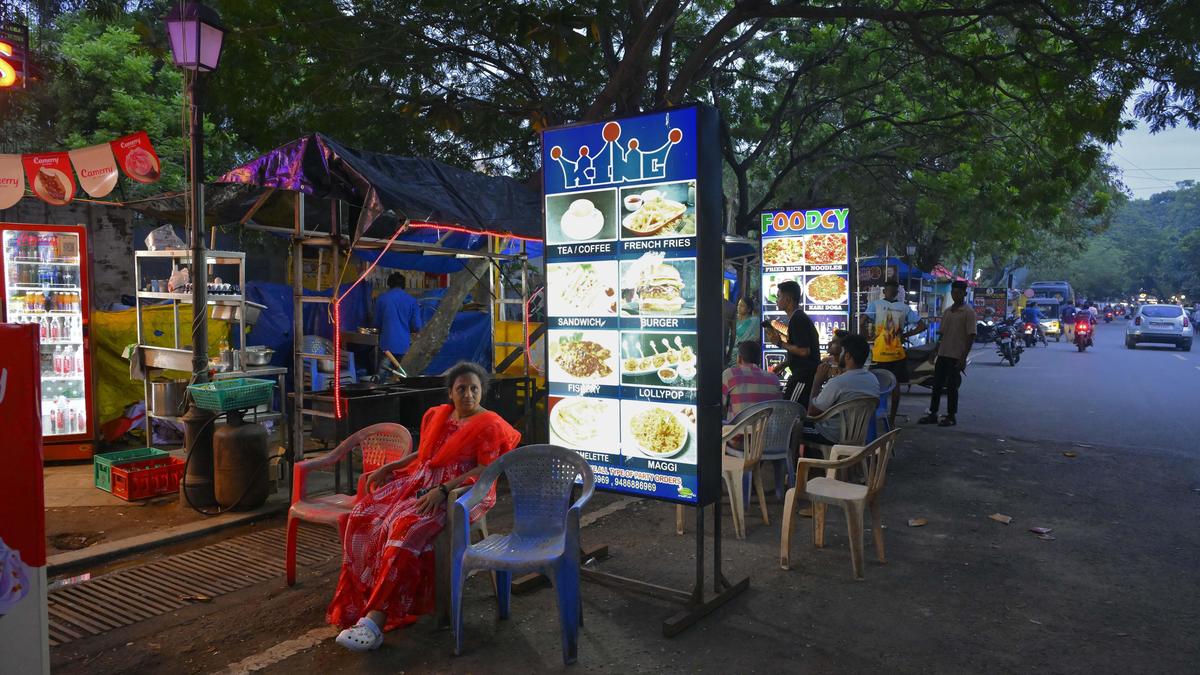

Eateries on Subbaiah Salai in South Boulevard.
| Photo Credit: KUMAR SS
The unregulated growth of roadside food stalls and eateries in several parts of the city has raised concerns among residents over food safety and hygiene.
On any given day, vendors can be seen operating from makeshift counters and pushcarts catering to a wide section of customers. The cuisine ranges from snacks to fast food and meals, depending on the time of the day. Some businesses have also started encroaching common areas, including One Way Roads and pavements by putting out plastic tables and chairs to accommodate their customers.
Residents say a number of stalls operate close to drains, garbage collection points, and busy roads, where food is exposed to dust and vehicle emissions. It is not only unhygienic, but dangerous as well. Questions have also been raised about the use of artificial colours, flavouring essences, and additives beyond permissible limits to improve the appearance and taste of food.
According to a food safety expert, “Unsafe water, uncovered food, poor hand hygiene, improperly stored ingredients, and use of repeatedly heated cooking oil can increase the risk of various illnesses. Preparation of food in the open also leaves food susceptible to contamination.”
According to M. Ravi, a resident of Reddiyarpalayam, “Food-safety authorities should conduct regular inspections, collect samples for laboratory testing, and take action against stalls found using banned colours, adulterants or food additives in excess of prescribed limits. Vendors, meanwhile, should be supported with access to clean water, waste-disposal facilities, and food-safety training.”
The Food Safety and Standards Authority of India requires street food vendors to be registered or licensed and to maintain hygienic preparation and vending conditions. Its regulations also require vendors to avoid contamination risks such as wastewater and open drains.
According to an official of the Food Safety Department, “Vendors must obtain the applicable FSSAI registration/license as well as permissions required by the concerned local body or municipality. Vendors operating in vacant spaces in front of buildings must also secure a no-objection certificate (NOC) from the relevant authority before commencing business.”
During inspections, it was found that some vendors were using essence beyond permissible limits. Notices were issued to 25 roadside food vendors for operating without required licenses. Action will be taken against vendors violating food safety norms and unsafe food items will be seized. Last year, around 300 food vendors were trained in hygienic food-handling practices. Intensified inspection and awareness drives would resume shortly, he said.
Published – August 10, 2026 05:30 am IST