






The 300-400cc motorcycle segment in India is now one of the most competitive spaces, with manufacturers offering not just performance but also advanced features and premium build quality.
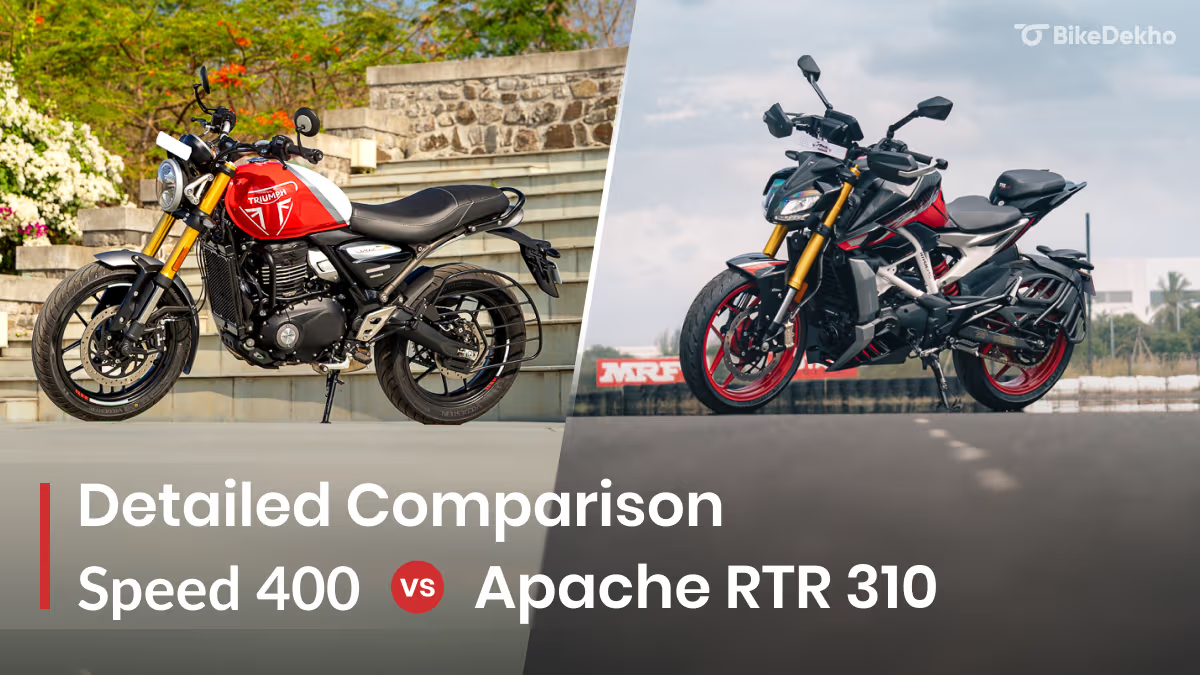
While the Speed 400 focuses on delivering a refined, premium roadster experience with strong performance, the Apache RTR 310 takes a completely different route with aggressive styling, advanced electronics, and track-oriented hardware.
So, which one makes more sense on paper? Let’s check it out.
|
Triumph Speed 400 |
TVS Apache RTR 310 |
||
|
Colours |
Ex-showroom Price |
Colours |
Ex-showroom Price |
|
Racing Yellow / Pearl Metallic White |
Rs 2,34,140 |
Arsenal Black Base without QuickShifter |
Rs 2,25,240 |
|
Phantom Black / Pewter Grey |
Arsenal Black Base |
Rs 2,42,390 |
|
|
Pearl Metallic White / Pewter Grey |
Fury Yellow Base |
Rs 2,42,390 |
|
|
Racing Red / Pearl Metallic White |
Fiery Red Base |
Rs 2,46,990 |
|
|
Glossy Black |
Rs 2,89,940 |
||
- The pricing strategy between the two bikes highlights their positioning.
-
The TVS Apache RTR 310 starts at a lower price point, making it more affordable. It also offers multiple variants and a unique Built-To-Order (BTO) system, allowing buyers to customise the bike with different kits and features.
-
The Triumph Speed 400, on the other hand, is offered in a single variant. While this simplifies the buying process, it also means buyers don’t get flexibility in pricing or features.
|
Specifications |
Triumph Speed 400 |
TVS Apache RTR 310 |
Difference |
|
Wheelbase |
1,386mm |
1,358mm |
+28mm |
|
Ground clearance |
164mm |
180mm |
-16mm |
|
Fuel tank capacity |
13 litres |
11 litres |
+2 litres |
|
Seat height |
803mm |
800mm |
+3mm |
|
Kerb weight |
179 kg |
169kg |
+10kg |
-
The Triumph Speed 400 is slightly heavier and has a longer wheelbase. This generally translates to better stability, especially at higher speeds.
-
The TVS Apache RTR 310 is significantly lighter. This gives it an immediate advantage in agility, making it easier to handle in city traffic and during quick direction changes.
-
The higher ground clearance will help the TVS Apache RTR 310 tackle potholes and speed bumps better.
-
The Speed 400 follows a clean neo-retro design. It looks simple, elegant, and premium. The round headlight, sculpted tank, and minimal bodywork give it a timeless appeal.
-
The RTR 310 is the complete opposite. It features a sharp, aggressive design that makes it look like a cyborg. The split headlamp, angular panels, and forward-biased stance make it look like a modern streetfighter.
|
Specifications |
Triumph Speed 400 |
TVS Apache RTR 310 |
|
Front suspension |
Upside-down fork |
Upside-down fork |
|
Rear suspension |
Monoshock, preload adjustable |
Monoshock |
|
Front brake |
300mm disc brake |
300mm disc brake |
|
Rear brake |
230mm disc brake with dual-channel ABS |
240mm disc brake with dual-channel ABS |
|
Front tyre |
110/80 – 17 |
110/70 – R17 |
|
Rear tyre |
150/70 – 17 |
150/60 – R17 |
- The Triumph Speed 400’s USD fork and monoshock suspension setup is designed to balance comfort and handling for everyday riding.
-
The TVS Apache RTR 310 takes things further. With its optional fully adjustable suspension at both ends (via BTO kits), it offers a level of customisation and performance tuning that is rare in this segment. Riders can easily adjust the suspension according to their weight and comfort levels.
-
Braking and tyre setup is quite similar on both bikes. So, the braking performance and grip offered by the tyres should be also quite similar.
|
Specifications |
Triumph Speed 400 |
TVS Apache RTR 310 |
|
Full-LED lighting |
Yes |
Yes |
|
Bluetooth connectivity |
No |
Yes |
|
USB charging |
Yes |
Yes |
|
Instrument Console |
Semi-digital |
TFT |
-
The TVS Apache RTR 310 is probably the most feature-loaded motorcycle in the segment. It gets a 5-inch TFT instrument console that shows the speedometer, odometer, trip meter, gear position indicator, and clock readings. It gets Bluetooth connectivity for call and SMS alerts and turn-by-turn navigation.
-
The bike also gets five riding modes – Rain, Urban, Sport, Track, and Supermoto – and advanced features like cornering ABS, cornering traction control, engine drag torque control, wheelie control, stoppie control, and TVS’ cornering cruise control.
-
The Triumph Speed 400 keeps things minimal. It offers essential features like traction control and a semi-digital instrument console with an analogue speedometer and an LCD screen.
|
Specifications |
Triumph Speed 400 |
TVS Apache RTR 310 |
|
Engine |
349cc, liquid-cooled, single-cylinder engine |
312cc, single-cylinder, liquid-cooled engine |
|
Power |
37PS at 8,500rpm |
35.6PS at 9,700rpm |
|
Torque |
32Nm at 7,000rpm |
28.7Nm at 6,650rpm |
|
Gearbox |
6-speed with slipper clutch |
6-speed with slipper clutch |
-
The Triumph Speed 400 produces significantly more torque and more power overall. Its engine offers strong low-end and mid-range performance, making it ideal for both city and highway riding.
-
The TVS Apache RTR 310, while slightly less powerful, is tuned to deliver performance at higher RPMs. This gives it a sportier character, especially when ridden aggressively with its high-revving engine.
-
Both bikes get a 6-speed gearbox, but the Apache also offers a bidirectional quickshifter in higher variants, which enhances the riding experience.
The Triumph Speed 400 is for someone who wants a premium, refined, and easy-to-ride motorcycle. It delivers strong performance without being overwhelming, and it feels mature and composed in most situations.
The TVS Apache RTR 310 is for riders who want maximum features, aggressive styling, and a more engaging riding experience with a high-revving engine. It is more tech-heavy and offers a level of customisation that the Speed 400 simply doesn’t.
Comparisons With Other Rivals:
Royal Enfield Classic 350: The Royal Enfield Classic 350 has timeless retro charm and is also more affordable, while the Triumph Speed 400 is more agile and is the sportier roadster of the two.
Honda H’ness CB350: The Honda H’ness CB350 offers great refinement at a more affordable price, while the Triumph Speed 400 offers agility and better performance.
Jawa 42 FJ: The Jawa 42 FJ is more affordable, but the Triumph Speed 400 offers sportier handling characteristics and a more exciting performance.