





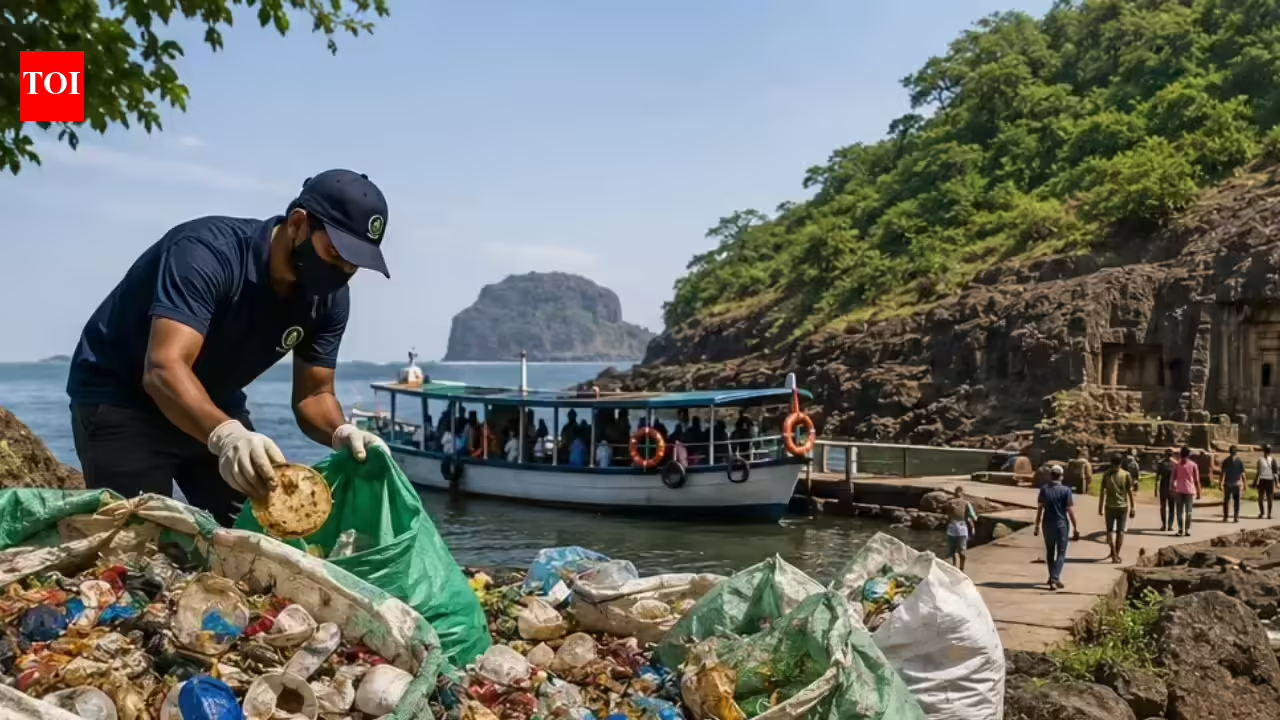
For centuries, Gharapuri, later Elephanta, has witnessed the passage of goods to the island, both as a site of worship and as a maritime anchorage. What remains of that ancient traffic are amphorae, coins, beads and figurines—a handful of clues to the material culture the island once knew. A starkly different set of deposits awaits the excavators of the future, framing a full-blown portrait of contemporary culture sketched in the permanent ink of PET bottles and multilayer packaging. These line the shore and cake the creeks in sedimentary scrap that includes broken plywood cabinets, insulated delivery bags, toys, clothes, and ‘biodegradable’ bin liners. For the past couple of years one organisation has been chipping away at this topsoil of trash. “Despite having a UNESCO World Heritage Site, the island never had a formal waste management system,” says Siddhant Padte, founder of Waste Matters Foundation (WMF) and owner of Elephanta Port Canteen, one of the island’s first restaurants, built by his grandfather in 1966. Elephanta’s municipal solid waste problem has reached a tipping point. Every day— 3,000 on weekdays, 5,000 on weekends—tourists land on an island no larger than 16 sq km., generating more than 150 kg of waste, which, until recently, had nowhere to go but up in smoke or to the sea. Since 2018, WMF has attempted to formalise Elephanta’s waste management system by collecting, sorting and recycling municipal solid waste generated from tourism as well as marine litter, which constitutes 60-65% of the island’s waste. In 2024, the nonprofit partnered with Ek Saath – The Earth Foundation and Jawaharlal Nehru Port Authority to launch the Gharapuri Elephanta Manthan (GEM) Project that enabled it to scale waste management operations with CSR funds. Today, twice daily, waste collectors and sorters comb the shores and common tourist areas, collecting close to 100 kg of trash from beaches and bins, and from restaurants and shops in Shetbandar village, where the caves are located, before segregating it by material. 42.6% of the collected waste is non-recyclable, contaminated by engine oil or chemical outflows from ships and the mainland. This is dispatched to cement factories as Refuse-Derived Fuel (RDF). 38.2% is plastic waste, of which 71.7% is that mainstay of every modern dump: PET packaging. Earlier this month, WMF launched Elephanta’s first material recovery facility to prepare waste for efficient shipment to the mainland. “We spend around Rs 1.5 lakh a month managing the whole system,” says Padte. But collecting and sorting waste is only part of the solution. “We can do little about marine litter, but we can influence tourist behavior,” he notes. The island receives several boatloads of tourists a day, most arriving with food and drink. Few give much thought to where the packaging ends up. Posters lining some of the ferries try to sensitise them. One of these draws attention to both victim and vector of waste pollution, the Bonnet Macaque. Tourists are advised against feeding these animals, listed as vulnerable on the IUCN list. High-calorific snacks like chips and soft drinks make them aggressive and addicted to these foods. This drives them to snatch food from tourists and dig out leftovers from trash cans, scattering wrappers and bottles across the island. Environmentalist Sanjiv Valsan observes other downsides. “The monkeys have stopped eating their natural food—fruit, berries and seeds—which prevents them from playing their natural role as seed dispersers in the forest. This can have larger ecosystem impacts.” Valsan and botanist Dr. Pratiksha Patel authored Elephanta’s first preliminary biodiversity survey, whose findings, they hope, will give researchers, government and activists a foothold for further research, conservation planning, and responsible tourism. “Waste directly impacts biodiversity. On the east coast, for instance, large patches of mangroves have degraded, possibly because of the oil and chemical runoff from Nava Sheva, even as new seedlings are entangled in webs of plastic, which inhibit growth,” reports Valsan, adding that local fishers complain of reduced catch, and fewer sightings of fiddler crabs on the shore. “Once people realise there’s a biodiversity goldmine here,” he says, “they’ll think twice about throwing garbage.” It’s an optimistic note — but the task is about to get harder.The ASI is planning to expand Elephanta’s tourist trail to include newly excavated sites, including the 1,500-year-old stepped reservoir. “We have already planned a trail that covers six to seven archaeological sites, apart from the caves,” says Abhijit Ambekar, Superintending Archaeologist of ASI’s Mumbai Circle. More sites mean more visitors, and more visitors mean more waste. It’s a challenge Padte is already preparing for. WMF is working to build a coalition across the island’s stakeholders — locals, ferry operators, restaurant and shop owners, the ASI, forest and tourism departments, and tour guides. “Boat owners can drive awareness through posters,” he says. “Guides can educate people about the natural history and culture of the island — there’s far more to Elephanta than the caves.“