





3 min readNew DelhiJun 17, 2026 11:14 AM IST
When the Centre on Tuesday blocked access to Telegram in India until June 22 and directed the platform to disable its message-editing feature for Indian users until June 30, the move was aimed at preventing a repeat of the misinformation and paper-leak claims that forced the cancellation of the NEET (UG) 2026 May examination.
The National Testing Agency (NTA) had sought action after investigators found that Telegram channels were allegedly being used by cheating rackets to circulate purported question papers, communicate with middlemen and candidates, and manufacture misleading “proof” of paper leaks by editing messages and files while retaining original timestamps.

Among those backing the decision was IIT Madras Director V Kamakoti, who has repeatedly warned about what he described as a “vulnerability” in Telegram that allows users to alter messages and even attached files without changing the original timestamp.
“There is a vulnerability in the Telegram platform, wherein you can send a message today and edit the message tomorrow or some other day later, without changing the timestamp,” Kamakoti said in a video message, later shared on NTA’s X handle. “For people who look at the message later, it will appear as if you had sent the message at the original time.”
Not the first time this features has been exploited
According to Kamakoti, the feature has previously been used to create confusion around competitive examinations. “Using this vulnerability, there has been an attempt in the past to create confusion and panic among candidates who appeared for multiple competitive examinations,” he said, citing instances related to JEE Advanced and the IISER Aptitude Test.
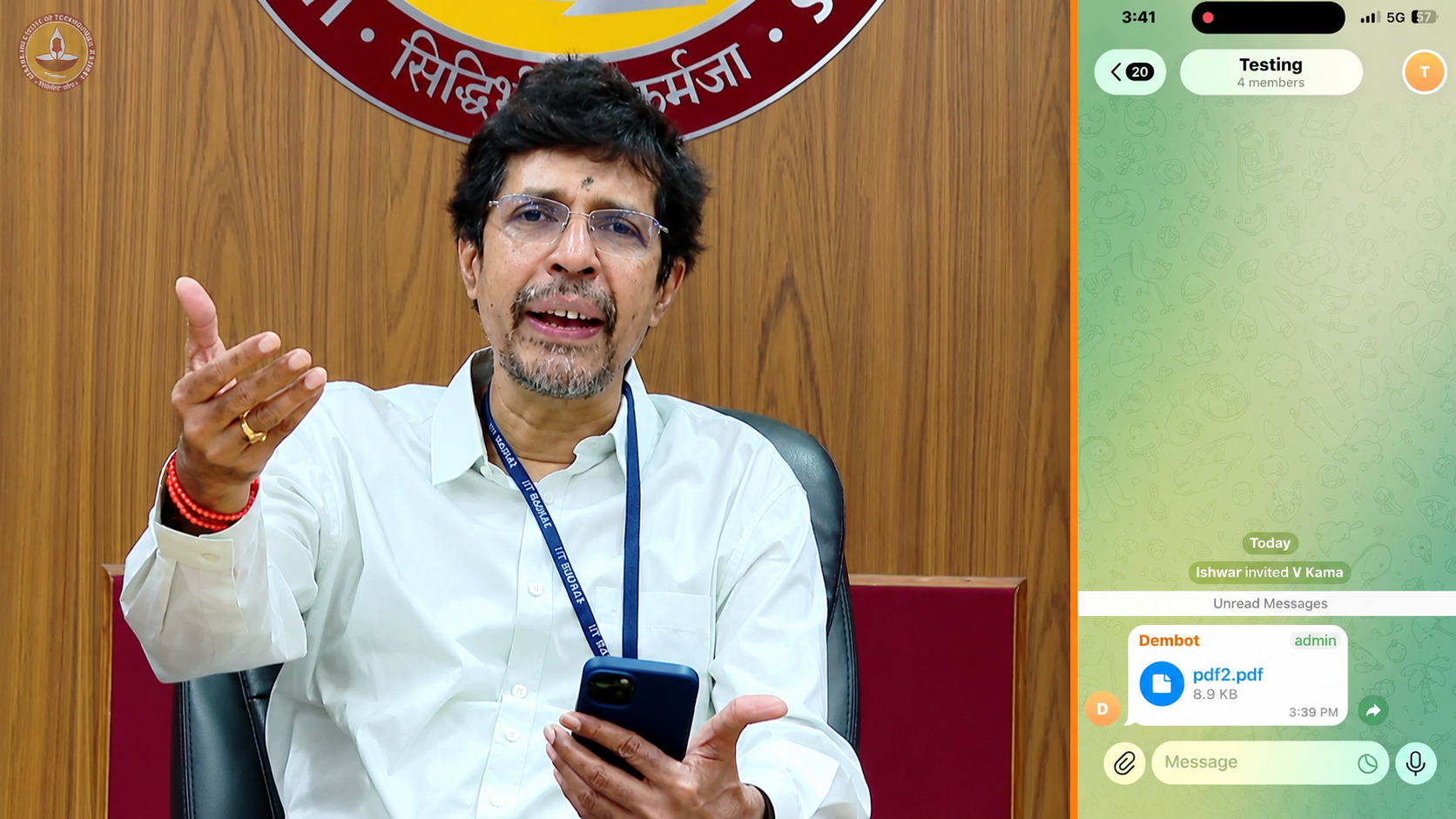
In a separate demonstration video, Kamakoti showed how a PDF file sent through Telegram could later be replaced with a different file while retaining the original timestamp. “What we have demonstrated is that at 3:40 pm I am able to send a PDF that replaces something which was sent at 3:39 pm without altering the timestamp,” he said.
Calling the issue “extremely dangerous”, the IIT Madras director argued that such functionality could be exploited to falsely claim that information had been shared earlier than it actually was. “Telegram allows this type of modification for a long time, even 48 hours,” he said.
In this follow-up, Prof. V. Kamakoti (Director, @iitmadras and Member, National Security Advisory Board) demonstrates the Telegram trick live.
A student sends “pdf1.pdf” at 3:39 PM. A minute later, the message is edited — the file is silently replaced with “pdf2.pdf”. The… pic.twitter.com/dW7xzS7ebF
— National Testing Agency (@NTA_Exams) June 16, 2026
Story continues below this ad
Kamakoti stopped short of revealing the technical details behind the exploit but urged students to stay vigilant. “Candidates and friends, this is to tell you that you must be aware of such types of exploitations of vulnerability with an intention to create panic and confusion,” he said. Referring to upcoming examinations, including NEET, he added: “Don’t believe in these things. Prepare well for the examination.”
NTA has also strongly supported the Centre’s decision. NTA Director General Abhishek Singh told in a separate interaction that while determined users may still find ways to access Telegram through VPNs, restricting the platform would significantly reduce the reach of groups involved in spreading fake claims, rumours and alleged paper-leak content before examinations.
The temporary restrictions come days before the NEET (UG) 2026 re-test, as authorities intensify efforts to curb misinformation campaigns and prevent panic among candidates.