





There are places that perform for you. They put their best face forward, hand you a map, and tell you exactly where to point your camera. Louisiana is not one of them. At least, not entirely.Beyond the version of this state that the world already knows, there is another Louisiana entirely. Older, quieter, and stubbornly indifferent to being discovered. It holds the largest freshwater swamp in America, a UNESCO World Heritage Site that most people have never heard of, 21 state parks where solitude is still genuinely available, and 17 scenic byways that make a convincing case for never arriving anywhere at all. This Louisiana has been extraordinary for centuries. It simply never felt the need to tell anyone.The Year of Outdoors has a front-runner. And it begins, as most good things in this state do, with a road.The road that asks nothing of youThe Creole Nature Trail is a 180-mile loop through Louisiana’s Gulf Coast marshlands and coastal wetlands, and it may be the most quietly spectacular drive in America. The sky here does not rise, it spreads, enormous in every direction, the way skies are when the land is flat and the reeds are low and water catches the light wherever you turn. The air carries salt and something older, something that smells of tide and tall grass and the particular wildness of a coastline that tourism forgot.Along the Mississippi Flyway, one of the great bird migration corridors on the planet, the birding is world-class in the most understated way possible. Roseate spoonbills. Brown pelicans. Thousands of shorebirds moving through on schedules older than memory, indifferent to your presence in the best possible way.There is no agenda here. You set your own pace, stop when something catches your eye, and keep going when you are ready. The road does not rush you. In a world that almost never offers this, it turns out to be the most radical thing imaginable.Into the interior
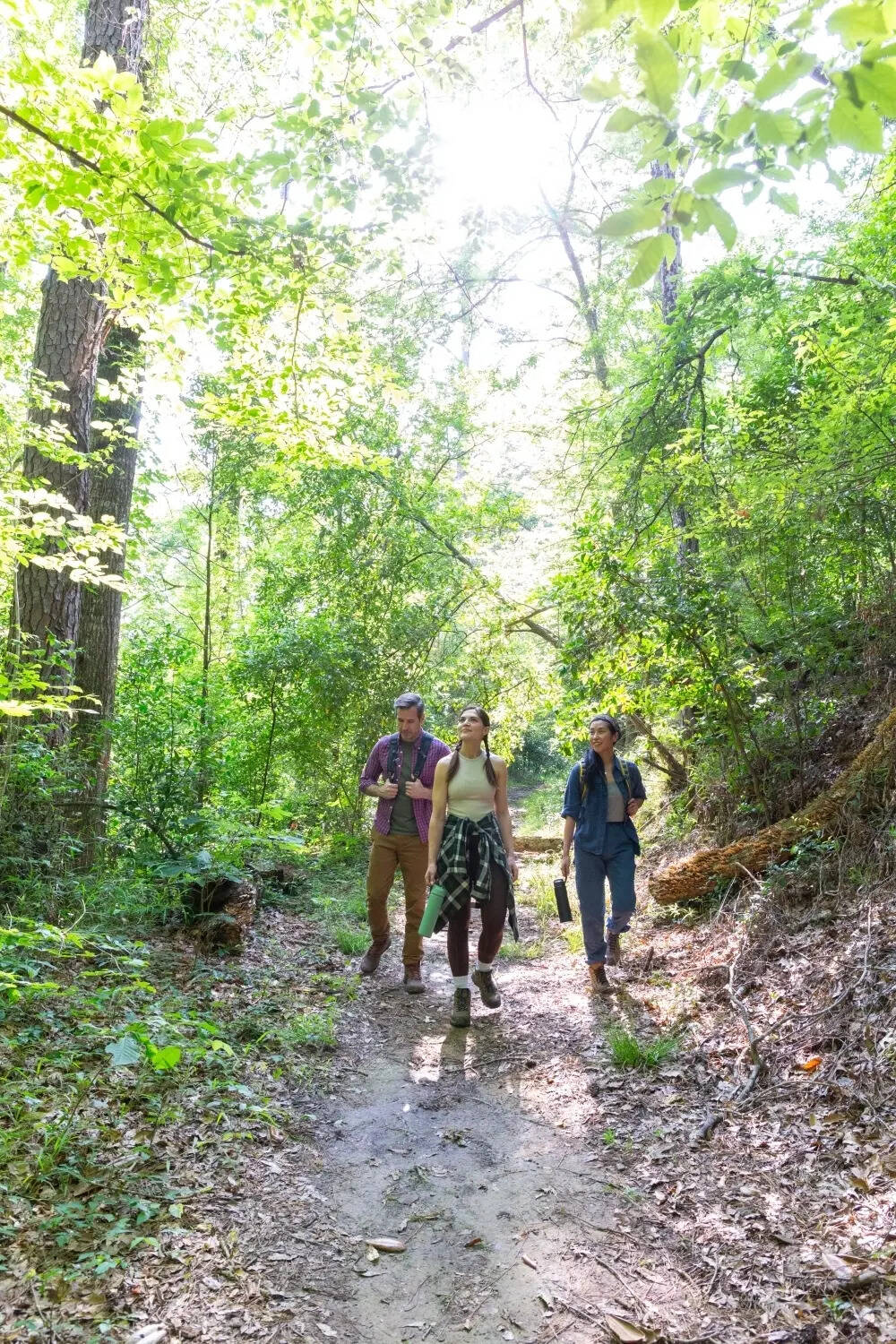
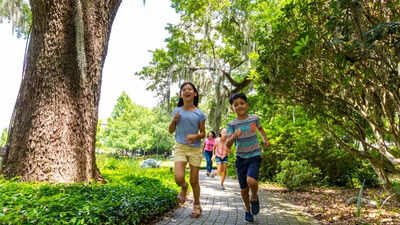
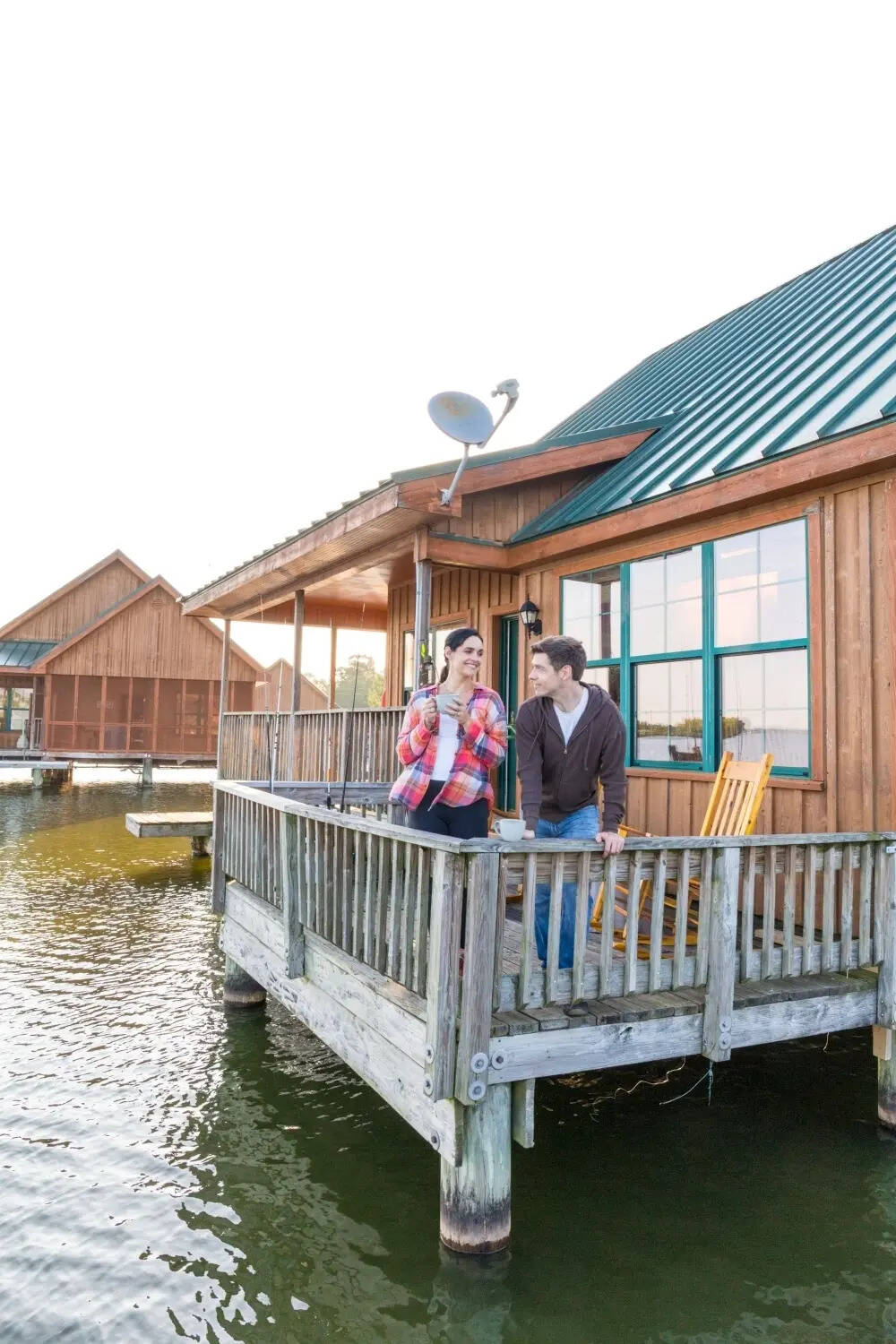
Go deeper and the landscape shifts register entirely. The Gulf Coast gives way to pine forest, the wide-open sky closes in gently, and the state reveals a version of itself that even most Louisianans have not fully seen.Kisatchie National Forest, Louisiana’s only national forest, stretches across nearly half a million acres of longleaf pine and sandstone hills. It looks nothing like the Louisiana of popular imagination, which is precisely why it is worth going. The light comes through the pines differently here, slower and more amber, and the trails carry you through a silence that feels earned. Fontainebleau State Park, draped in Spanish moss along the north shore of Lake Pontchartrain, offers a different texture of stillness altogether. Chicot State Park, built around a 6,400-acre, is the kind of place where a morning on a kayak can undo weeks of accumulated noise in a way that no wellness retreat ever quite manages.Louisiana has 21 state parks. Most visitors to the state never see a single one. For those who want to sleep inside the landscape rather than merely near it, glamping within these parks is among the most considered ways to travel right now. Not camping as an endurance test, but camping as genuine immersion. You wake to birdsong that has no competition, to mist sitting low on still water, to the particular quality of a morning that belongs entirely to you and has not yet been organised by anyone.The place that stops you coldSomewhere in the middle of all this nature, Louisiana holds a secret that has nothing to do with nature.Poverty Point is a UNESCO World Heritage Site dates back more than 3,400 years, built by a civilisation that left no written record. Six massive concentric earthen ridges and a 72-foot mound that, at the time of its construction, ranked among the largest earthworks anywhere on earth. It preceded the Roman Empire. It preceded the writing of the Mahabharata. It was built by people who understood scale, ambition, and permanence in ways that still resist easy explanation.Most people, including most Americans, have never heard of it. Stand here and the silence feels different. Not peaceful, but ancient. You are in the presence of deep time, of human ingenuity that needed no audience and asked for none. That almost no one has come is their loss. That it remains this quiet is entirely your opportunity.Where the wild is most aliveIf there is one place that holds everything Louisiana’s outdoors truly is, it is the Atchafalaya Basin. The largest freshwater swamp in America, and one of the most biologically extravagant places on the continent.
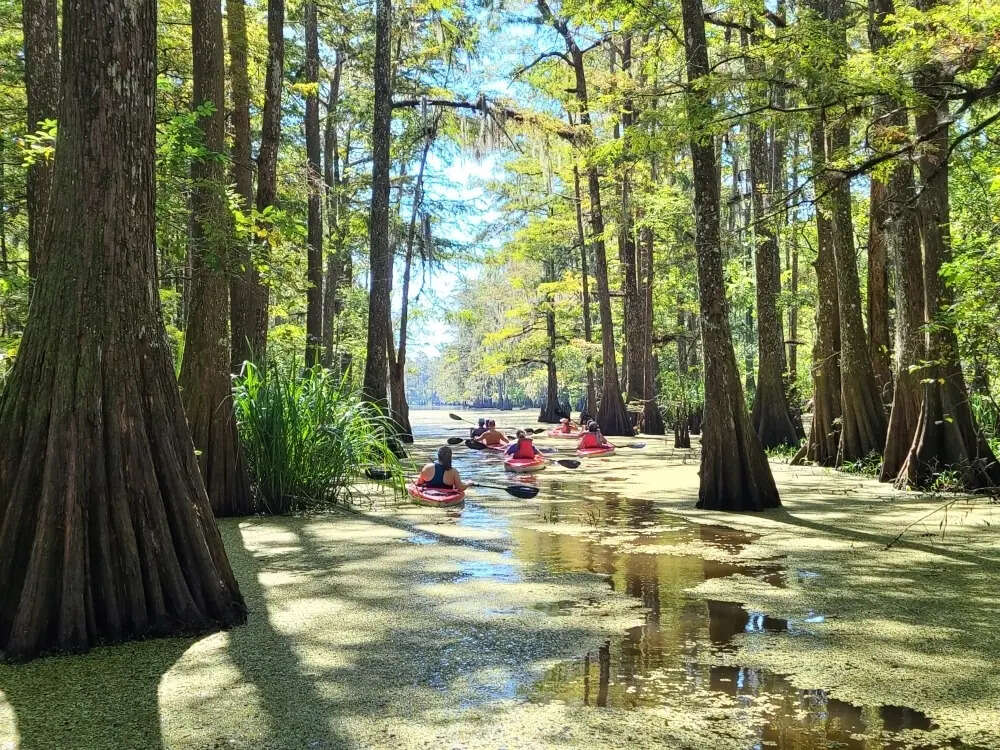
Bald cypress trees rise from black water, their knees surfacing like sentinels around something they have been guarding for a very long time. Roseate spoonbills nest in colonies overhead, their pink so vivid against the grey morning sky that it looks almost theatrical, until you remember that no one designed this, it simply grew. The silence, when it comes, is broken only by the eruption of an egret taking flight or the slow, deliberate glide of an alligator through still water. At Lake Martin, at the Basin’s edge, you can kayak through corridors of cypress so still that the reflection on the surface is indistinguishable from what floats above it.This landscape has never needed to perform for anyone. Coming to it feels less like visiting a place and more like being allowed into something that was here long before you, and will be here long after.The drive between is the destinationLouisiana has 17 designated scenic byways, and this is not a footnote. In most parts of the world, the road between places is the price you pay to get somewhere. Here, the road is somewhere. The Great River Road traces the Mississippi through river parishes that feel suspended in their own amber, past plantation oaks and levee towns where time seems to move at a different speed. The Longleaf Trail Scenic Byway cuts through Kisatchie past wildflower meadows and clear-water streams that seem too clean to be real. And the Creole Nature Trail, as already witnessed, is a world entirely its own.
Louisiana teaches you, gently but thoroughly, that the going matters as much as the getting there. In the Year of Outdoors, that may be the most important lesson on offer.Some years, you travel and come back full. Other years, you travel and come back changed. The difference is rarely the distance covered. It is almost always the depth of what you allowed yourself to notice. Louisiana asks for your attention. In return, it gives you pine forests and Gulf marshes, ancient earthworks and cypress corridors, roads that feel like they were made for no one but you. It gives you the quiet, uncommon satisfaction of discovering something the world has not yet overrun.That is a rare thing. And rare things have a way of not staying that way.This is your year. Make it Louisiana. Begin at ExploreLouisiana.com and find the version of this state that was always waiting for you.Disclaimer: This article has been published on behalf of the Louisiana Office of Tourism by Times Internet’s Spotlight team.