



3 min readPuneAug 8, 2026 10:42 PM IST
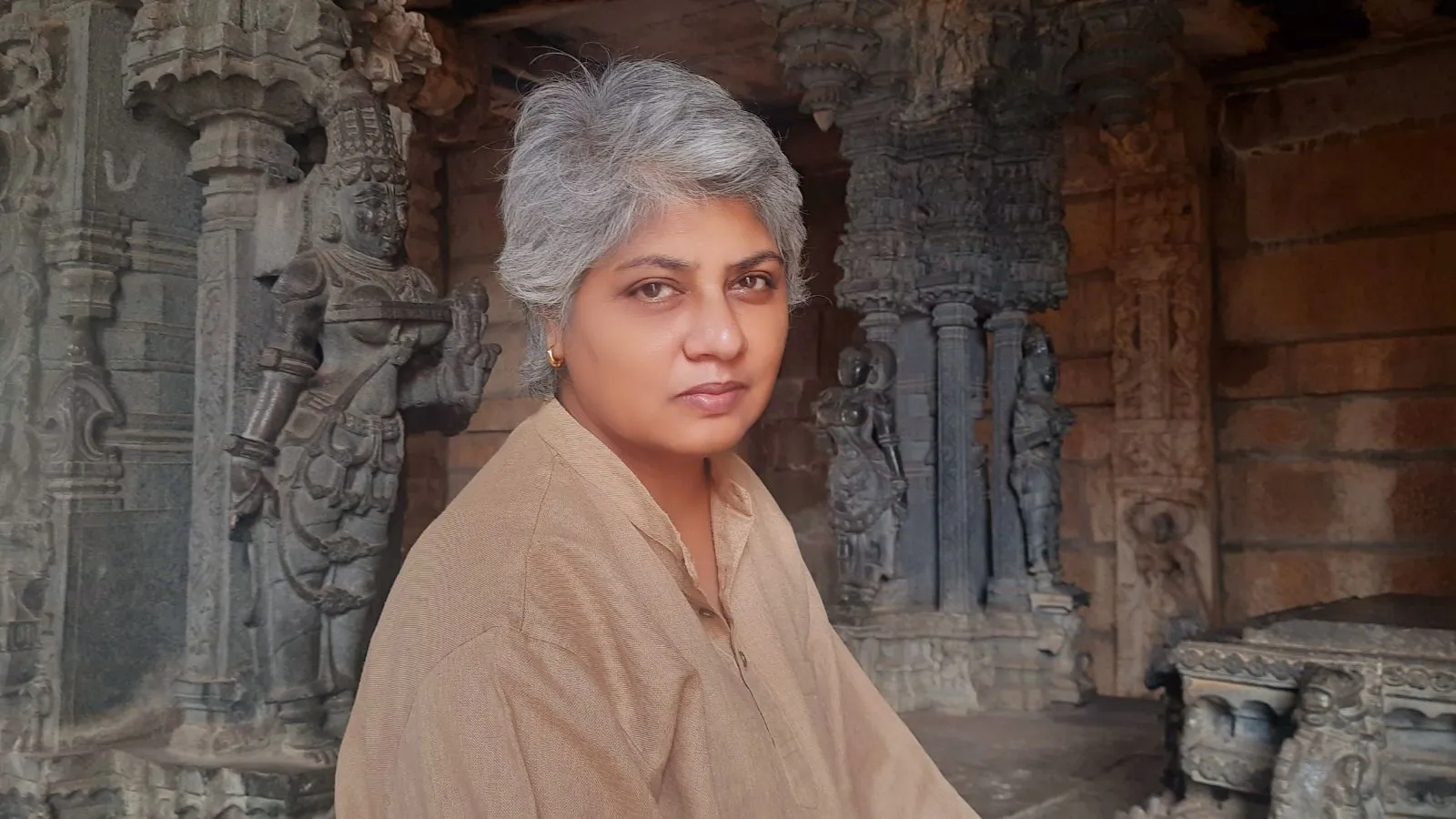
When Mani Rao visits a bookstore, her eyes scanning shelves for her own titles, she usually finds them in the religion section. It amuses and mildly frustrates her. Her English translations of Sanskrit classics, she says, are meant to bring these works back into the realm of literature rather than leave them treated only as sacred texts.
“People are happy to read Homer. Do we consider the Odyssey a religious text because it has gods and humans interacting with one another? There are characters who are the sons and daughters of a god and a human,” says Rao.

On Sunday (August 9), Rao will speak at a session, “What Words Hold: The Subtleties of Poetry”, at the Pune International Centre. The event is being held in collaboration with The Word Bookshop. She will talk about how the reverence with which Sanskrit texts are often approached can make readers forget to engage with them as literature.
If you put a book on a pedestal, you can’t actually see it clearly because you no longer have the ability to interact with it on equal terms. It is also foolish and dangerous. We must free our minds. Sanskrit classical texts are our inheritances. We are the heirs to a rich legacy that is unrivalled across the world,” she says. ” The Bhagavad Gita is about a methodology about living,” she adds.
Works by Kalidasa and Bhasa, as well as texts such as the Saundarya Lahari, are today read by a relatively small group of readers. Rao believes this leaves a significant part of India’s literary heritage outside the reach of most people. The difficulty of Sanskrit, combined with a lack of translations that speak to contemporary readers, can make these works seem more inaccessible than they are.
“Many readers would be surprised that there is so much drama, relationships and conversation in the Bhagavad Gita. This is essentially a spoken-word text,” says Rao, who translated it as Bhagavad Gita: God’s Song.
Rao studied Sanskrit in school, when the subject was still part of the total academic marking system. “That stopped in 1982, when I passed out of Class XII,” she says.
Story continues below this ad
Around 2005, when she was 40, Rao became interested in ancient Indian thought. It was then that she realised she had never read the Bhagavad Gita in its entirety. As she began reading the text, she found it very different from what she had expected.
“I used to think that I was a scientific and modern person. Why should I read anything which was not relevant? But, the Gita turned out to be interesting and delightful with a lot of word play,” she says.
Rao went back to studying Sanskrit and later completed a PhD in religious studies, researching mantras. Her work since then has included translations of Sanskrit texts, bringing them to readers who may otherwise never encounter them.
“What a unique position we have in India. We have access to thousands of years of sophisticated thinking, a lot of it contained in our old texts. All we have to do is read,” says Rao.