



The myopia afflicting the opposition parties became evident once again from the glee in the Congress and the Left over the ouster of Mamata Banerjee from power in West Bengal. Relegated to the background were the worries over mass disenfranchisement, communal polarisation, and the worsening of economic woes. The opposition is letting India down, having failed to mobilise the people against the BJP for spawning multiple crises.
Congress members jubilated that Banerjee’s betrayal of 2012 had been avenged, for she had then broken their alliance that had terminated, a year before, the Left rule of 34 years. Her defeat was a revenge for the Left, too—a thousand of its activists have been killed by Trinamool activists over the past 15 years, and hundreds of its offices across the State closed down, only to be opened this month.
Credit must be given to Congress leader Rahul Gandhi for cautioning against celebrating Banerjee’s defeat, which emphatically signifies a subversion of democracy. On May 5, Gandhi posted on X: “Some in the Congress, and others, are gloating about TMC’s loss. They need to understand this clearly—the theft of Assam and Bengal’s mandate is a big step forward by the BJP in its mission to destroy Indian democracy. Put petty politics aside.”
Gandhi’s post was a break from the past, for he hadn’t ticked off his party leaders for publicly rejoicing over the AAP’s defeat in Delhi in 2025. As in West Bengal, so in Delhi, the downfall of the party that had gobbled up the Congress’ base had its leaders hoping to reclaim their monopoly over the anti-BJP space.
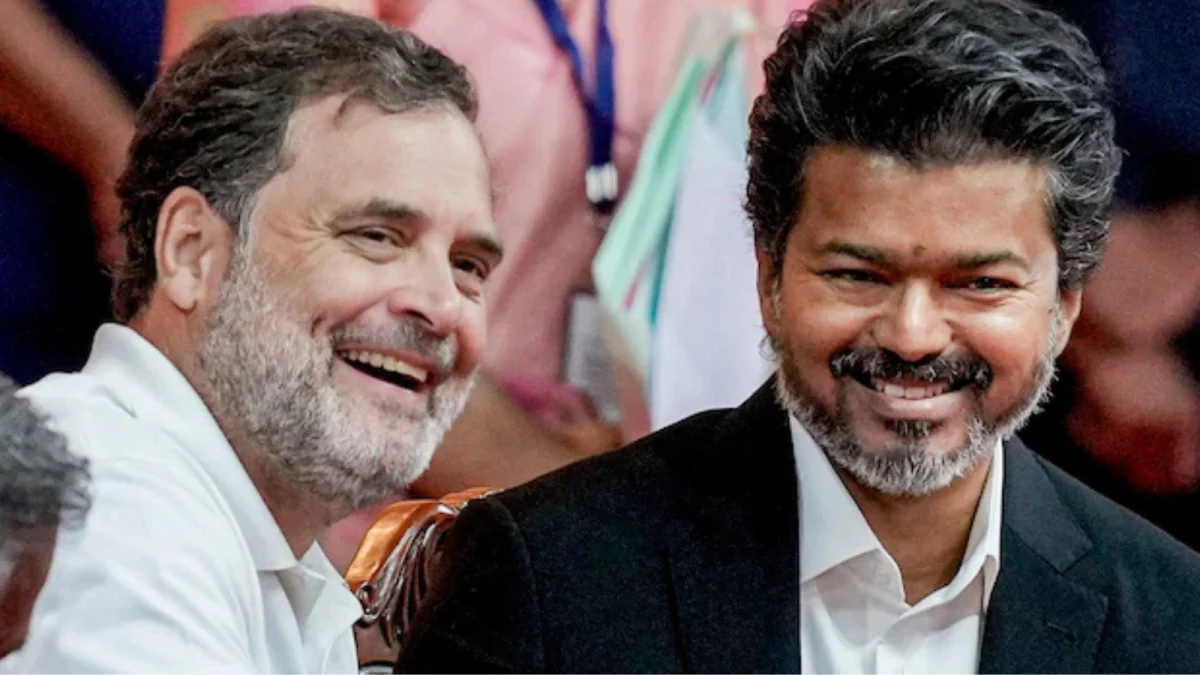
Yet, within days of Gandhi’s May 5 post, he and the Congress showed an astonishing lack of foresight in battling the BJP—and thwart its assault on democracy. The party unilaterally broke its alliance of over 20 years with the Dravida Munnetra Kazhagam and chose to support the minority government of Tamilaga Vettri Kazhagam leader C. Joseph Vijay. The grand old party argued that it didn’t want the communal forces to manoeuvre their way into power in Tamil Nadu.
The Congress’ decision had more than a dash of “petty politics”. The party initially said its support to Vijay was subject to the condition that he wouldn’t take the support of the BJP and its proxies, a term coined for those who had aligned with the saffron brigade to fight the Assembly election. Subsequently, though, the Congress dropped the term “proxies” from the statement issued to explain its support to Vijay. The reason: Vijay had, independent of the Congress, chosen to enter into a parley with a faction of the All India Anna Dravida Munnetra Kazhagam, a BJP ally, to bolster his government.
With Vijay no longer dependent on the Congress for his government’s survival, it’s moot to ask to what extent he would let the grand old party grow in the State. And to grow the Congress wants, independent of the DMK, a legitimate but unrealistic dream in Tamil Nadu, for which it has alienated its steadfast regional ally committed to federalism, secularism, welfarism, and opposed to Hindutva’s homogenising project. The Congress’ decision sends a signal to its allies that it wouldn’t hesitate to expand its footprint at their expense.
History has catalysed the electoral competition in the anti-BJP space. The Congress fears that unless it wins a substantial number of seats on its own, regional outfits could gang up to deny it the chance to lead the government at the Centre in 2029 or even beyond. This happened in 1996, with the Congress supporting the United Front government from outside. It was the reverse in 2004: a post-electoral alliance was stitched together, with the Left supporting the Congress-led government from outside.
But the politics of 2026 is remarkably different from that of two or three decades ago. The BJP has become a behemoth, with resources and organisational strength that even the combined opposition can’t match. The party bolsters its strength by engaging in undeniable electoral manipulation, as in Odisha and Andhra Pradesh in the 2024 Lok Sabha election, and more brazenly in the recent Assembly elections in West Bengal and Assam.
It not only raids opposition leaders and splits their outfits, but also co-opts their supporters through accommodation. For instance, despite its visceral hatred for communists, the BJP government in West Bengal has given advertisements, including the controversial one on the Somnath temple, to Ganashakti, a Bengali-language mouthpiece of the Communist Party of India (Marxist). It has also allowed the Left to reopen its offices. This ostensibly laudatory conduct is designed to retain the Left supporters who voted for the BJP in reaction against Banerjee’s repression.
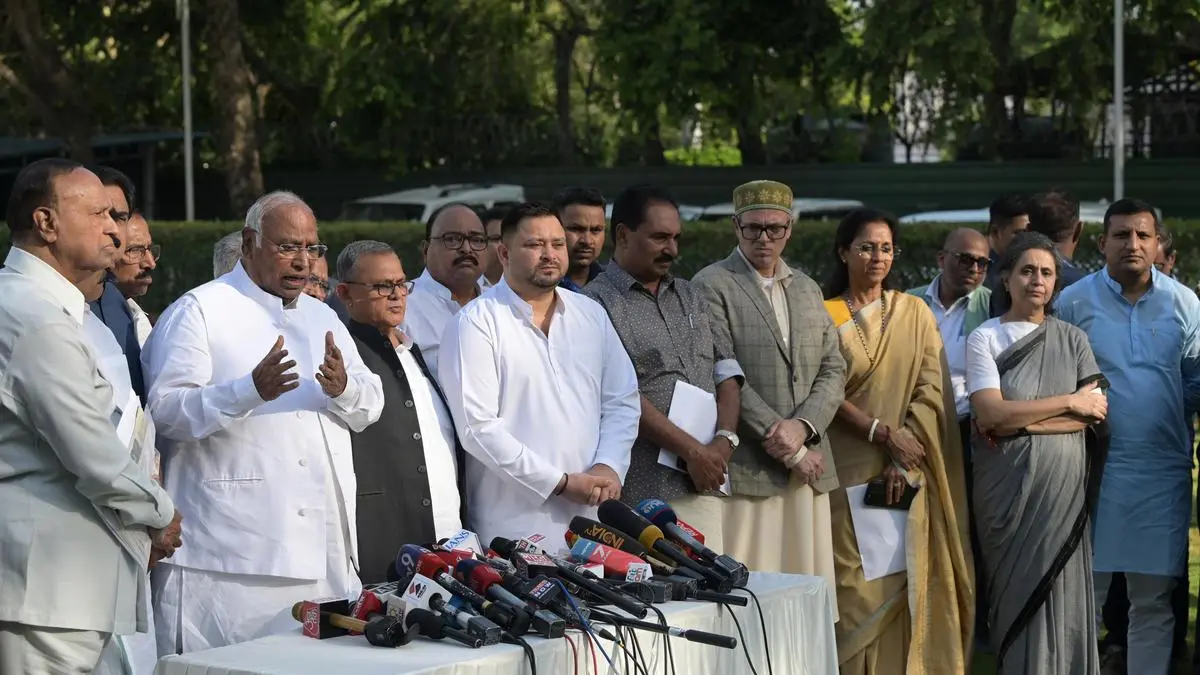
The competition among the opposition parties saps their energy to combat the BJP. It’s becoming increasingly difficult for one of them to emerge victorious solo in even the States governed by them. They must enter into a grand bargain, with regional parties assuring the Congress that it would lead a future government at the Centre—and, likewise, the grand old party refraining from encroaching upon the space of its allies. There are a large number of States where the Congress is the sole opposition pole. It must win these States to diminish the BJP’s formidable clout.
The grand bargain, above all, could enable them to pool their resources and devise a strategy to fight against electoral manipulation. This is an imperative for saving India’s democracy from being hollowed out. The process to forge opposition unity has to begin now, not a few months before the 2029 Lok Sabha election. It requires them to forget their past animosities.
Instead of attending to this complex task, opposition leaders have lapsed into fantasising about a spontaneous popular upsurge against Prime Minister Narendra Modi, as has happened in Nepal, Sri Lanka, and Bangladesh against their governments. India is too vast and too politically diverse a country for a mass upheaval to become uncontrollable, not least because of Hindutva having coalesced significant segments of Indians who could, with the assistance of security forces, play the role of reactionaries.
Here are two examples of helplessness masquerading as fantasies of a mass upsurge. Last year, during his impressive presentation of Haryana’s flawed voter list, Gandhi said, “India’s Gen Z and youth have the power to restore democracy with satya and ahimsa.” Although AAP leader Arvind Kejriwal has paid an enormous price for challenging Modi, including a spell in prison, he asked students, in his press conference on the NEET paper leak, to emulate their counterparts in Nepal and Bangladesh by taking to the streets to change the government.
Waiting for a mass upsurge
It speaks eloquently of opposition leaders that they await a mass upsurge to unseat Modi, instead of themselves mobilising people to oppose him. It’s a tacit acceptance that they can’t electorally vanquish him. Would they come to the rescue of those who would invariably countenance state repression for daring to rebel?
Take Noida, the Uttar Pradesh city contiguous with Delhi, where labour unrest led to a brutal crackdown recently. Sixty of the hundreds booked are in prison. Aakriti Chaudhary, a 26-year-old Delhi University graduate, and Satyam Verma, a journalist-turned-translator of English novels, have been arrested under the draconian National Security Act. Few opposition leaders have travelled to Noida to push back against their incarceration.
Have Gandhi or Kejriwal spoken about the tragedy of Muslim youth leaders languishing for years in prison for organising protests against the discriminatory Citizenship Amendment Act, 2019? None of the opposition leaders is likely to resist the new proposal to deny social welfare schemes to those deleted from Bihar and West Bengal’s electoral rolls. Truly, the opposition gets the government it deserves.
Ajaz Ashraf is a senior journalist from Delhi and the author of Bhima Koregaon: Challenging Caste.
Also Read | Will the Secular Republic hold its ground?
Also Read | Why there are no protests against vote theft