



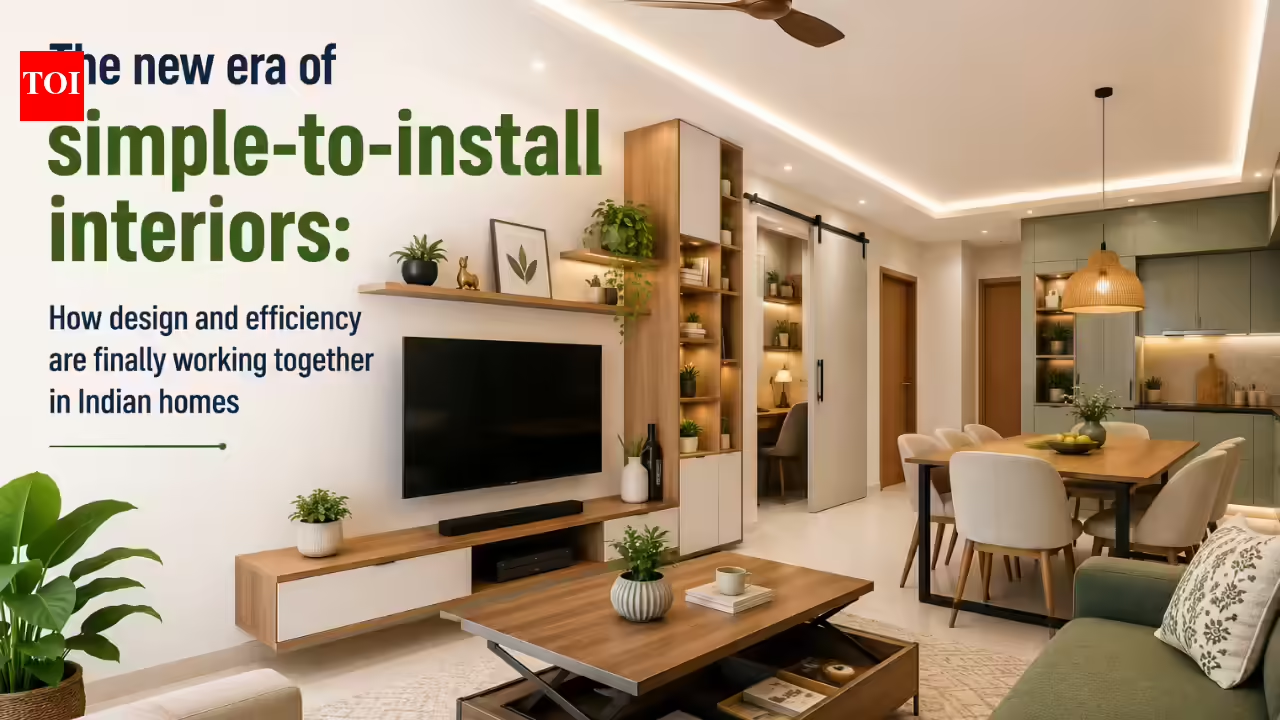
Interior design is going through a quiet change. For years, the assumption was simple: if you wanted a space to look genuinely considered, you had to accept the mess, the timelines, the specialists, and the cost that came with it. Beautiful interiors were complicated to build. “Interior design is going through a quiet change. Not in how spaces look, but in how they come together. The conversation in the industry has moved on from purely chasing aesthetics to asking a more practical question: can a space look this good and still be this straightforward to build? For a long time the answer was rarely yes. Beautiful interiors came with complicated processes, long timelines and a fair amount of on-site improvisation. That trade-off is starting to disappear,” Parth Parmar, Director, PARÉ Innovations told Times of India.
Finish quality and easy installation are no longer at odds
“The most meaningful development in the interiors industry right now is that high-quality finishes and straightforward installation have stopped working against each other. Realistic wooden ceiling systems that go up cleanly. Composite wall panels that need no additional treatment once fixed. Soffit systems that fit without specialist labour,” says Parmar. A surface that looks exactly as it was designed to look, without the process becoming a months-long project, is no longer the exception. And that shift is being felt across residential interiors, commercial fit-outs, and large-scale builds alike.The practical implications are significant. Shorter installation timelines mean fewer materials on site, less waste and less room for error. And when a finish doesn’t require layers of additional treatment to look the way it should, the entire process becomes leaner without the outcome suffering.
Versatile surface systems are changing the way spaces get designed
“A lot of unnecessary complexity on site comes from working across too many different materials at once. When one system can carry through walls, ceilings and exteriors with the same finish and consistency, the process becomes leaner without the outcome suffering. Engineered exterior grade wall panels bring that same quality to facades that interior surfaces bring to rooms, with the added benefit of being built to handle weather and time. That kind of versatility is changing how spaces get designed from the very beginning,” he says. That kind of versatility doesn’t just make installation easier. It changes how a space gets designed from day one.
Good design is no longer reserved for high-budget projects
There’s a version of this conversation that’s been happening in the industry for a while: curved panels, organic architectural shapes, seamless lamination in matching colours and finishes, these were details once associated almost exclusively with high-end, high-budget projects. The assumption was that if you didn’t have the budget for the full process, you didn’t get the full finish.That’s changing.Simpler execution means more spaces actually get the quality of finish they were originally designed for, rather than a compromised version of it. A residential project with a modest timeline can now have the same surface quality as a luxury fit-out. An office renovation doesn’t have to choose between looking intentional and staying on schedule.“Considered interiors are no longer reserved for the few,” the expert says.The interiors industry is arriving at a place where building well and building efficiently are the same thing. For homeowners that means more spaces getting built the way they were imagined. And for an industry that has long accepted complexity as the price of quality, that’s a shift that’s long overdue, says Parmar.