








Last Updated:
In California’s Death Valley, summer is not just uncomfortable. It shapes when people work, sleep, travel and even step outside their front door.




News18
Most people visit Death Valley for a few hours. They stop beside the famous temperature sign, take photographs of the dramatic desert landscape and then head back to cooler places.
A small number stay.
For the few hundred people who live and work in Death Valley year-round, extreme heat is not a tourist attraction. It is a fact of daily life. Residents plan their schedules around it, adapt their homes to it and learn to respect it. In a place often described as the hottest on Earth, surviving summer requires routine, preparation and a willingness to accept that the desert is always in charge.
Death Valley’s reputation is not accidental.
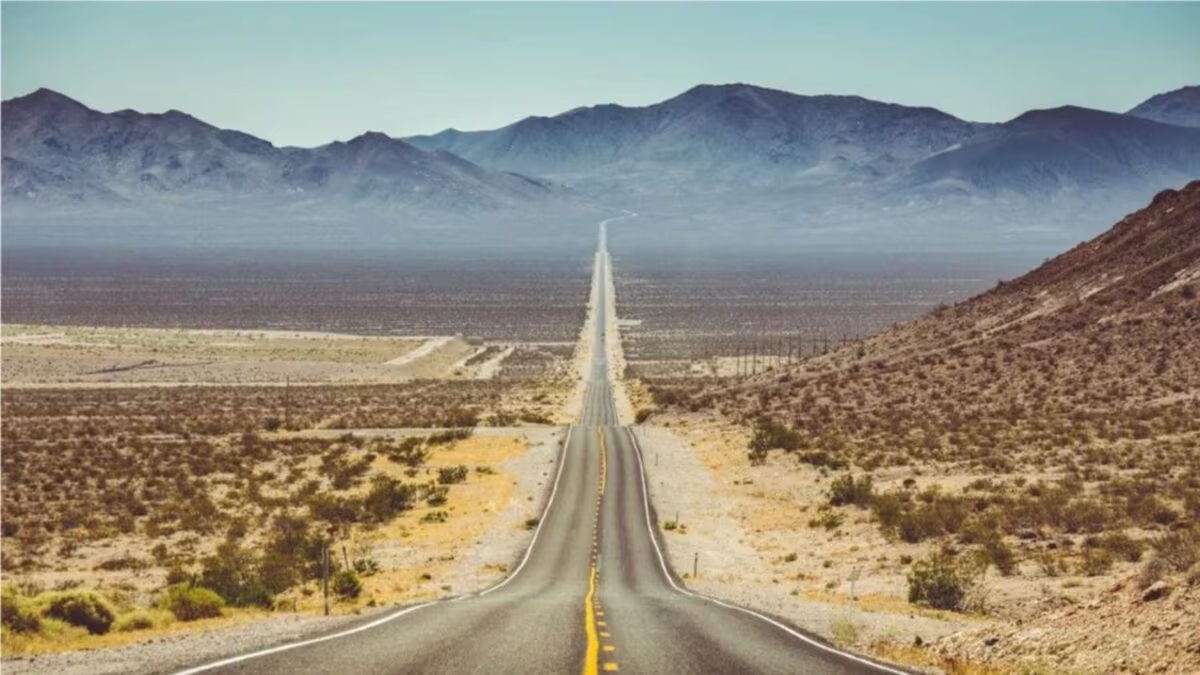
Located in eastern California near the Nevada border, the valley sits below sea level and is surrounded by high mountain ranges. The basin acts like a giant natural bowl, trapping hot air and preventing it from escaping easily.
The landscape itself adds to the heat. Sunlight reflects off dry rocks, sand and salt flats, while the lack of vegetation means there is little natural cooling. Rainfall is scarce and humidity remains extremely low throughout much of the year.
The result is a place that regularly experiences some of the highest temperatures recorded anywhere on Earth.
Death Valley is also home to Furnace Creek, where a temperature of 56.7 degrees Celsius (134 degrees Fahrenheit) was recorded in 1913, a reading that remains the highest officially recognised air temperature ever recorded.
Numbers alone do not fully explain the experience.
People who live in Death Valley often struggle to describe the sensation to outsiders.
Brandi Stewart, who has worked at Death Valley National Park, once compared stepping outside during summer to being hit in the face by several hairdryers at once. The air is so dry that sweat evaporates almost instantly, meaning people often do not feel perspiration on their skin even as their bodies work hard to cool themselves.
Others compare it to opening an oven door and feeling a blast of hot air. The difference, residents say, is that the heat does not disappear after a few seconds. It surrounds you constantly.
Even before sunrise, temperatures can remain above 38 degrees Celsius. By afternoon, metal surfaces become untouchable, vehicle interiors become dangerously hot and walking outside for extended periods can quickly become exhausting.
In many places, people organise their day around work, school or social activities.
In Death Valley, everything revolves around temperature.
Residents often run errands early in the morning or after sunset. Outdoor activities are carefully planned and many people avoid unnecessary trips during the hottest part of the day.
Homes are designed to keep heat out. Blackout curtains remain closed during daylight hours, air-conditioning systems run continuously and insulated buildings help maintain cooler indoor temperatures.
Water becomes a constant companion. Residents rarely leave home without it, and visitors are repeatedly reminded to carry more than they think they will need.
Power outages are taken seriously because indoor temperatures can rise rapidly when cooling systems stop working.
Despite the conditions, some jobs still require people to spend hours outside.
One example is Furnace Creek Golf Course, which sits below sea level and is often described as the lowest golf course in the world.
Workers there begin before sunrise to avoid the worst heat of the day. Maintenance crews mow grass, trim plants and repair damage caused by the harsh desert environment. Trees can become so dry that branches break unexpectedly.
Outdoor workers throughout the valley rely on early start times, frequent hydration and strict safety precautions. During summer, productivity is often determined not by the amount of work available but by how much heat the human body can safely tolerate.
Given the extreme temperatures, many people wonder why anyone would live there at all.
For residents, the answer often lies in what happens outside summer.
Winter in Death Valley is mild and pleasant compared with much of North America. Temperatures become comfortable, the desert landscape attracts visitors from around the world and outdoor activities become possible again.
Many residents also develop a deep connection to the unique environment. These spectacular mountains, expansive salt lakes, and amazing night skies form a unique environment like nowhere else on Earth.
To others, being isolated and living in a smaller population appeals to them.
Here one can understand how humans have adapted in nature where nature itself challenges its limits.
They know that only with proper planning can one survive, not with strength alone. They bring along plenty of water, keep an eye on weather patterns, don’t take unnecessary risks, and always respect nature.
Visitors arrive here in search of hot records and pictures worth capturing. But for the people who live there, Death Valley is simply home.
It just happens to be one of the hottest homes on Earth.
Read More