





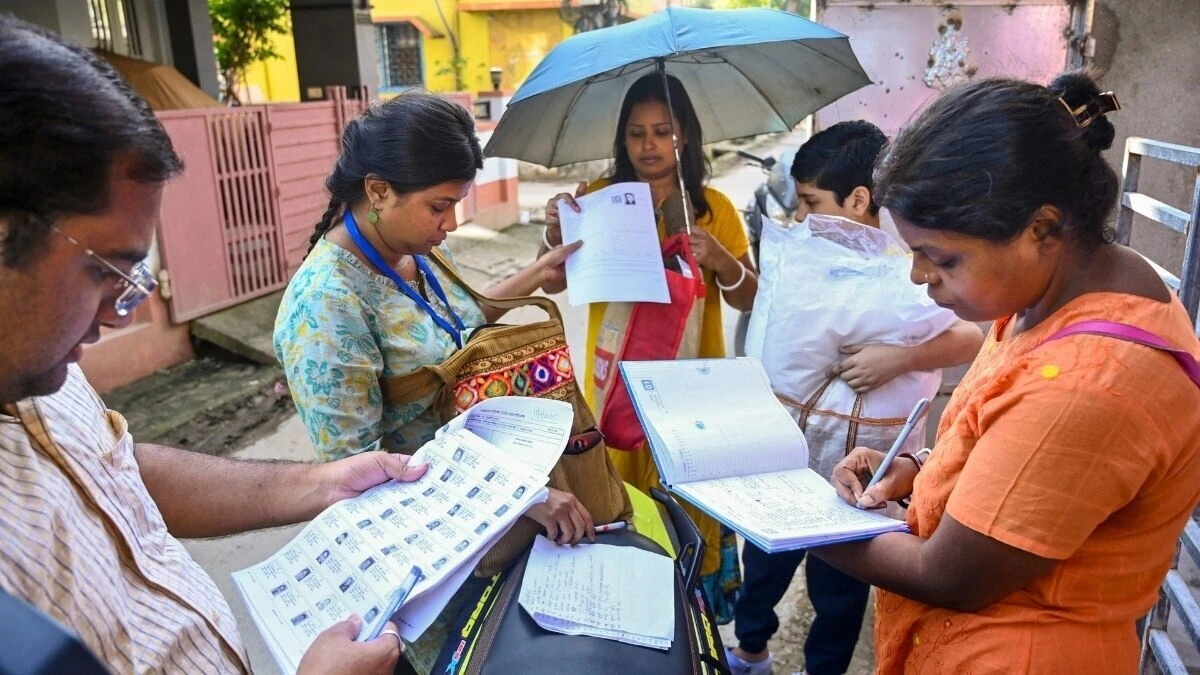
The Supreme Court, while upholding the Election Commission’s authority to conduct the Special Intensive Revision (SIR) of electoral rolls, held that the poll body had acted within its constitutional mandate and that the exercise incorporated adequate safeguards, procedural fairness, and mechanisms for claims and appeals for individuals whose names were deleted.
At the same time, however, the court made it clear that the SIR exercise is not a citizenship determination process.
It stressed that the Election Commission’s scrutiny is confined only to deciding whether a person is eligible to be included in the electoral rolls, and cannot be treated as a final adjudication of citizenship status.
The judgment, however, leaves a critical question for lakhs of deleted voters… What happens next?
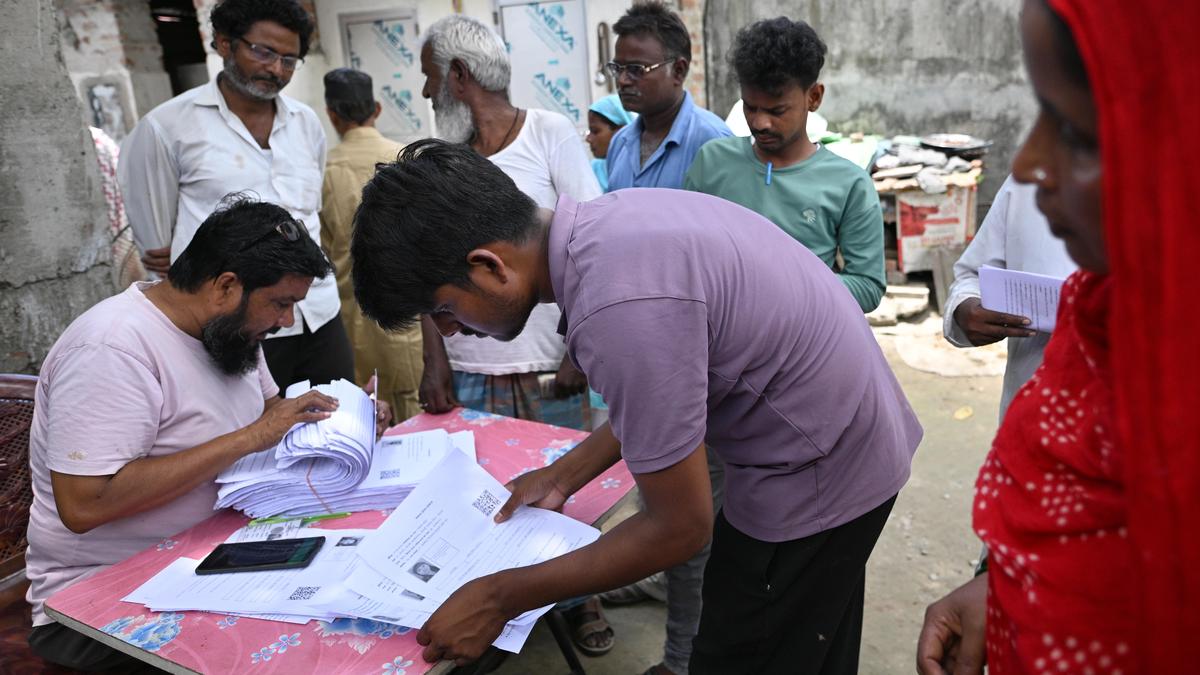
1. The SIR itself includes the process of claims and objection – the people who were deleted from the draft rolls have the chance to file a claim and submit documents to the ERO/DM before the final list was published.
Many such claims were processed in the states where SIR has been concluded.
For example, in West Bengal, the Supreme Court itself has created a special appeals mechanism and appointed retired High Court judges to hear over 34 lakh claims arising out of the electoral verification exercise.
Just hours before the state went to polls, a little over 1,600 names were restored to the voter list, while by May 14, around 4,043 appeals had been accepted by the tribunals, with the adjudication process still ongoing.
2. The Supreme Court has directed that the names that continue to be deleted on grounds of doubtful citizenship have to be referred to the competent authority by the ECI itself within four weeks.
WHO IS THE COMPETENT AUTHORITY?
Under Indian Law, the Ministry of Home Affairs (MHA) is the competent authority to determine citizenship.
Citizenship in India is by birth, descent or by naturalisation.
Birth: any person born in India on or after January 26, 1950, but before July 1, 1987, is automatically a citizen of India
Any person born after this date but before December 3, 2004 is automatically a citizen if they were born in India and either parent is a citizen of India at the time of his birth;
For individuals born after December 3, 2004, acquire citizenship by birth only if both parents are Indian citizens, or if one parent is an Indian citizen and the other is not an illegal migrant.
Descent: A person born outside India, but one of the parents is an Indian citizen at the time of birth can claim citizenship by descent.
Registration: Applicable to Persons of Indian Origin (PIO), individuals married to an Indian citizen, or Overseas Citizens of India (OCI) who meet specific residency requirements.
Naturalisation: Foreigners not classified as illegal migrants can apply if they have legally resided in India for 12 of the preceding 14 years and possess basic knowledge of an Indian language.
The MHA verifies citizenship by checking the date of birth, place of birth records of the person being verified, and their parent or spouse.
Which means that for any person who is now referred to the competent authority, they will have to prove their date and place of birth before the MHA appointed authority.
After 2004, the National Register of Indian Citizens (NRIC) framework came under the purview of the Registrar General of India, functioning under MHA, which maintains the national database of Indian citizens through records of births and deaths.
For persons born before 2004, documents such as birth certificates, family records, ration cards, village records and certificates issued by municipal authorities are treated as proof of citizenship by birth.
School leaving certificates: CBSE or state board certificates, which carry date of birth and parents’ names are also proof of date and place of birth.
Passport: Considered the “ultimate” proof of citizenship.
Meanwhile, in the case of “doubtful citizenship”, the MHA has the procedure under section 13 of the Citizenship Act where documentation and status can be verified, and a certificate is issued by an officer of the rank of an Undersecretary of the MHA, to certify that the person is a bona fide citizen of India.
The MHA certificate is then considered proof of citizenship.
PERSON’S CITIZENSHIP UNDER QUESTION?
Ordinarily, there has never been such an exercise in the country for mass verification of citizenship of persons who are not already alleged to be illegal immigrants.
Cases of suspected illegal immigrants are typically handled by the local police and the Foreigners Regional Registration Office (FRRO) which conducts the verification of the available documents.
One of the arguments raised by the petitioners in the SIR case was that the SIR exercise “seems to be a backdoor NRC”, which is an allegation that opposition parties had also raised in Parliament.
Now with the Supreme Court directing the ECI to refer the case of persons deleted from the voter lists to the MHA, questions will again be raised about what process will be followed to verify their documents.
For someone arrested as an “illegal immigrant”, the individual’s case is typically referred to a quasi-judicial Foreigners Tribunal. If one issues an opinion declaring them a “foreigner,” they lose their legal rights to remain in the country.
They also lose the right to access social security and various government benefit schemes, and may be arrested and detained while their actual country of origin is being verified.
At present, India has over 100 foreigners’ tribunals operating primarily out of Assam, where they were set up during the NRC process.
According to officially available data, 1,40,050 cases were pending before such tribunals till December 2020.
NGOs have informed the Supreme Court that as of 2025, over 85,000 cases still remain pending.
A person who has been declared a foreigner by the police can also appeal before a High Court to challenge the order.
WHAT HAPPENS NEXT?
Now as lakhs of persons have been deleted from the electoral rolls by the ECI, the focus now shifts to how the MHA will conduct the verification of the documents of these deleted persons and what steps would be taken for those who are rejected as “Citizens” by the Competent authority”.
– Ends