





Last Updated:
The new chief minister’s challenge will be to ensure that the Congress does not slowly appear overshadowed within its own alliance




For Satheesan, the larger issue seems more about power management inside the government.

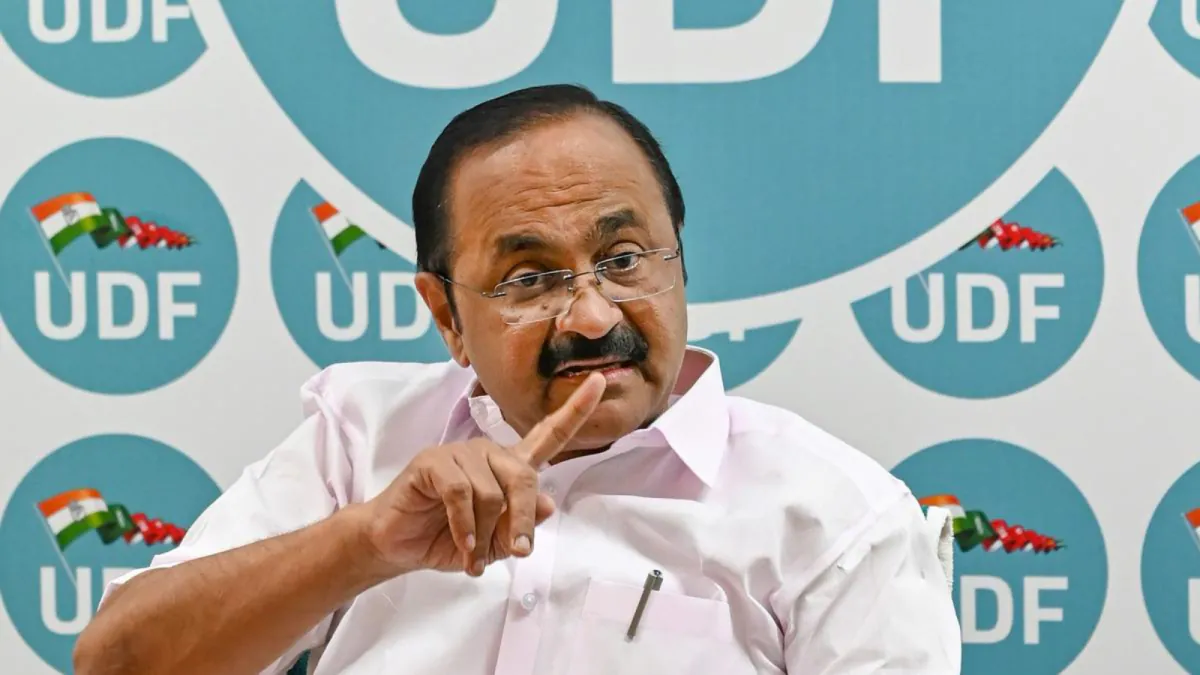
For all the celebration surrounding VD Satheesan’s elevation as Keralam’s new chief minister, the real challenge before him may not come from the LDF or the Opposition bench, but may emerge from within his own coalition.
The Congress leader has managed to cross the first political hurdle by securing the top post after intense internal lobbying and factional pressure. But now comes the far more delicate task of keeping the Indian Union Muslim League (IUML) within limits while ensuring the Congress does not appear politically dependent on it.
The political and power circles in Keralam are now abuzz with discussions that Satheesan became the leadership choice with the strong backing of the Muslim League, which anchored the UDF alliance in the state. Even though the chief minister took oath on Monday, the IUML leaders have already announced that the party would retain the same significant departments as last time. The portfolios include industry and IT, education, minority affairs and local body development.
ALSO READ | In Rahul Gandhi’s Congratulatory Post For Satheesan, A Mention For Venugopal: ‘Led Campaign…’
Now, the issue is not merely about coalition arithmetic. It is primarily about perception, power balance and the changing political mood of the state. The IUML has once again secured five cabinet berths in the new UDF government, exactly the number it enjoyed during the Oommen Chandy government in 2011. That announcement itself underlines the League’s continued bargaining strength within the coalition. Despite being an ally, the party negotiates from a position of remarkable confidence because it knows the Congress cannot afford to alienate it electorally.
“Even in 2011, they held five ministries. The number was never the issue. The real concern is the subjects and departments they control: industry, local self-government, minority affairs, and education, the very departments through which nearly 55-60 per cent of state revenue flows. With SC/ST communities at 10 per cent, Muslims at 28 per cent, and reservation politics increasingly consolidated around single dominant castes, the debate is not about representation alone, but about who controls the core levers of power and resources,” said Shone George, vice-president of BJP’s Keralam unit.
Balancing Act
Satheesan understands this reality perhaps better than anyone else in the Congress. And it reflected in his speech when he said that Muslim League is one of the major secular forces in the state. Flanked by the Muslim League leaders, he said, “I invite those who seek to portray the IUML as anti-secular to contemplate the fundamentalist forces that would have come to the fore if not for the League leadership.”
Even though the chief minister is trying to balance the power equation, the problem before him is larger now than ever before. It is because Keralam’s political discourse is no longer what it was a decade ago. Questions around representation, identity politics and ideological consistency are sharper than they were in the past. Every alliance is now being examined more aggressively, while every political compromise is scrutinised in the public space.
ALSO READ | Man Of Cadre, Face Of Campaign: 5 Factors That Tilted Congress’ Kerala Decision In Satheesan’s Favour
And that is where the Congress probably finds itself facing an uncomfortable contradiction.
The Secularism Debate
The Congress ecosystem repeatedly projects the IUML as a secular party and rejects any criticism as communal targeting. This is despite the fact that one of its MLAs and senior leaders KM Shaji openly invoked religion in his speeches, raising serious concerns about the direction of state politics.
“When key ministers appear to function under ideological pressure from groups such as Jamaat-e-Islami and the Indian Union Muslim League, questions naturally arise about who is truly influencing governance. The worry today is not merely electoral arithmetic but the growing influence of radical elements and identity-based power structures over mainstream political leadership in the state. The chief minister is not representing Congress, he is representing Jamaat. And he is completely controlled by the Jamaat and Muslim League,” added George.
Satheesan has, however, strongly defended the League in the past and positioned it as an inseparable pillar of the UDF alliance. But, one political fact continues to stand out.
“Despite decades of participation in coalition governments and despite repeatedly receiving powerful ministerial portfolios, the IUML has never given a ministerial position in Kerala to a non-Muslim representative from its quota. In fact, leaders like Shaji have openly said that religion is the main problem,” said a senior CPM leader, who does not want to be named.
“The leaders have also publicly stated that Congress must come to power for the sake of Muslims. Our leaders, including Pinarayi Vijayan, said the Muslim League must decide if they are a political party or a religious organisation,” he added.
That reality is increasingly becoming politically difficult for the Congress to defend publicly. BJP and LDF leaders argue that a party claiming secular credentials cannot continue functioning entirely through community-specific political representation while simultaneously demanding immunity from ideological criticism.
ALSO READ | Six Trials For Satheesan: Why New Kerala CM’s Path To Governance Is Full Of Thorns
The Congress may still insist that the IUML represents minority aspirations and therefore naturally promotes Muslim leadership. But the counter-question now being raised in Kerala’s political circles is equally direct. It is about inclusivity. This debate is unlikely to fade soon because the BJP has already identified it as a political pressure point in Kerala.
Greater Leverage
For Satheesan, however, the larger issue is not ideological optics alone. It seems more about power management inside the government.
The IUML today remains one of the most organised political forces within the UDF. Its influence stretches far beyond cabinet numbers. The party has a strong electoral base across districts and a deeply networked organisational structure with enormous influence across northern Kerala, particularly in Malappuram and adjoining regions.
During the chief ministerial discussions too, the League’s backing for Satheesan played a significant role in strengthening his position within the Congress. That strong support naturally comes with expectations.
Now, as the new government takes shape, Satheesan’s challenge will be to ensure that the Congress does not slowly appear overshadowed within its own alliance. He will also need to prevent internal Congress resentment from growing over perceptions of unequal political weight.
Thiruvankulam, India, India
Read More