






Introduction
In keeping with its usual historic timeframe, Samsung just unveiled its latest crop of foldable smartphones. These include the Galaxy Z Fold8 Ultra, which, confusingly-enough is directly succeeding the Z Fold7, the Z Fold8 – which is now the name for Samsung’s entirely new foldable form factor and last and probably least – the Z Flip8. The Korean giant also refreshed its wearable lineup.
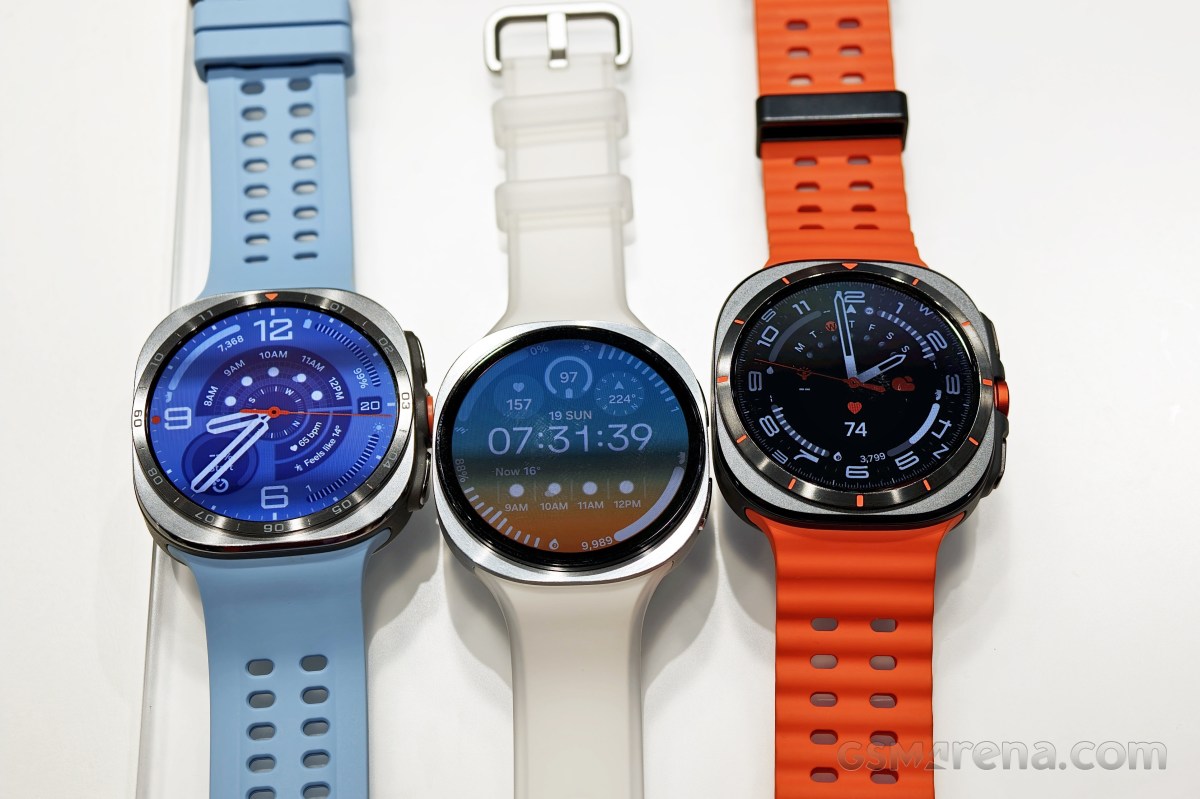
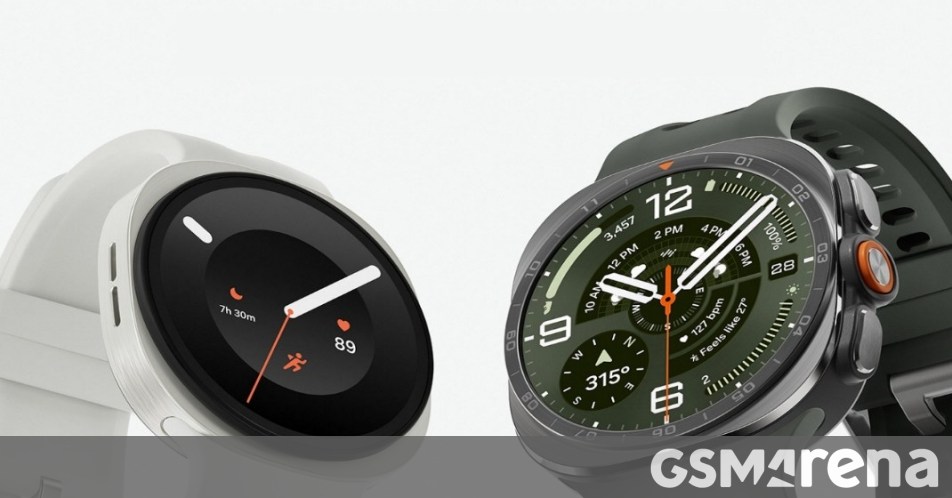
Naming and general model designations are a lot simpler here. You have a brand new Galaxy Watch Ultra2 only available in a single 47mm size, and then you have the new Galaxy Watch9, which can be had in either 40mm or 44mm size. There is still no word of a Galaxy Watch9 Classic. It could still come at a later date, though; that wouldn’t really be typical of Samsung and their watch announcements, so make of that what you will.
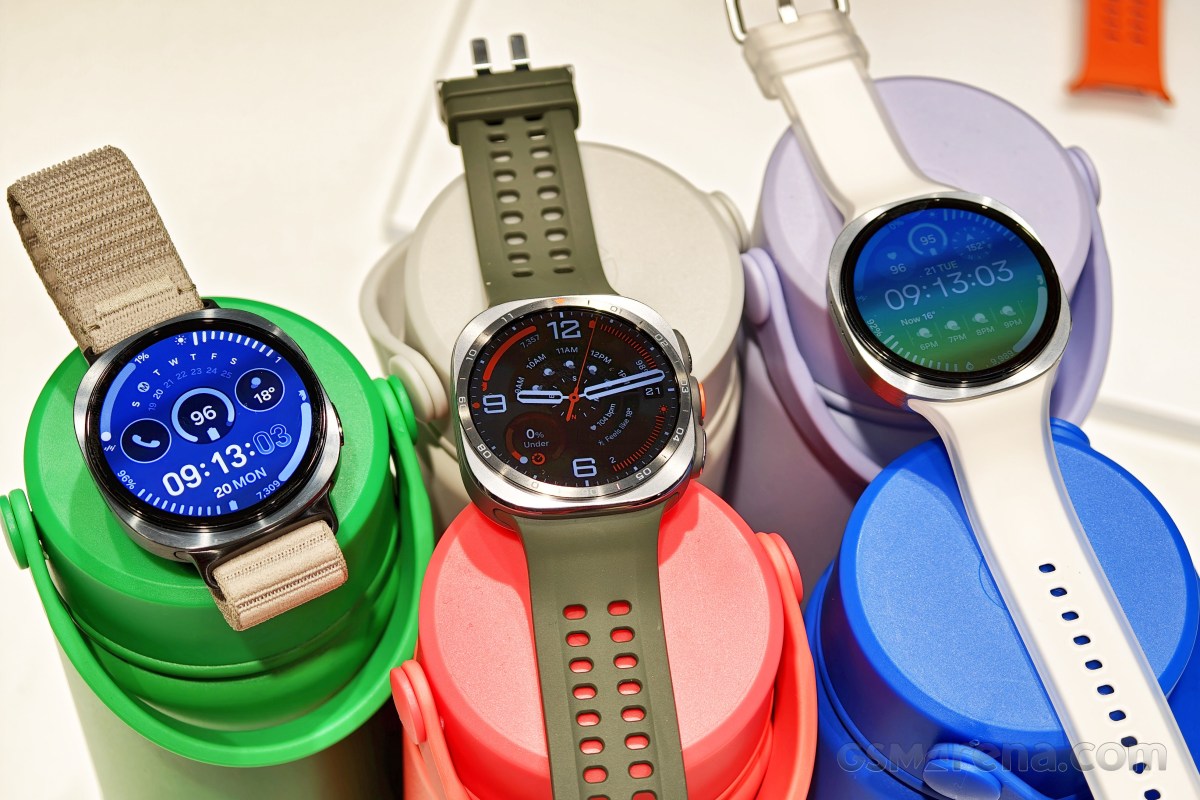
On the surface, not a lot has changed with this year’s models. Certainly not the overall styling. Samsung is persisting with its frankly odd body shape choices for both models. We get it – being unique and standing out are important, but the designs are still highly polarizing.
Instead of appearances, it seems this year Samsung is focusing more on internals. Both watch models come with some interesting changes on the inside, which we will go through.
Samsung Galaxy Watch Ultra2 hands-on review
Let’s start with the Ultra and work our way down, or rather “sideways”, since the Ultra and vanilla models aren’t exactly competing for the same crowd in our mind. The Ultra is a very different beat, both figuratively and literally. With a 47mm dial and measuring 47.4 x 47.1 x 10.7mm, it is nothing short of a huge watch. Even for someone with relatively big hands, it’s kind of a lot.
Samsung Galaxy Watch Ultra2 specs at a glance:
- Body: 47.4×47.1×10.7mm, 62g; Sapphire crystal front, ceramic/sapphire crystal back, titanium frame (grade 4); IP68/IP69K dust tight and water resistant (immersible up to 100m/10ATM for 10 min), MIL-STD-810H compliant, ECG certified, 40m swimproof/diving (EN13319).
- Display: 1.52″ Super AMOLED, 5000 nits (peak), 498x498px resolution, 9:9 aspect ratio, 327ppi.
- Chipset: Snapdragon SW6100 Wear Elite (3 nm).
- Memory: 64GB 2GB RAM.
- OS/Software: Android Wear OS 7, One UI Watch 9.
- Rear camera: No.
- Front camera: No.
- Video capture: Rear camera: No.
- Battery: 800mAh; 10W wireless.
- Connectivity: LTE; eSIM; Wi-Fi 5; BT 6.0; NFC.
- Misc: Accelerometer, gyro, heart rate, barometer, altimeter, compass, SpO2, temperature (body), temperature (water), BioActive.
And mind you, the Ultra2 has gotten a bit slimmer compared to its predecessor. It’s not a colossal shrink-down – merely 1.4mm, but when it comes to watches it does count. Not to say that now the Watch Ultra2 magically sits flush with your wrist or anything like that, but it does matter. Samsung says that through “advanced internal re-engineering”, it managed to reduce the overall thickness by 12%. Apparently, the new Ultra2 watch bands are now softer and lighter, which makes for a more comfortable wearing experience overall.
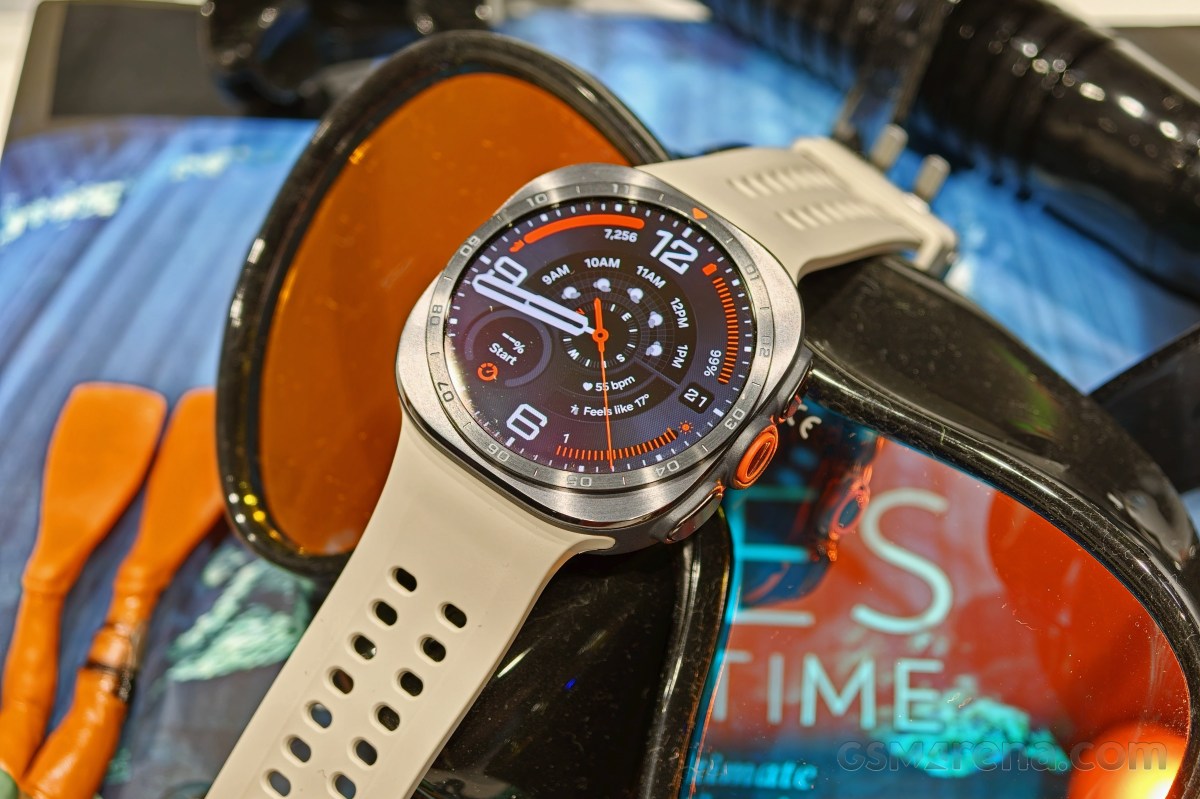
Since the Ultra2 is actually a gram heavier than the original model, Samsung apparently felt like they had to make up the weight difference as best they could elsewhere. Being perfectly honest, slimmer or not, we still find the Watch Ultra2 unwieldy. We get that it is meant for rough conditions and not exactly everyday wear, so we can’t be too harsh on it.
Speaking of rough conditions, the Ultra2 has gotten even tougher. Well, at least on paper, we aren’t sure how much of a practical difference it makes since the original Ultra was also swim-ready with its IP68 ingress protection rating.
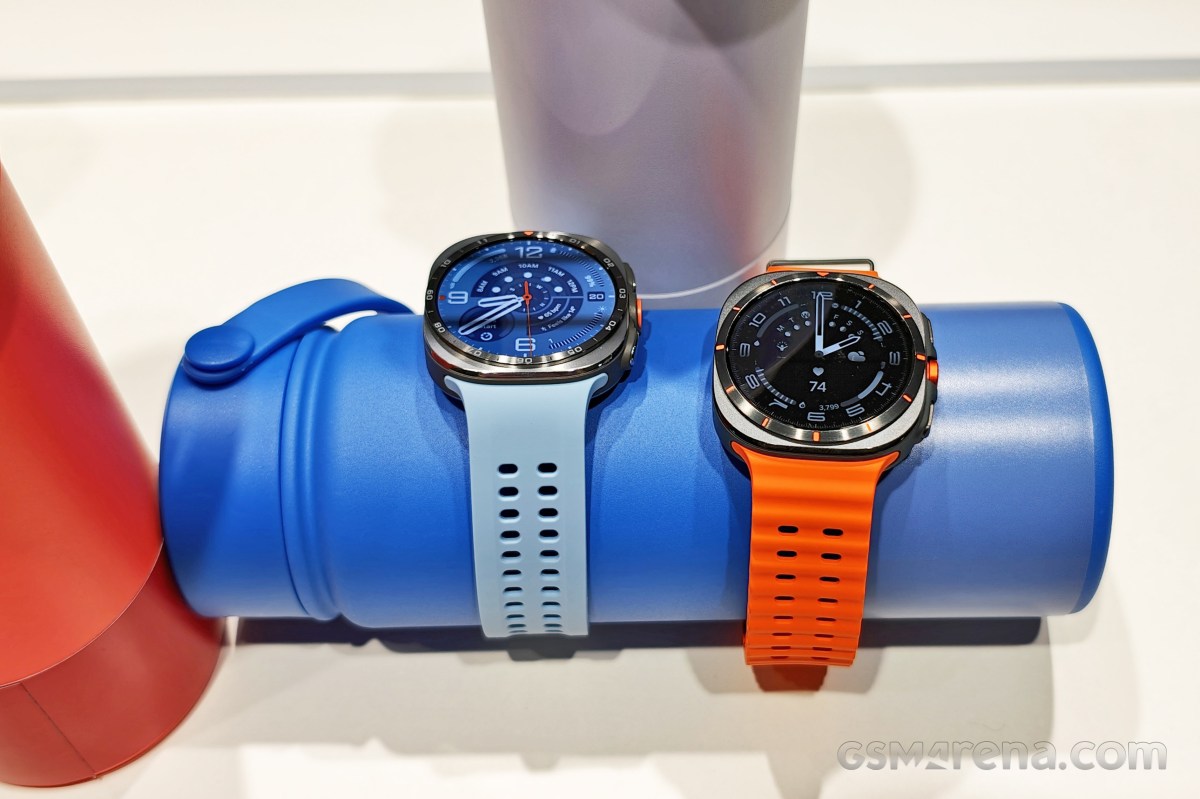
Left: Galaxy Watch Ultra2 • Right: Galaxy Watch Ultra
The Watch Ultra2 has the technically better IP68/IP69K rating. Though that still allows it to go to the same 100m or 10ATM depth for 10 minutes. The potentially more important new addition is the EN13319 certification, which roughly translates to 40m swimproof/diving capabilities. Samsung points out that the Watch Ultra2 has been developed together with Mares – a world-leading diving equipment brand. To give it even more credibility as a diving accessory, the Ultra2 automatically starts tracking stats like depth, time and water temperature. Later this year, users can also expect an exclusive Ultra2 Diving app that promises even more advanced features like ascent/descent speed tracking and safe dive limits. Impressive stuff, though we doubt that anybody will actually swap out a proper diving computer for the Ultra2.
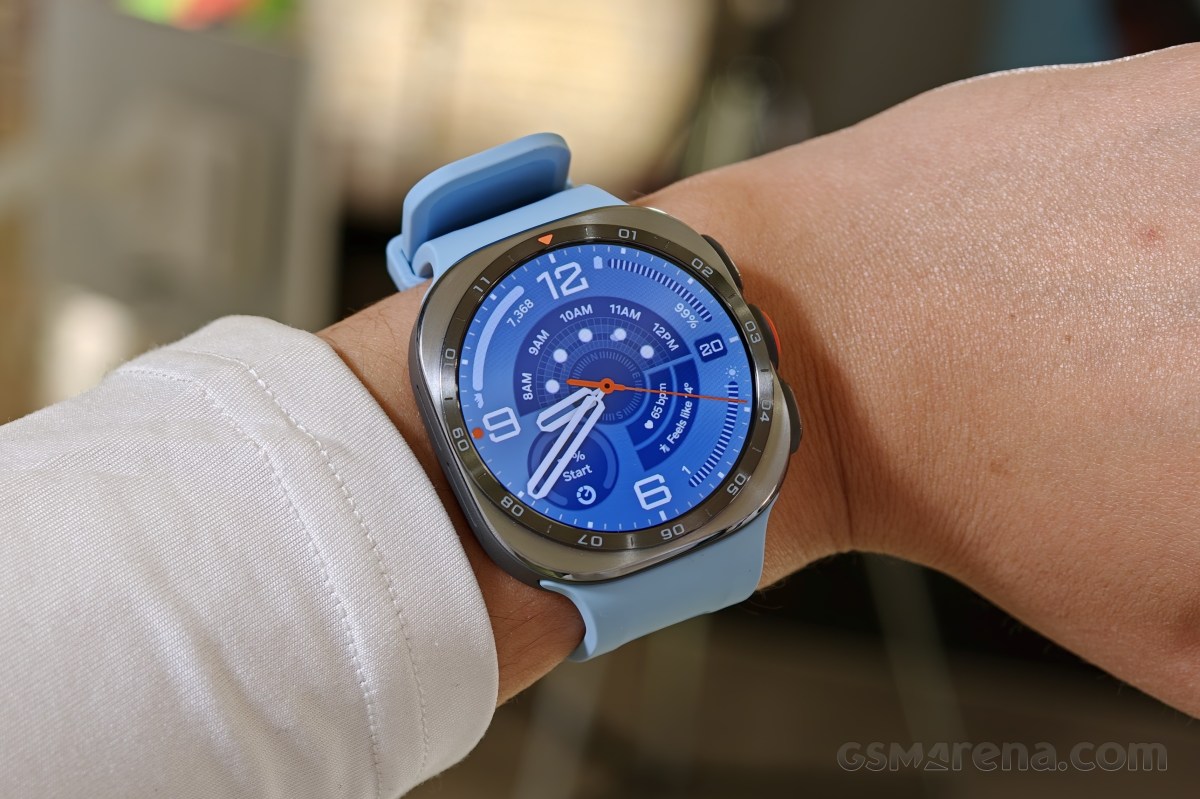
Not a lot else seems to have changed about the rest of the build. Well, Samsung has added etched numbers to the front bezel. Then again, that’s hardly criticism, considering the original Ultra already delivered pretty much the most premium bill of materials. You get a grade 4 titanium frame, a ceramic/sapphire crystal back and a Sapphire crystal front. Unless you really go out of your way to bump into diamonds or obsidian, the Ultra2, which inherits the same build, should be perfectly fine.
But thankfully, seeing how diving is a pretty niche activity, there are other interesting improvements to go around. In no particular order, while we were hard-pressed to actually spot any external differences in the Ultra2 compared to the original model, looking at the specs sheet, we did notice that the display has grown ever so slightly from 1.5 inches to 1.52 inches. That brings along a slight bump in resolution, but only basically enough to make up for the larger display size. The pixel density remains the same at a perfectly sharp 372 ppi, or so.
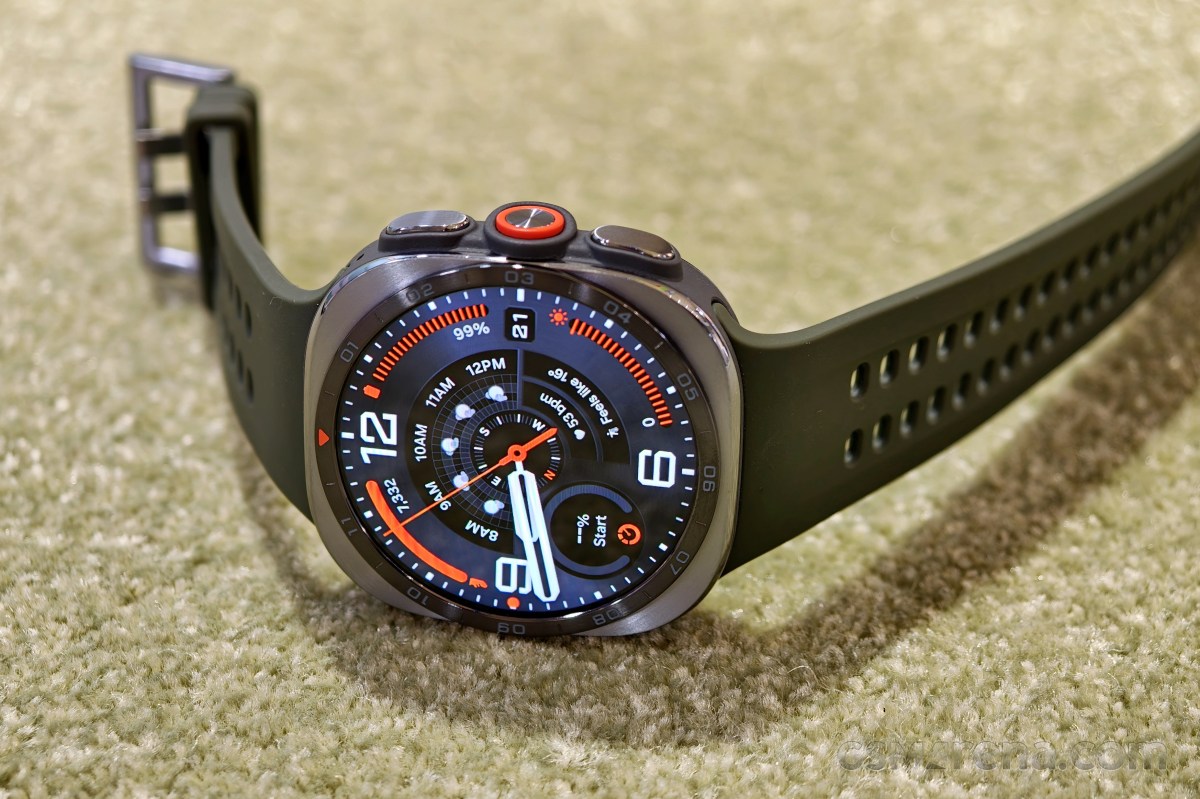
Samsung does boast that the display peak brightness has apparently gotten a lot better. While we don’t have an official figure formally marked down for the og Ultra, most sources claim it can go up to 3,000 nits, while the Ultra2 can do a whopping 5,000 nits. That is quite the improvement and one that might actually come in handy. If there ever was a device meant to be visible under the harshest of lighting conditions, it has to be a wearable.
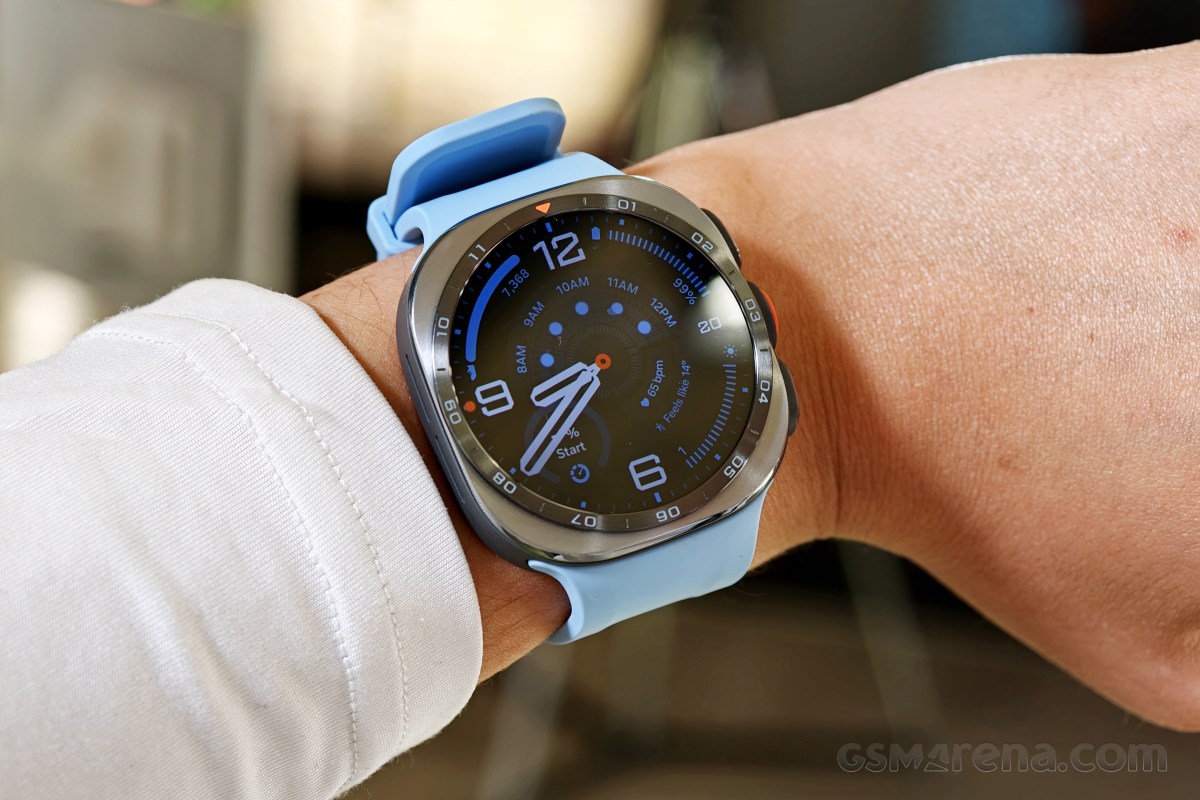
Despite being notably slimmer and only like 1 gram heavier, the Ultra2 comes with a serious battery upgrade: 800 mAh, up from 590 mAh in the original model. That is potentially massive for usability, particularly in intense tracking scenarios, where you might be hitting multiple things at once, like the screen and GPS.
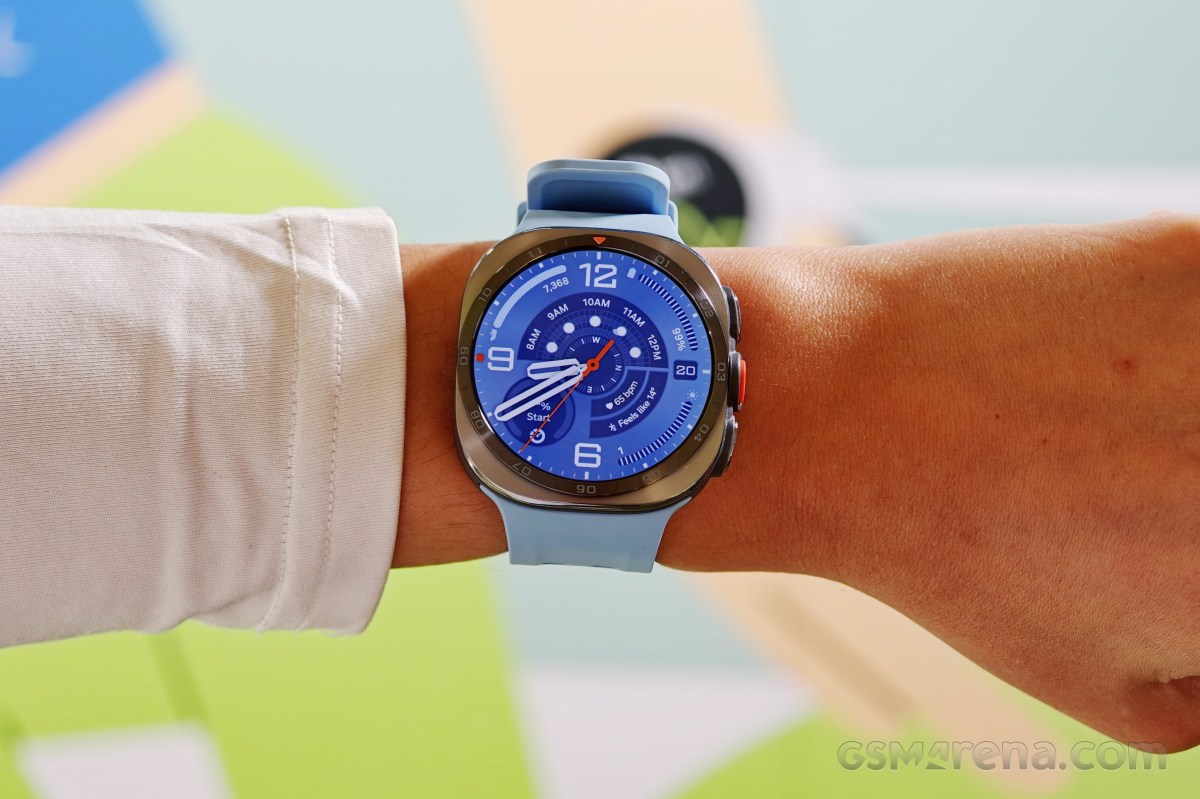
Samsung seems to have basically gutted the insides through and through because the chipset has been changed as well. Instead of an in-house Exynos W1000, the Watch Ultra2 uses a Snapdragon SW6100 Wear Elite. Both are penta-core chips, made on a 3nm node and meant to be extremely power-efficient, so we don’t necessarily know what the implications of the swap are. Samsung highlights “a massive boost in speed and efficiency for lag-free, seamless health monitoring”, which sounds like PR-talk more than anything else. We highly doubt that the old chipset was having trouble keeping up with sensor input.
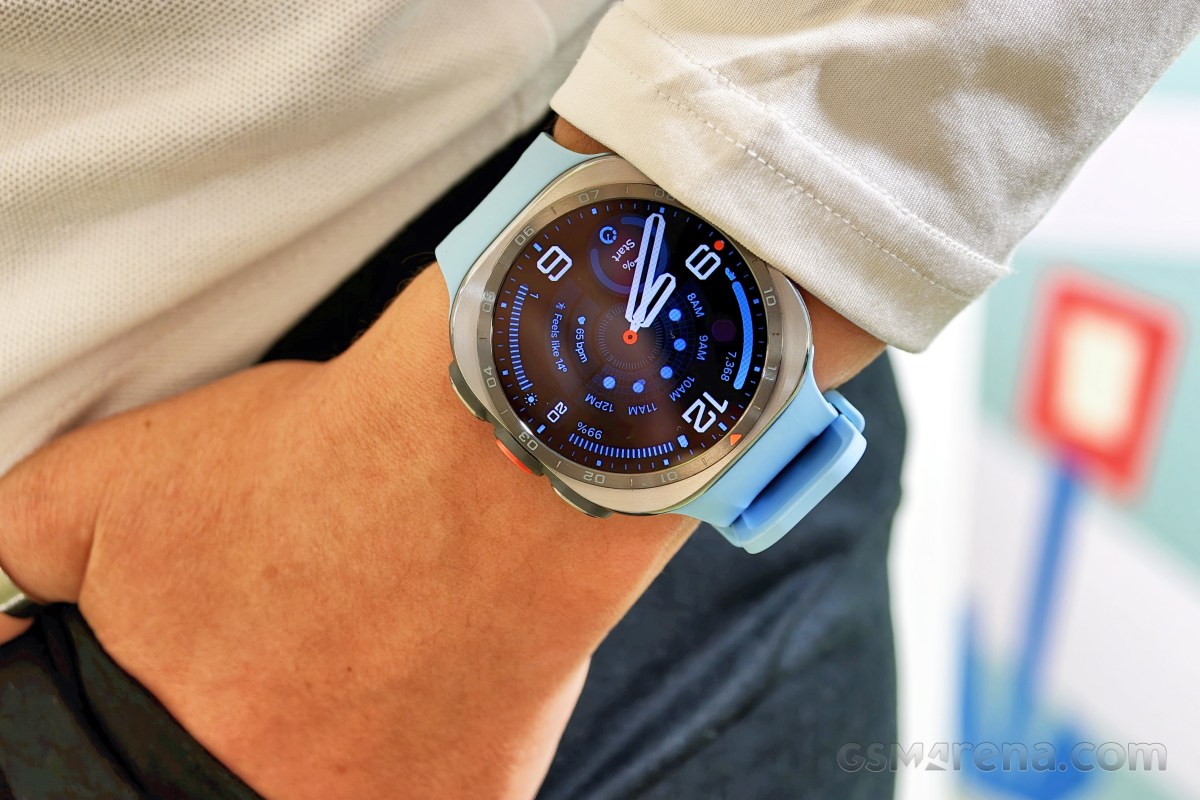
Speaking of sensors, these, at least on the surface, appear to be unchanged and include: Samsung BioActive Sensor (Optical Bio-signal Sensor + Electrical Heart Signal + Bioelectrical Impedance Analysis), Temperature Sensor, Accelerometer, Barometer, Gyro Sensor, Geomagnetic Sensor, Light Sensor.
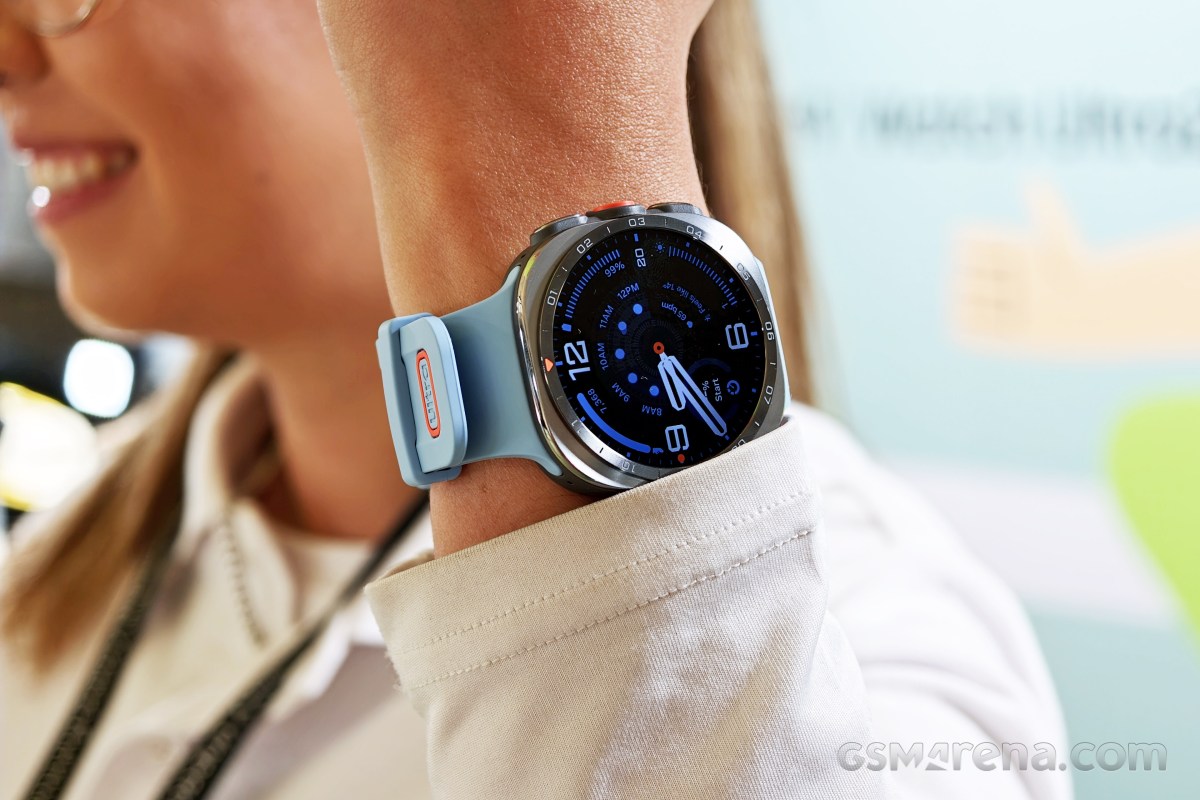
Broader connectivity also includes GPS (L1+L5), GLONASS, GALILEO, BDS support for positioning, NFC and technically better dual-band Wi-Fi ac and Bluetooth 6.0. So, you can expect some smaller quality-of-life upgrades from these changes. Though the mere fact that the Ultra2 ships with Android Wear OS 7 and One UI Watch 9 will probably be more impactful than these small hardware tweaks. Oh, and purely for the sake of thoroughness, while the original Watch Ultra technically exists in a 32GB variant and a 64GB variant, both with 2GB of RAM, the Ultra2 is only offered with 64GB of internal storage.
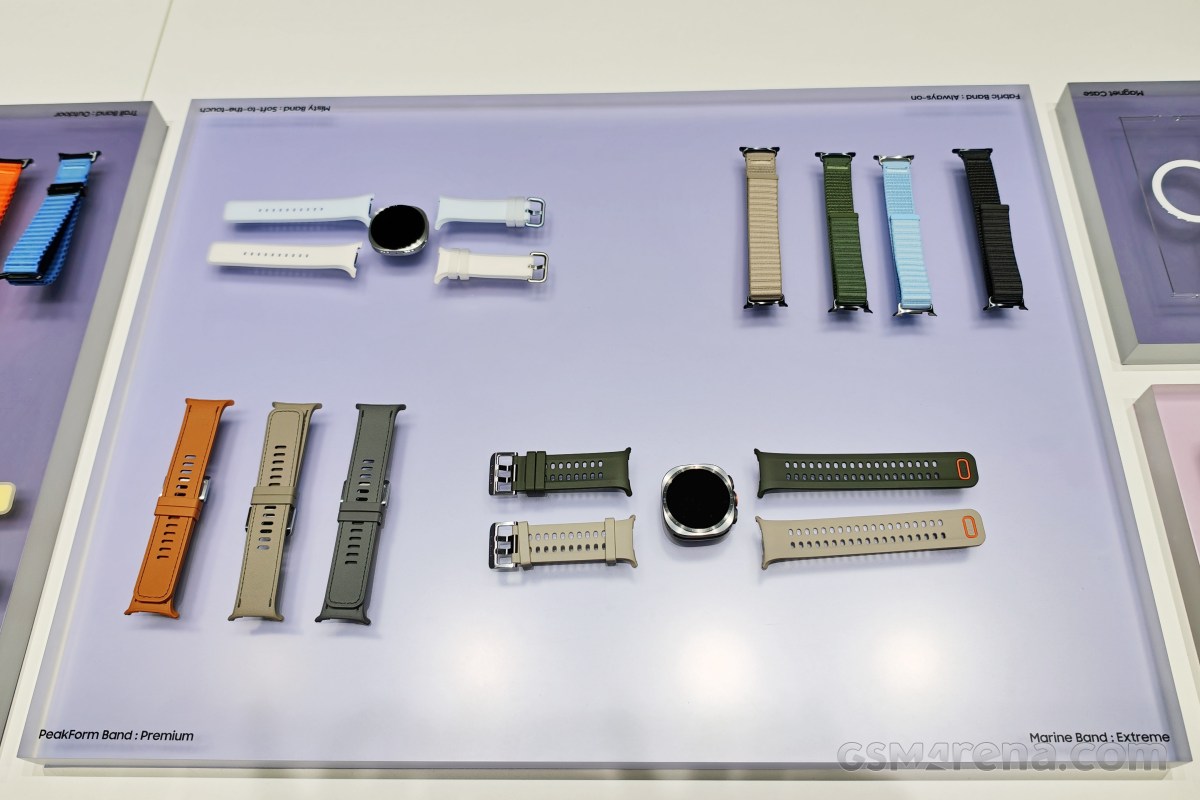
Color options for the Ultra2 include Titanium Silver and Titanium Gray. Not really much variety, but you can spice things up with different bands. There is the Marine Band – a light and breathable silicone band meant for all-day carry, PeakForm Band – a hybrid material band aiming for both comfort and elegance and Trail Band – a classic fabric band for superior comfort.
Samsung Galaxy Watch9 hands-on review
As already mentioned, Samsung is insisting on preserving the peculiar body shapes of its wearables. This results in some frankly hilarious descriptions in press releases. The Ultra2 is frequently called a “squircle”, while the regular Watch9 apparently has a “signature cushion silhouette”.
Samsung Galaxy Watch9 specs at a glance:
- Body: 42.7×40.4×8.6mm, 31.5g / 46.0×43.7×8.6mm, 34g; Glass front (Sapphire crystal), aluminum frame; MIL-STD-810H compliant, IP68 dust tight and water resistant (immersible up to 50m/5ATM), ECG certified, Blood pressure monitor, Armor aluminum 2 frame.
- Display: 1.34″ / 1.47″ Super AMOLED, 3000 nits (peak), 438x438px / 480x480px resolution, 9:9 aspect ratio, 327ppi.
- Chipset: Snapdragon SW6100 Wear Elite (3 nm).
- Memory: 32GB 2GB RAM.
- OS/Software: Android Wear OS 7, One UI Watch 9.
- Rear camera: No.
- Front camera: No.
- Video capture: Rear camera: No.
- Battery: 390mAh / 445mAh; 10W wireless.
- Connectivity: LTE; eSIM; Wi-Fi 5; BT 6.0; NFC.
- Misc: Accelerometer, gyro, heart rate, barometer, altimeter, compass, SpO2, temperature (skin), BioActive, antioxidant index.
The Watch9 has seen fewer changes than the Ultra2. There is no real chassis redesign for this one. The Watch9 is still offered in two sizes: 40mm and 44mm. Their measurements are 42.7 x 40.4x 8.6mm (31.5g) and 46.0 x 43.7x 8.6mm (34.0g), respectively, so basically no change since the Watch8. The build consists of a familiar aluminum chassis and a Sapphire crystal for the front. Just like last year, the Watch9 gets IP68 certification, making it immersible up to 50m/5ATM.
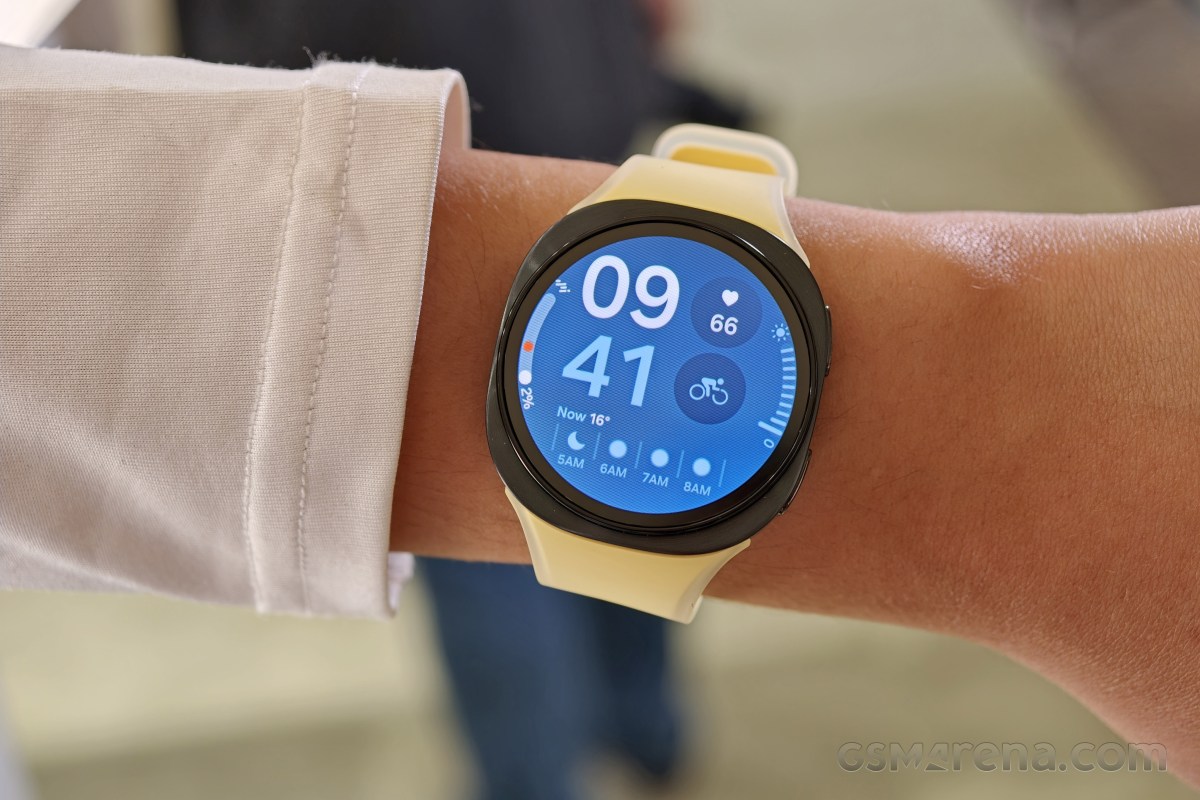
Sadly, there is no battery capacity increase like on the Ultra2, only an ever-so-slight bump: 390mAh on the 40mm one and 390mAh on the 44mm model.
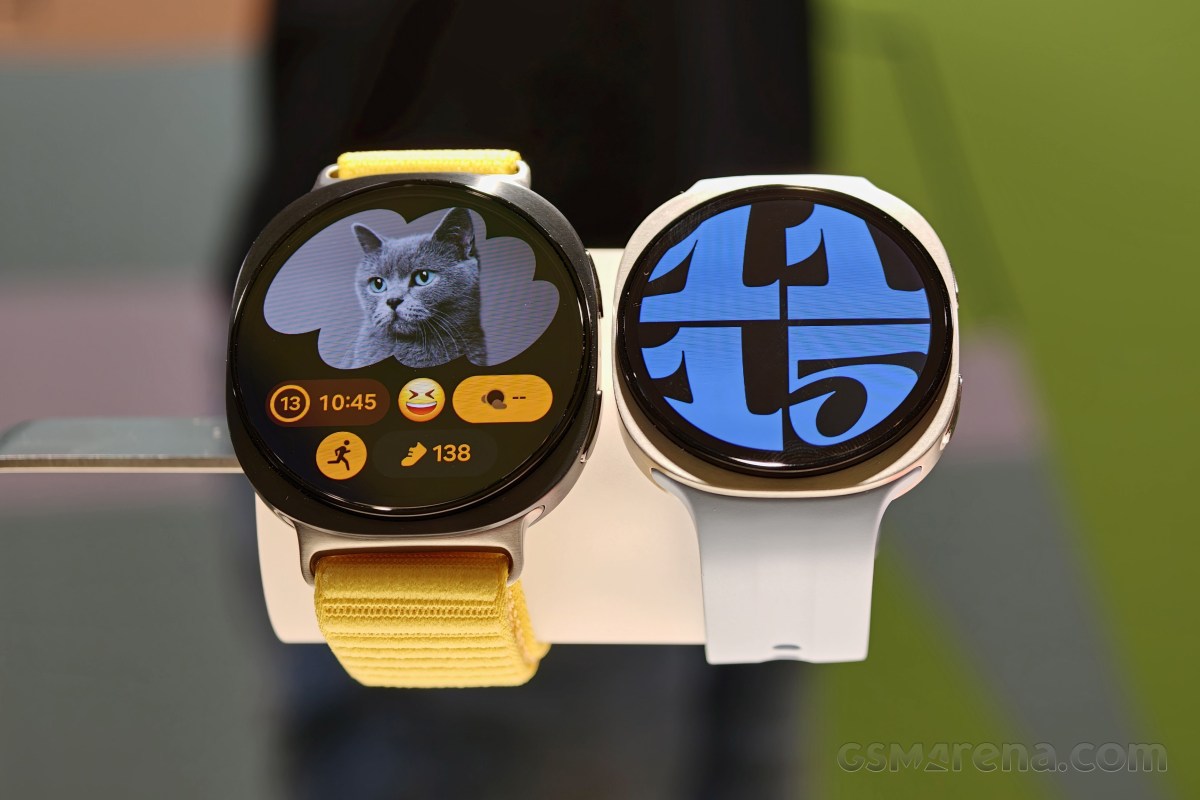
Left: Samsung Galaxy Watch9 44mm • Right: Samsung Galaxy Watch9 40mm
Unfortunately, the vanilla Watch9 doesn’t get a brightness boost either. Still, the 1.47-inch (480×480) and 1.34-inch (438×438) panels remain rated at around 3,000 nits, which is very respectable. Like the Ultra2, these also have Full Color Always On Display support.
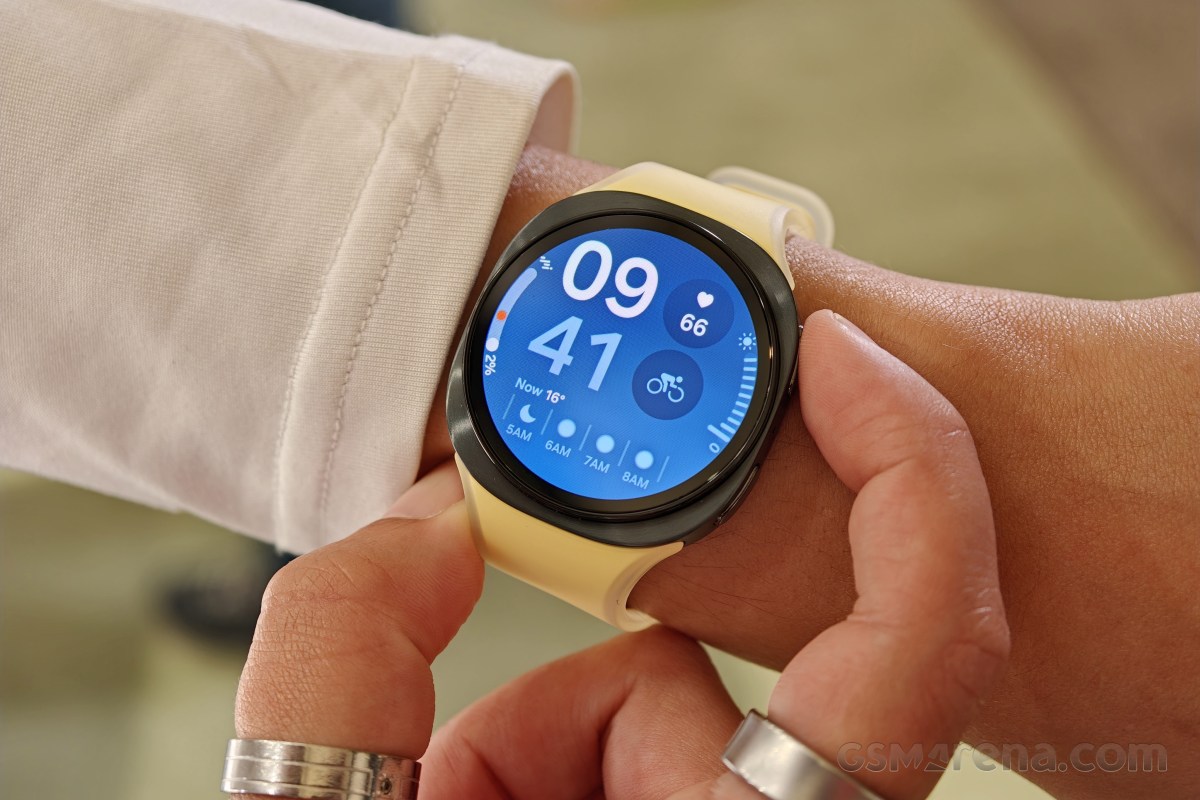
Samsung did still change one thing – the chipset. The in-house Exynos W1000 has been swapped for a Snapdragon SW6100 Wear Elite. Again, just like with the Ultra2, we aren’t sure exactly what effect that will have on usability and battery life. We’ll just have to wait and see.
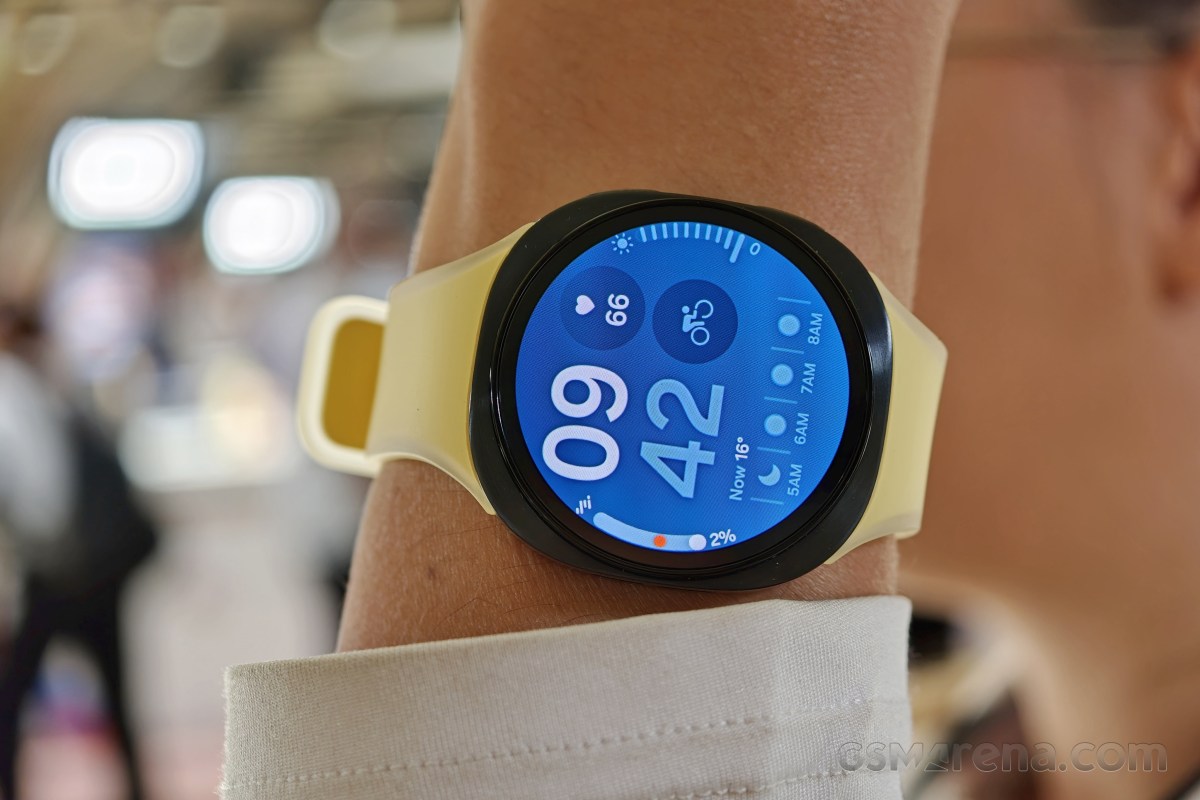
And just like on the Ultra2, the new chipset here does bring along some small connectivity improvements like dual-band Wi-Fi ac and Bluetooth 6.0. Other than that, the Watch9 still gets NFC and GPS (L1+L5), GLONASS, GALILEO, BDS for positioning. The sensor list appears unchanged and includes: Samsung BioActive Sensor (Optical Bio-signal Sensor + Electrical Heart Signal + Bioelectrical Impedance Analysis), Temperature Sensor, Accelerometer, Barometer, Gyro Sensor, Geomagnetic Sensor, Light Sensor.
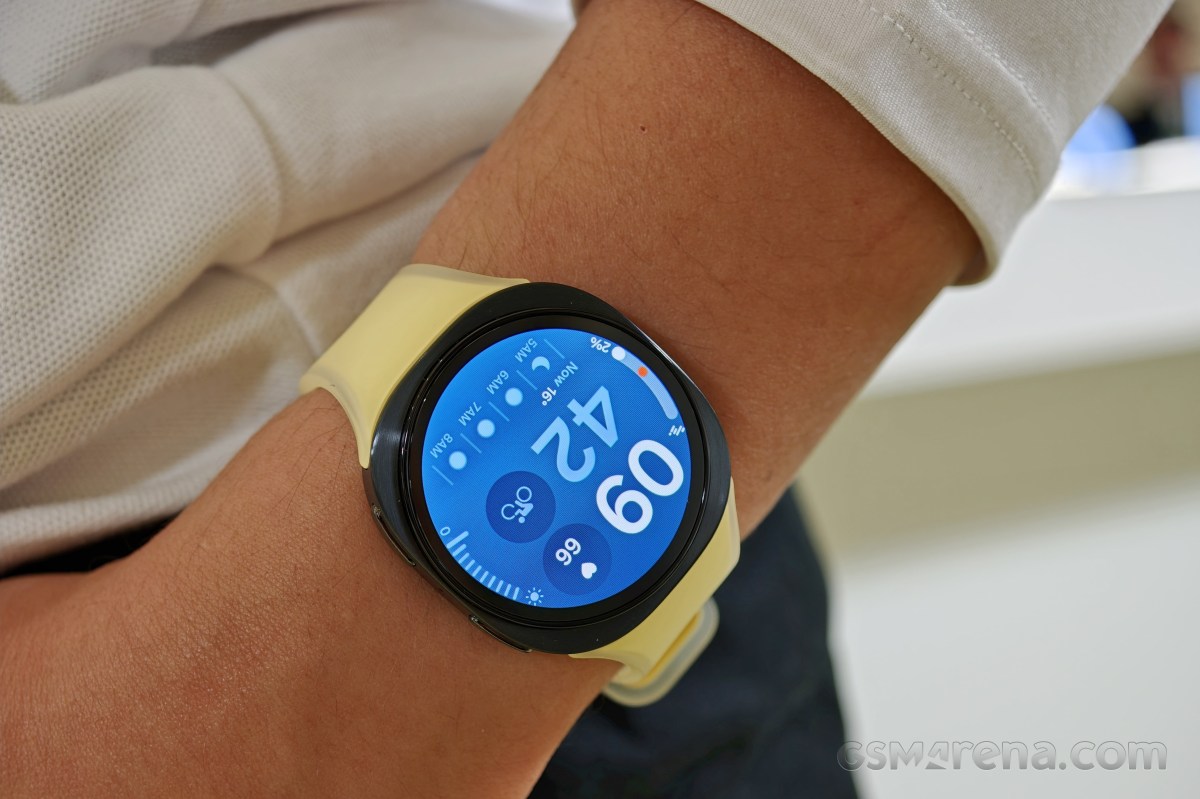
The Watch9 has a bit more variety when it comes to colors. The 40mm version is available in Cream and Graphite, while the 44mm one can be grabbed in Graphite and Silver.
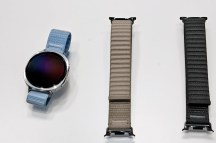
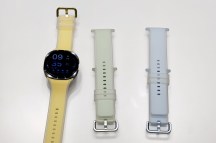
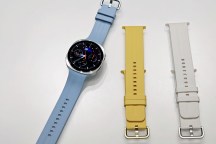
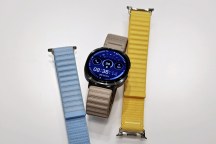
Samsung Galaxy Watch9 band options
First-party band options for the Watch9 include: Sports Band – a now thinner and softer all-rounder for daily use, Misty Band – a premium soft silicone option with a stylish two-tone design and Fabric Band – a lightweight fabric option.