





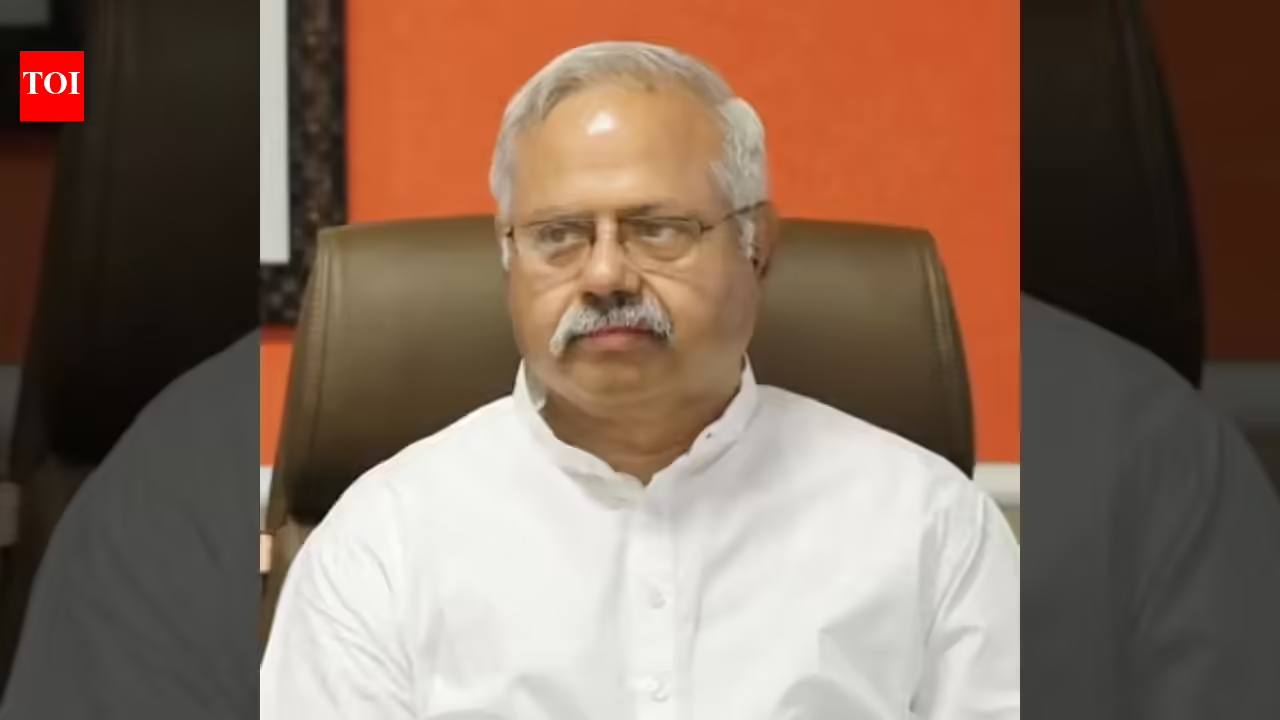
NAGPUR: Against the backdrop of BJP’s spectacular victory in West Bengal assembly elections, RSS’ Akhil Bharatiya Prachar Pramukh, Sunil Ambekar, on Friday underlined the Sangh’s deep historical roots in Bengal, saying every Sarsanghachalak or RSS chief has worked in the state and contributed to expanding its ideological base even before India’s independence.Speaking to the media here, he said Bengal remained central to RSS’ organisational journey since its birth in 1925.“From the time of founder Dr Keshav Baliram Hedgewar, Bengal was central to Sangh’s work. Every sarsanghchalak had a stint in Bengal, including RSS founder Hedgewar who studied medicine in Kolkata and again returned to the city to work for the organisation in 1939,” he said.“We worked silently for decades, we faced violence, but we continued to work. We have an intricate network of swayamsevaks (cadres) at the grassroots,” he added.Ambekar, accompanied by Vidarbha Prant Sanghchalak Deepak Tamashettivar and Nagpur Mahanagar Sanghchalak Rajesh Loya, said present RSS chief Mohan Bhagwat also spent nearly three years in the Bengal capital during his tenure as ‘sarkaryawah’. He said, “The quiet dedication and determination of pracharaks in Bengal helped awaken public consciousness there.”Responding to a question on partition, Ambekar said there was widespread anger and pain among people, but “if the Sangh possessed greater strength at that time, perhaps partition could have been avoided.” He added RSS workers actively participated in relief and rehabilitation efforts after partition.Ambekar also rejected allegations that RSS harboured hostility towards any community. “We consider everyone our own and believe in dialogue with all sections of society,” he said, alleging political interests often spread misinformation about the organisation.Reiterating RSS’ long-standing ideological position, Ambekar said the organisation viewed India as a “Hindu Rashtra” and argued that a strong Hindu society would benefit all communities, including Muslims and Christians. “If India progresses, it will benefit the entire world,” he said.On caste and ideological politics, Ambekar criticised attempts to combine Ambedkarite and Left ideologies under slogans such as “Jai Bhim-Lal Salam”. “Babasaheb Ambedkar emphasised the path shown by Lord Buddha and warned against the communist approach,” he said.Ambekar also claimed that misconceptions about RSS persisted due to limited understanding of the organisation’s work. He said the Sangh was increasing dialogue with intellectuals, journalists and opinion-makers abroad to address such perceptions.Speaking about India’s younger generation, Ambekar said Gen-Z in India remained optimistic and deeply committed to democracy and national development. “They believe issues can be resolved peacefully and have immense faith in the country,” he said.