



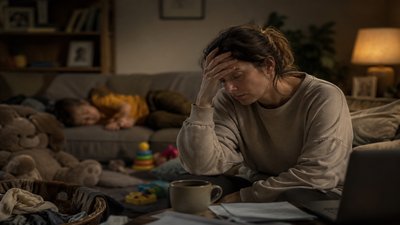
“Quiet cracking” is a striking way to describe a familiar kind of collapse: not the loud, dramatic kind, but the slow, private kind that happens when someone keeps functioning while feeling themselves fray from the inside. The term has mostly circulated in workplace conversations, where it refers to people who are still showing up and getting things done, even as stress, exhaustion, and disengagement build underneath. In parenting coverage, that same idea has been extended to mothers and fathers who are carrying the full weight of work, home, child care, and emotional labor with very little room left to breathe. Scroll down to read more…
What it looks like at home
15 Jun 2026 | 12:57
Is spending lakhs on a child’s birthday party reasonable or insane?
For parents, quiet cracking often does not look like a crisis from the outside. It can look like a packed lunch made on autopilot, a bedtime story read while half-listening, a smile held together through school runs and dinner and laundry, and then a private collapse once the house finally goes still. That is part of what makes it hard to spot: the parent is still “doing everything,” but the joy, patience, and sense of meaning that once made the work feel human can begin to thin out. In practice, it is less a single bad day than a prolonged state of survival mode.
Why more parents are feeling it now
The pressure is not coming from one direction; it is coming from all of them at once. The National Center for Biotechnology Information’s review on parental stress notes that parents commonly face financial strain, time demands, loneliness, difficulty managing technology and social media, and cultural pressure. It also points to the mental labor of parenting itself, juggling schedules, anticipating needs, making endless decisions, and monitoring progress, as something that can drain attention and well-being. In the same review, the share of parents who said they were coping “very well” with raising children fell from 67.2% in 2016 to 62.2% in 2019, even before the pandemic added school closures, financial worries, and heavier concern for family mental health.

That backdrop matters because parenting is no longer just about care; for many families it has become a constant coordination job. Parents are expected to be available, calm, informed, emotionally steady, digitally vigilant, academically involved, and endlessly patient, all while keeping up with work and the bills. The U.S. Surgeon General’s advisory on parents underscores that parental mental health is a public health priority and calls for stronger support through policy, workplaces, and community connections. That framing is important: it shifts the conversation away from “why are parents not coping better?” and toward “why are so many parents being asked to carry so much alone?”
The silence around it
Quiet cracking thrives in a very specific environment: one where struggle is hidden, endurance is praised, and asking for help can still feel like failure. Parents often know they are overloaded, but they also know the laundry still has to be folded, the child still has to be fed, and the day still has to look normal. That pressure to appear composed can push distress underground, where it turns into irritability, numbness, guilt, or that uneasy feeling that life is being managed rather than lived.

There is also a deeper reason the silence sticks: isolation. The Surgeon General has repeatedly argued that social connection is protective and that loneliness and poor social relationships carry real health costs. For parents, that means the lack of community is not just emotionally painful; it can make stress harder to regulate and recovery harder to find. When the nearest support is a text thread, a calendar reminder, or a late-night scroll, the load becomes even more internalized.
What helps parents crack less quietly
The antidote is not perfection. It is relief, connection, and smaller expectations. That may mean sharing the mental load more honestly, letting a task be “good enough,” or treating rest as maintenance rather than indulgence. It may also mean building real human support, another parent who can trade school pickup, a neighbor who can listen without judgment, a family member who can step in without being asked twice. Putting a name to the experience can itself be relieving. Once a difficult feeling has language, it often becomes easier to see it as a common human struggle rather than a personal failing. Recognizing that others are carrying similar burdens can reduce the sense of isolation that so often accompanies parental stress.

The most practical shift may be the simplest one: parents need fewer impossible standards and more actual backup. That is not a soft idea. It is the difference between a home running on emotional debt and a home that has some room to recover. When parenting becomes nothing but output, meals, messages, appointments, discipline, logistics, quiet cracking is often what happens next. When connection, rest, and support return to the picture, the pressure does not vanish, but it becomes bearable again.