




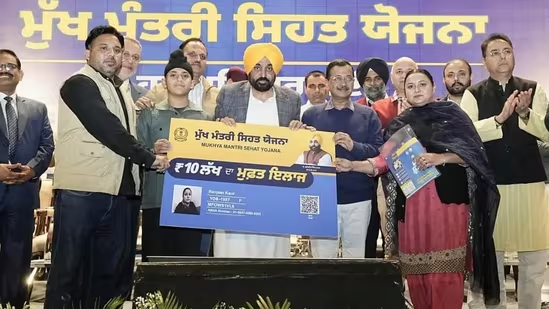
The Punjab government on Monday said the Mukh Mantri Sehat Yojana was strengthening access to high-risk maternal and neonatal healthcare by providing cashless treatment for complicated deliveries and critical newborn care across the state.
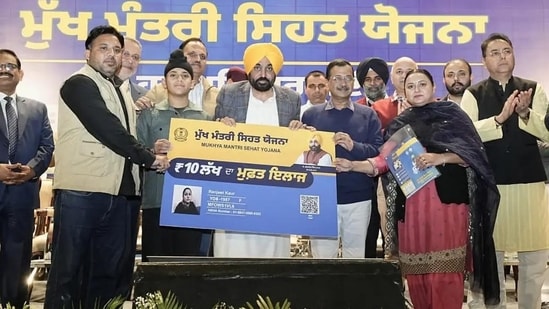
According to official data released by the State Health Agency (SHA), over 7,300 maternity and neonatal care cases had been treated under the scheme till May 25, with expenditure amounting to ₹7.04 crore.
The government said the scheme covered more than 5,300 high-risk caesarean deliveries, accounting for ₹6.37 crore in expenditure.
Focus on high-risk pregnancies
The statement cited findings from the National Family Health Survey (NFHS-5), which estimated that nearly one in every two pregnancies in India falls under the high-risk category.
Officials said factors such as poverty, low awareness, short intervals between pregnancies, previous birth complications and prior caesarean procedures increased health risks for mothers and newborns.
“The Sehat Card has emerged as a critical support mechanism for women requiring surgical intervention during childbirth due to complications such as prolonged labour, maternal health conditions, fetal distress and previous cesarean deliveries,” the statement said.
Beneficiaries share experiences
The government also shared experiences of beneficiaries who received treatment under the scheme.
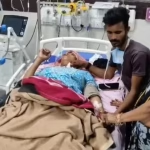
Deepika, a 28-year-old beneficiary from Patiala who faced complications including anaemia during pregnancy, underwent a caesarean delivery under the scheme. Her husband Manoj said the treatment was completed without financial stress due to the cashless facility.
Another beneficiary, Diksha Sonkar, received maternal and neonatal care during the birth of her third child at PIMS Medical College Hospital. Her husband Vikas Sonkar said, “We have two daughters and we were worried if there would be any complications in the third delivery.”
Speaking about financial concerns during medical emergencies, he said, “Anytime there is a medical emergency, we have to borrow money on interest.”
“But with the Sehat Card, everything has been taken care of,” he added.
Neonatal care support expanded
Officials said the scheme was also supporting treatment for critically ill and premature newborns requiring specialised medical intervention.
According to official data, 2,094 infants received treatment under different neonatal care packages.
Under Basic Neonatal Care, 881 infants were treated with expenditure of ₹5.82 lakh, while 777 infants received treatment under the Special Neonatal Care Package.
The government said 207 newborns requiring CPAP support, short-term ventilation or treatment for neonatal infections were covered under the Intensive Neonatal Care Package.
The statement added that 116 vulnerable infants requiring advanced treatment and 64 critically ill newborns received specialised care under separate packages.
The Punjab government said around 44.8 lakh registrations had been completed under the Mukh Mantri Sehat Yojana so far.