








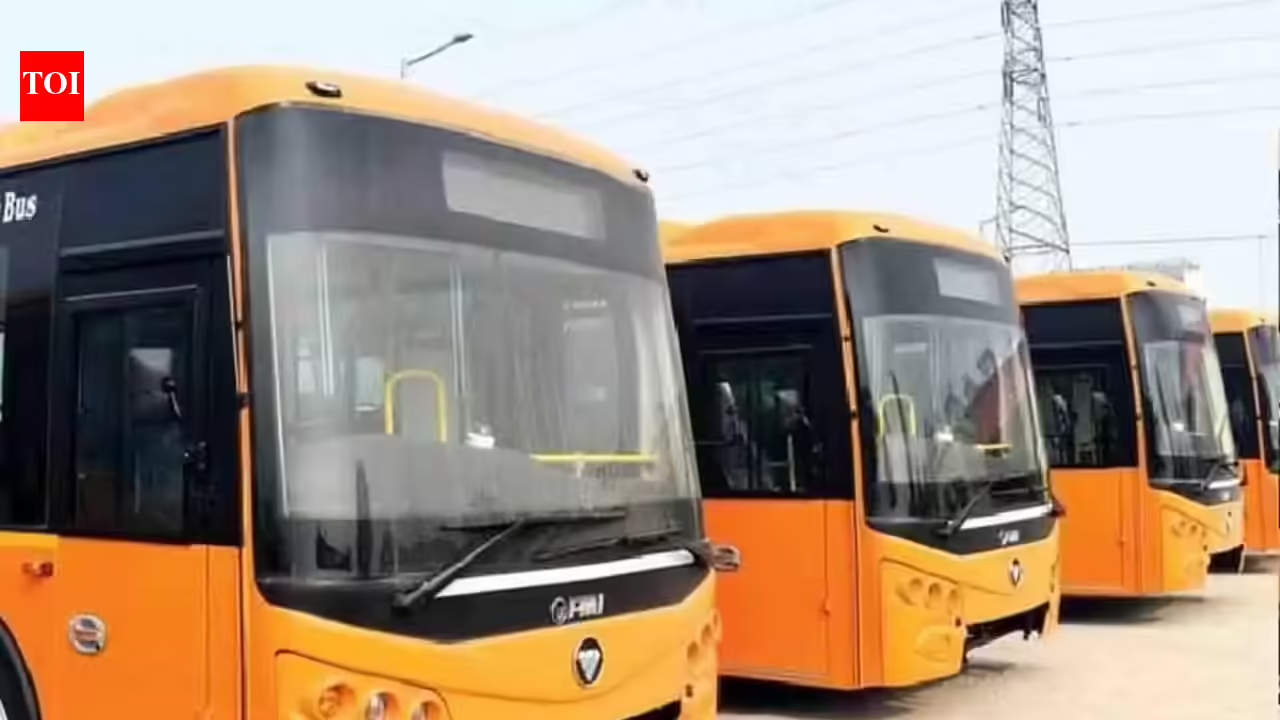
Prayagraj: City commuters opting for air-conditioned e-buses for safe, comfortable and eco-friendly travel have reason to cheer.As part of efforts to improve passenger comfort and convenience, the state govt has approved the operation of 50 more air-conditioned electric buses under the Gross Cost Contract (GCC) model.Officials said the addition of 50 buses will further strengthen the city’s eco-friendly public transport system, taking the total fleet of AC e-buses to 130.Regional manager (Roadways) Ravindra Kumar said, “A total of 80 electric buses are currently operational in Sangam City, including 50 buses on city routes, 24 Atal buses and six RG buses operating outside the city.”With the approval of 50 more electric buses, the fleet strength will rise to 130. Routes for the new buses will be finalised after a detailed survey. For the first time, private operators will be allowed to choose their preferred routes, he added.Considering the high capital cost of electric buses, the government is adopting the public-private partnership (PPP) model. The GCC model forms a key part of this strategy and is mainly used for operating electric buses in public transport.Under the model, the govt awards a service contract to a private operator and pays a fixed amount on a per-kilometre basis. The operator is responsible for procuring buses, insurance, drivers and maintenance, while the transport department decides routes, schedules, fares and ticket revenue collection.The key benefit for operators is that their earnings remain fixed regardless of passenger numbers. They are assured a minimum operational distance and compensated accordingly. A subsidy of Rs 40 lakh will be provided for each 12-metre e-bus and Rs 35 lakh for each 9-metre e-bus.Kumar said electric buses will be operated in the district under the GCC model for the first time, a move expected to reduce the financial burden on the roadways department.

