





- Petrol, diesel, and CNG prices increased across India.
- Government claims consumers shielded from full global impact.
- Oil companies absorb significant losses to lower prices.
Fuel Price Hike: After petrol, diesel and CNG prices were raised across India today, the Centre is attempting to shape the larger narrative around the fuel price shock: global oil prices may have surged because of the US-Iran conflict, but Indian consumers, according to government sources, are still being shielded from the full impact.
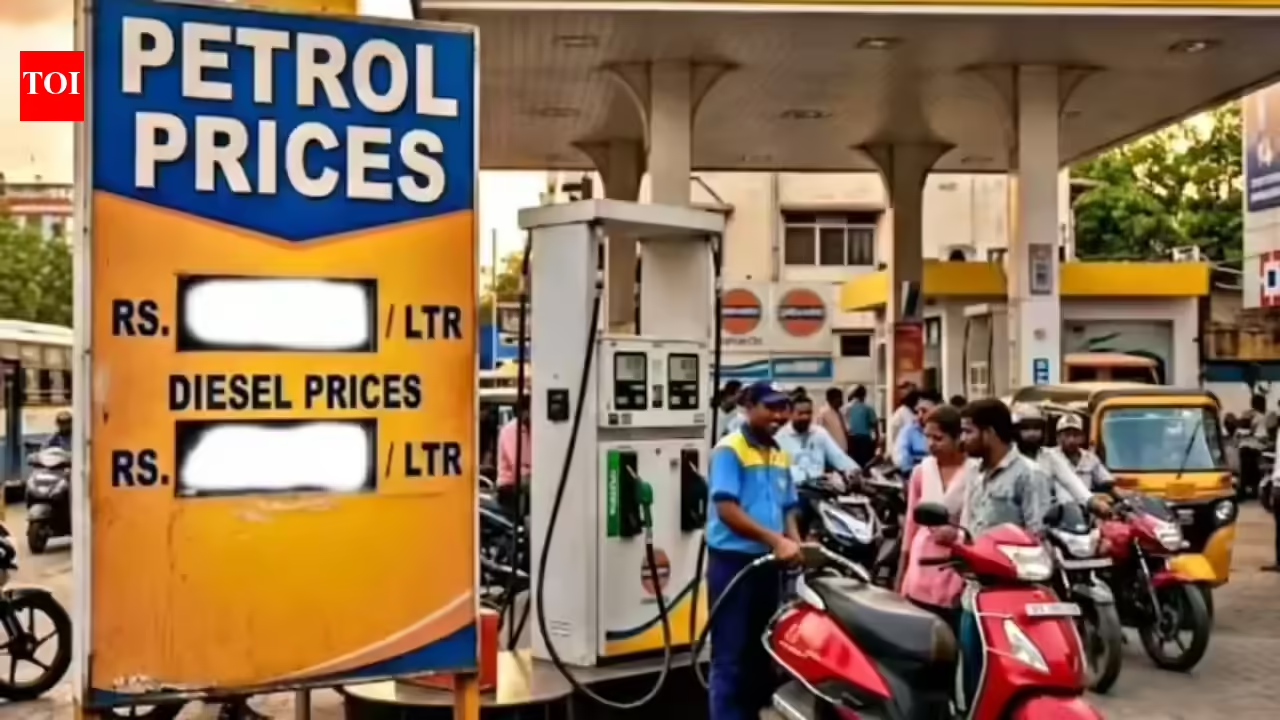
The latest fuel price revision marked the first major increase in retail fuel prices in more than four years. Petrol and diesel prices were increased by Rs 3 per litre each, while CNG prices were also raised by Rs 2 per kilogram amid mounting pressure on oil marketing companies (OMCs).
In Delhi, petrol prices climbed to Rs 97.77 per litre and diesel rose to Rs 90.67 per litre. CNG prices in the national capital now stand at Rs 79.09 per kilogram.
The increase comes against the backdrop of elevated crude oil prices triggered by geopolitical tensions in West Asia and disruptions around the Strait of Hormuz.
According to government sources, India is facing the same global oil shock affecting several economies worldwide, but a combination of tax cuts, subsidies, and losses absorbed by oil companies has so far prevented a much sharper jump in retail fuel prices.
Petrol, Diesel and CNG Prices Already Raised
The government’s messaging comes just days after oil marketing companies increased petrol and diesel prices by Rs 3 per litre each across the country, marking the first major retail fuel price revision in more than four years.
In Delhi, petrol prices rose to Rs 97.77 per litre, while diesel climbed to Rs 90.67 per litre. Prices were also revised upwards in Mumbai, Kolkata and Chennai.
At the same time, compressed natural gas (CNG) prices were increased by Rs 2 per kilogram, taking the Delhi retail price to Rs 79.09 per kilogram.
The fuel price increase has already begun feeding concerns around inflation, transportation costs and pressure on household budgets.
Govt’s Core Message: India Has Avoided a Bigger Crisis
According to government sources, the Centre believes the current crisis is external in nature and not the result of domestic policy failures.
Officials argue that several countries are already facing fuel rationing and steep retail price increases, while India has so far managed to avoid such extreme measures.
Sources claimed nearly 82 countries globally are dealing with petrol and diesel rationing in some form. In parts of Southeast Asia, fuel prices have reportedly increased by up to 50 per cent, while prices in Europe have risen by nearly 20 per cent.
Against that backdrop, the government’s argument is that India’s retail fuel prices could have been significantly higher had the Centre and OMCs not intervened.
The Global Oil Shock Reaches India
The conflict between the US and Iran has disrupted energy markets globally, pushing up crude oil prices and increasing pressure on fuel-importing nations such as India.
Government sources said the impact of the crisis is unavoidable because India imports a large share of its crude oil requirements. However, officials maintain that the country has managed the situation better than many other economies.
Around 82 countries globally are reportedly facing some form of fuel rationing, while oil prices in parts of Southeast Asia have risen by as much as 50 per cent. In Europe, fuel prices have increased by nearly 20 per cent.
According to sources, India has so far avoided such a scenario despite elevated global prices.
Also Read : CNG Prices Hiked Alongside Petrol, Diesel Rates, Check City-Wise Fuel Prices
Oil Companies Under Pressure After Fuel Freeze Ends
Fuel prices had remained largely unchanged since April 2022, barring limited revisions ahead of elections. Even as crude oil prices surged globally in recent months, state-run fuel retailers continued selling petrol and diesel at older rates for an extended period.
That strategy, however, sharply increased pressure on OMC finances.
Oil Companies Absorbing Massive Losses
One of the government’s key arguments is that state-run oil marketing companies (OMCs) are absorbing a substantial share of the increase in crude oil costs instead of fully transferring them to consumers.
Sources said oil companies are currently incurring losses of nearly Rs 1,000 crore every day.
Officials claimed OMCs are effectively absorbing around Rs 26 per litre on petrol and nearly Rs 82 per litre on diesel to keep retail prices lower than market-linked levels.
Without these interventions, officials suggested, petrol and diesel prices could have been significantly higher.
Govt Points to Earlier Tax Cuts
The Centre is also highlighting previous reductions in fuel taxes as part of its broader effort to cushion consumers.
According to sources, the government had already reduced taxes by Rs 8 per litre on petrol and Rs 6 per litre on diesel in recent months.
Officials argue that these measures have helped moderate the impact of rising crude oil prices on households and businesses.
Also read : Share Markets Volatile, India Hikes Petrol Prices: Sensex About 100 Points Down, Nifty Over 23,700
Why Govt Says the Hike Could Have Been Worse
Government sources argued that without tax reductions and price absorption by OMCs, retail fuel prices could have become two to three times more expensive.
Officials said such a scenario would have hit fuel-dependent sectors particularly hard.
Farmers and Transport Sector in Focus
The government believes sectors heavily dependent on fuel would have faced severe pressure had prices been fully aligned with global crude rates.
Officials said farmers, truck drivers and auto-rickshaw operators would likely have been among the worst affected.
The broader concern is that sharply rising fuel prices could push up transportation and logistics costs, eventually feeding into inflation across goods and services.
Fertiliser Subsidy Also Under Pressure
Beyond fuel, the government is also trying to contain the impact of rising global commodity prices on agriculture.
According to sources, a fertiliser sack that costs around Rs 2,200 in the market is currently being provided to farmers for Rs 242, with the remaining amount being borne by the government through subsidies.
The rising subsidy burden is expected to add pressure on public finances if global commodity prices remain elevated for a prolonged period.
Panic Buying and Inflation Fears Surface
The latest fuel price hike triggered panic buying in some parts of the country, with long queues reported at fuel stations in states including Rajasthan and Gujarat.
Economists have also warned that rising fuel costs could feed into transportation, logistics and freight charges, eventually pushing up prices of essential goods and services.
India’s retail inflation rose to 3.48 per cent in April 2026, while wholesale price inflation climbed to 8.3 per cent, driven largely by higher fuel and energy prices.
PM’s Appeal: Save Fuel, Spend Carefully
Amid the evolving energy crisis, Prime Minister Narendra Modi has urged citizens to reduce fuel consumption, cut down on unnecessary foreign travel and limit gold purchases.
Government sources pointed out that Indian households are estimated to hold nearly 30,000 tonnes of gold worth around Rs 400 lakh crore.
Officials noted that gold imports have emerged as the country’s second-largest expenditure item, increasing pressure on foreign exchange reserves during a period of elevated crude oil imports.
‘This Crisis Came From Outside’: Govt’s Message
At the centre of the government’s messaging is the argument that the current fuel and energy crisis is largely driven by external geopolitical developments rather than domestic policy failures.
According to sources, the government’s position is that India does not take economic decisions under pressure and that measures are being calibrated to balance consumer protection, inflation management and fiscal stability.
Even so, economists warn that if global crude oil prices remain elevated for an extended period, the pressure on oil companies, government finances and household budgets could intensify further in the months ahead.
BREAKING NOW: Indore fire tragedy as EV short circuit triggers deadly explosions