







5 min readNew DelhiUpdated: Aug 12, 2026 04:33 AM IST
THE RAJYA Sabha passed the Tribunals Reforms Bill, 2026 by voice vote on Tuesday amidst sloganeering and a walkout by the Opposition.
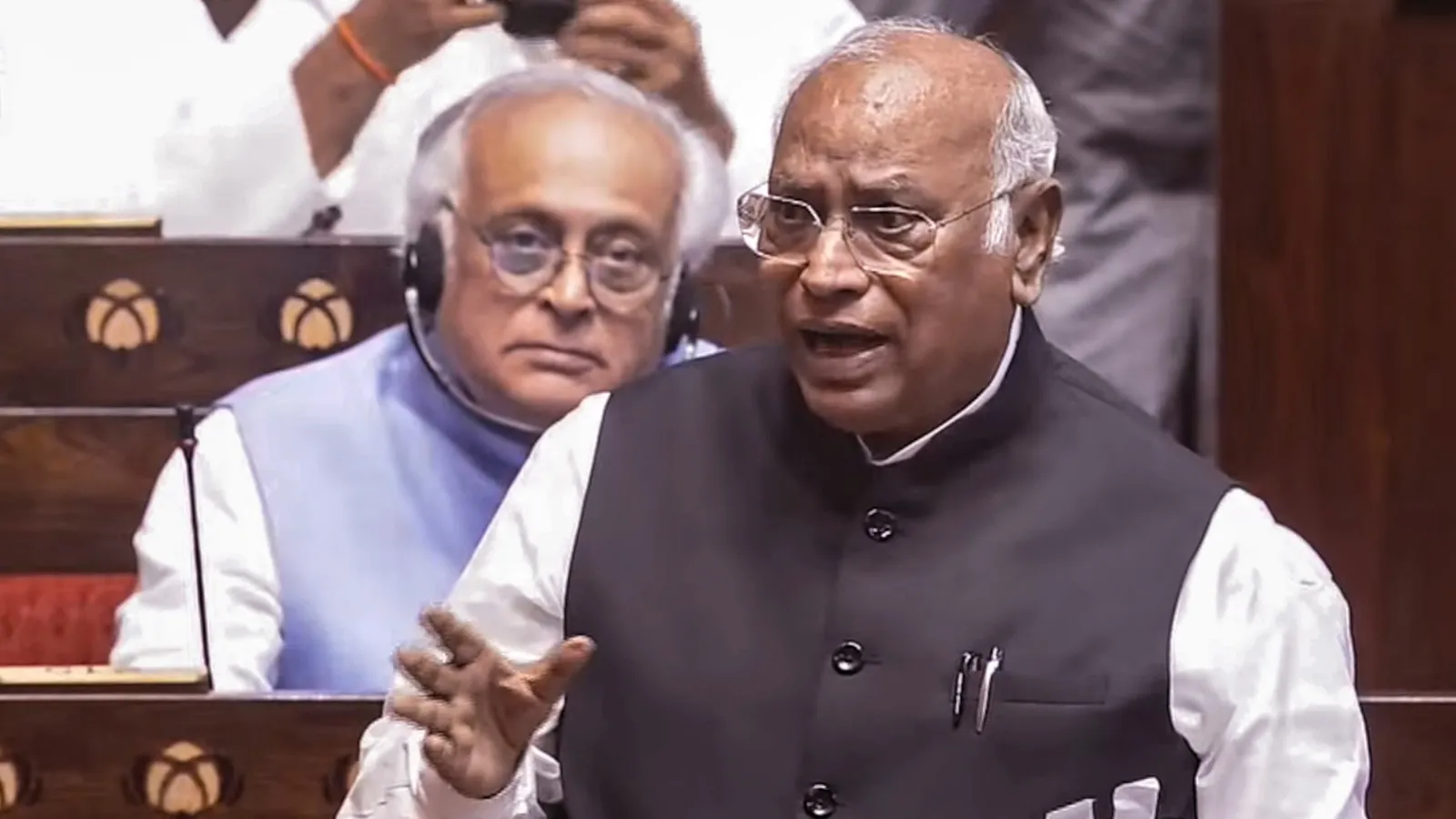
At the start of the debate in the post-lunch session, Deputy Chairman Harivansh gave the floor to the Leader of the Opposition Mallikarjun Kharge, but said he could only speak on the Bill. Kharge was cut off when he tried to raise the Ram Mandir donation theft row. As the Chairman called the next Speaker, the Opposition MPs staged a walkout from the House.

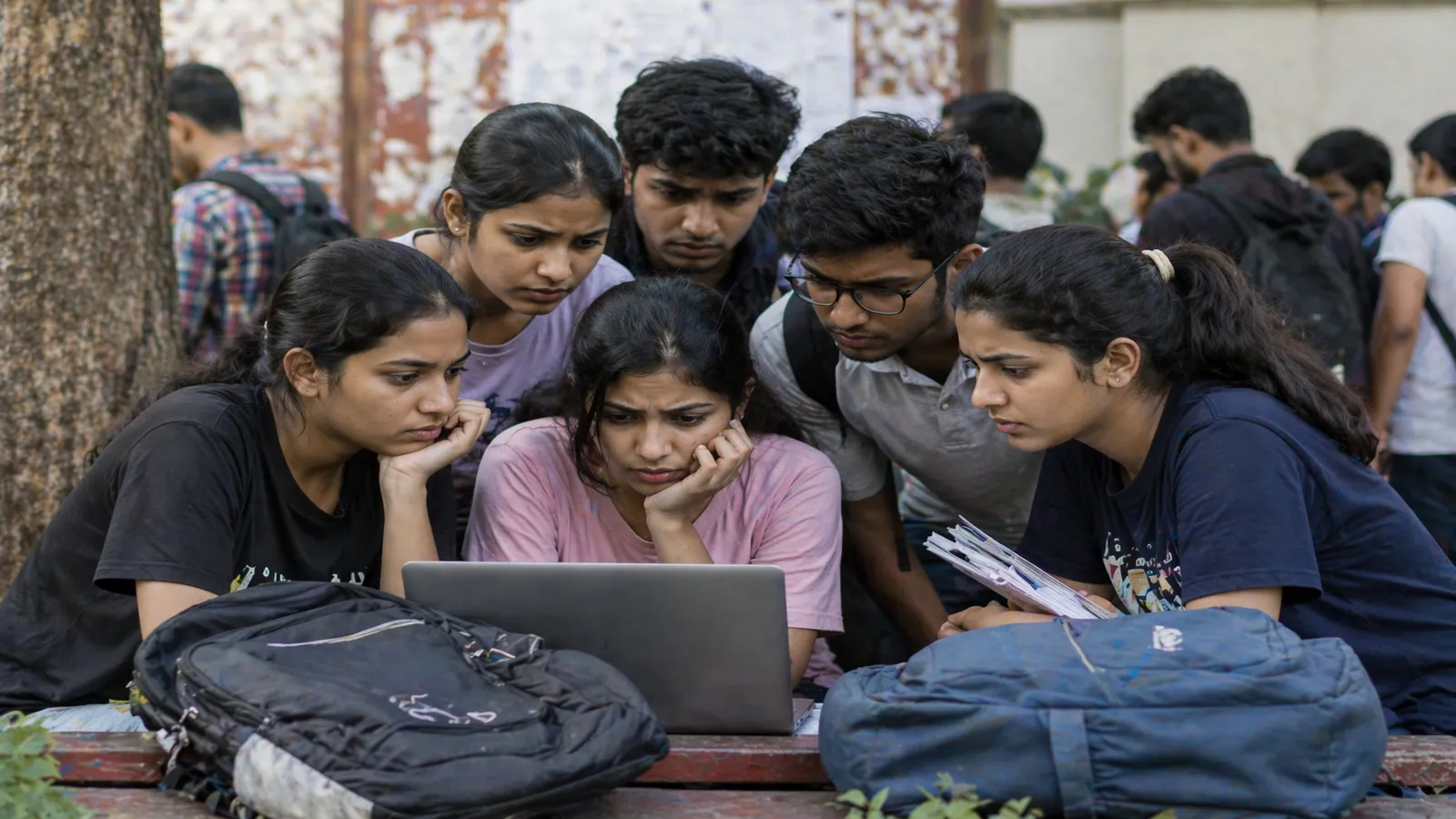
Earlier, the Rajya Sabha witnessed two adjournments as the Opposition and the Treasury benches disrupted the proceedings. Vice-President and Rajya Sabha Chairman C P Radhakrishnan adjourned the House soon after Kharge began speaking on the Ram Temple donation row. When the House re-convened, Radhakrishnan proceeded with the Question Hour. Noting that Kharge wanted to raise an issue related to a state, the Chairman said “it will not be encouraged”. He said even the Treasury side wanted to raise a state-related issue on Jharkhand students’ protest, but he disallowed it. As the MPs disrupted the Question Hour, the House was adjourned till 2 pm.
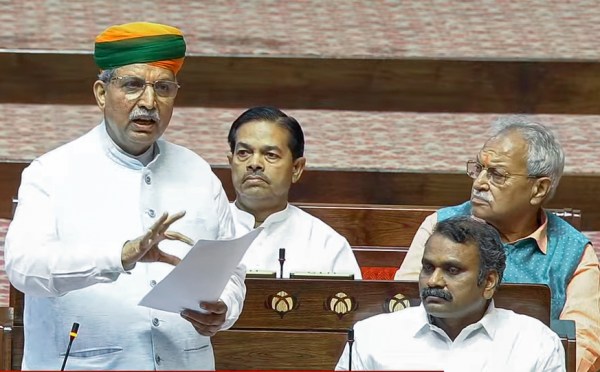 Union MoS (IC) Arjun Ram Meghwal speaks in the Rajya Sabha during the Monsoon session of Parliament, in New Delhi on Tuesday. (Sansad TV/ANI Video Grab)
When the House met after the second adjournment, Minister of State for Law and Justice Arjun Ram Meghwal moved the Tribunal Reforms Bill. Replying to the debate, Meghwal said all the members who spoke agreed that it was a very important change. He said that the key point of the Bill was the setting up of the National Tribunal Commission. “The proposed National Tribunal Commission will be chaired by a former judge of the Supreme Court or a former chief justice of High Courts. There will be two judicial and two technical members. Some members mentioned that the government will appoint the members. It will be done by the NTC itself. There will be a search-cum-selection system,” said the minister.
He said the Bill will also not change the jurisdiction of any of the tribunals. It’s meant to ensure a transparent system that could offer a timely and fair resolution. He said it is not merely meant for quick dispute resolution but also to ensure that the capital investment does not remain locked and comes back to the economy.
Meghwal said no other government had thought to bring in such structural reforms — the tribunals were working alright, but the PM thought of improving the system. He said over the years the number of tribunals had been rationalised from 26 to 19 to now 16.
The minister specifically addressed the concerns raised by AAP MP Sanjay Singh, who said the process would lead to skewed representation in the tribunals as there were very few judges from the SC and ST communities. Meghwal said while the appointment of judges is done through the Collegium system, the government has written to the judiciary, and that has, in fact, led to improved representation among new judges.
Story continues below this ad
Singh said that there has been only one adivasi judge so far to represent a 10-crore population. “There needs to be reservation in the tribunals, otherwise we cannot support the Bill,” he said.
This led to a “clarification” from Parliamentary Affairs Minister Kiren Rijiju, who said any wrong message should not go that the government does not want to appoint people from the minority communities. He said while it is true that there has been only one tribal judge who retired many years ago, the selection has been done by the Collegium system for years. He added that before 1992, when the government did the appointments, why the then Congress government did not appoint judges from these communities.
Rijiju said that under the current government, he became the first tribal law minister and the first Buddhist one since Baba Saheb Bhimrao Ambedkar.
Singh also alleged that the government did not want to bring the National Company Law Tribunal (NCLT) under the jurisdiction of the NCT because it wanted to continue to control the body, which has been used to forgive debts of corporates.
Story continues below this ad
BJD member Sasmit Patra said that NCLT should be brought under the same framework.
DMK Member Tiruchi Siva used the discussion to raise the matter of Cauvery water sharing. He said that Karnataka has not yet implemented the directions by a tribunal to share water with Tamil Nadu. He said there needs to be a mechanism to ensure that the tribunal orders are actually followed.