



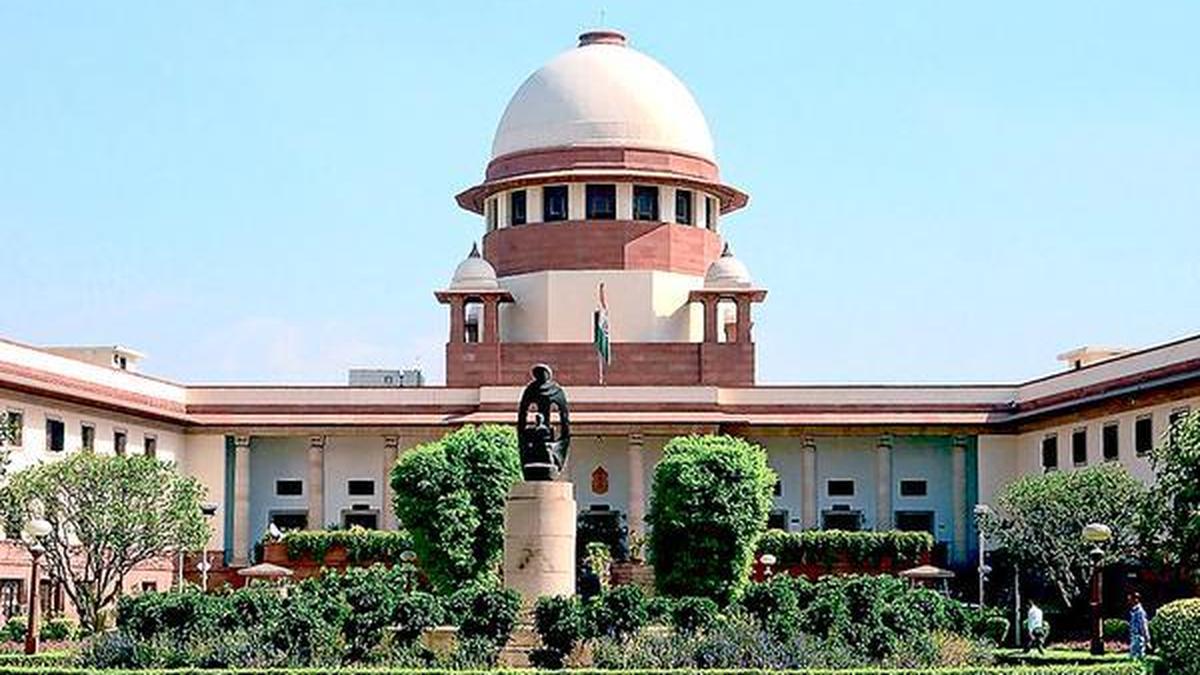
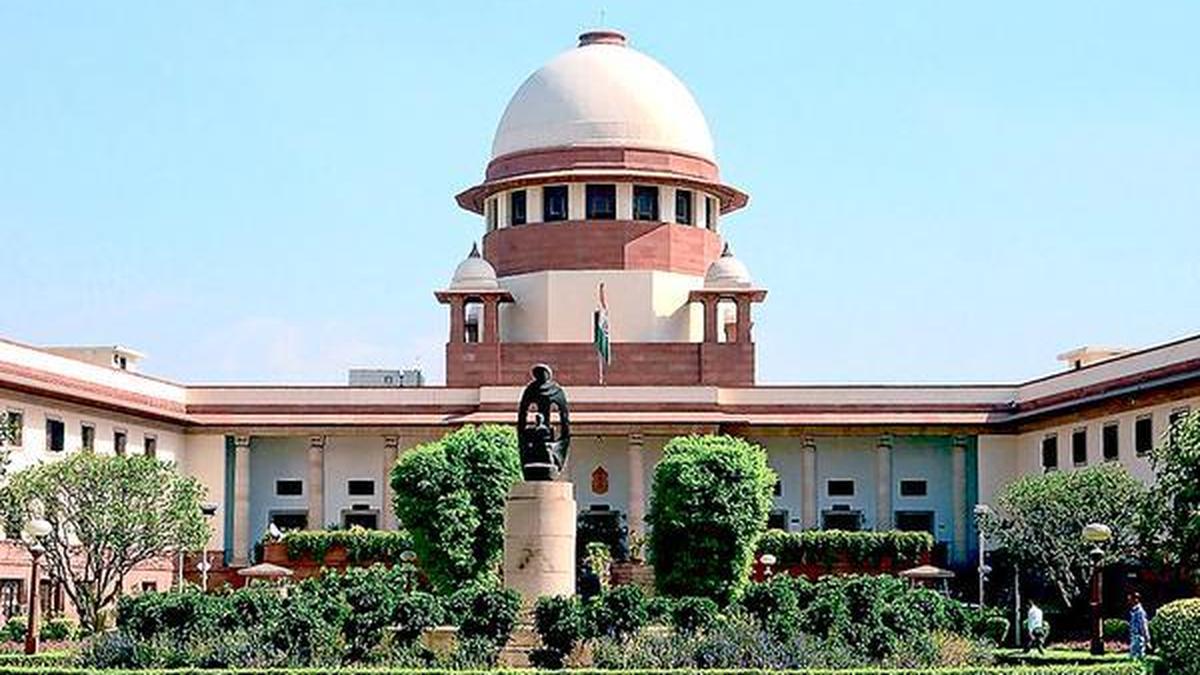
Supreme Court of India. File
| Photo Credit: The Hindu
The Supreme Court on Friday (May 22, 2026) recalled observations made in an order blacklisting three educators for preparing a Class 8 NCERT textbook with references to judicial corruption even as the government orally conveyed a determination not to associate with them anymore.
“The conclusive opinion attributing motive to your clients has been deleted. The observations that it was a deliberate misrepresentation to tarnish the judiciary has been removed. We have also set aside the direction that nobody should engage your clients. Now, it is left to the independent decision of the government,” Justice Joymalya Bagchi, part of a three-judge Bench headed by Chief Justice of India Surya Kant, addressed the lawyers representing the three academics.
Author and scholar Michel Danino, educationist Suparna Divakar and legal researcher Alok Prasanna Kumar had approached the top court for deletion of portions in a March 11 order which accused them of distortion to “project a negative image of Indian judiciary before Class 8 students”.
Editorial | Selective outrage: on Supreme Court and NCERT textbook
“The problem was only with the content and not the creators,” Justice Bagchi said.
The court had issued a carte blanche direction to the Union government, States, universities and public institutions receiving government funds to “disassociate” themselves from the three pedagogues. “We see no reason as to why this kind of persons be associated in any manner for the purpose of preparation of curriculum or finalisation of textbooks for the next generation of this country,” the court had said in the March 11 order.

The educationists submitted that the March 11 order was passed ex parte, without even hearing their side of the story. They said the portions under scrutiny were included in the textbook as a result of a collective decision. The academicians said they were not just “fly-by-night operators”, but distinguished in their respective fields of education. Mr. Danino is a Padma Shri awardee.
“I do not want to even read it [the part of the March 11 order which accuses the three academics]… These are decorated academics. These observations in paragraph 8 of your March 11 order have far-reaching consequences. I have a fairly modest request from you… Delete those adverse statements in that paragraph,” senior advocate Shyam Divan submitted for Mr. Danino.
Solicitor General Tushar Mehta said the contents which came under question were “wholly undesirable”.
Lopsided portrayal
Justice Bagchi said the court had felt the portrayal of the judiciary in the textbook lopsided. The role of the judiciary as regards its constitutional supremacy was missed out while corruption was highlighted as a unique feature of the judiciary, the judge pointed out.
Senior advocate Gopal Sankaranarayanan, for Mr. Kumar, said a malicious intent did not drive the contents of the chapter in the textbook.
“Only when we debate issues in our schools may solutions come… We are tending to whitewash our institutions, children need not be subject to that. Let us have it, warts and all,” he submitted.
Mr. Sankaranarayanan said adverse observations like the ones in the March 11 order had a “massive impact”.

Though recalling the “harsh” observations in the order, the court said the government, on its part, was free to take its own decision as to whether or not to associate with the three academicians.
Mr. Mehta denied the academicians’ claim that the inclusion of the chapter in question was a “collective” call. He said “the government would like to take its own decision not to associate them further in any work”.

Published – May 22, 2026 02:29 pm IST