







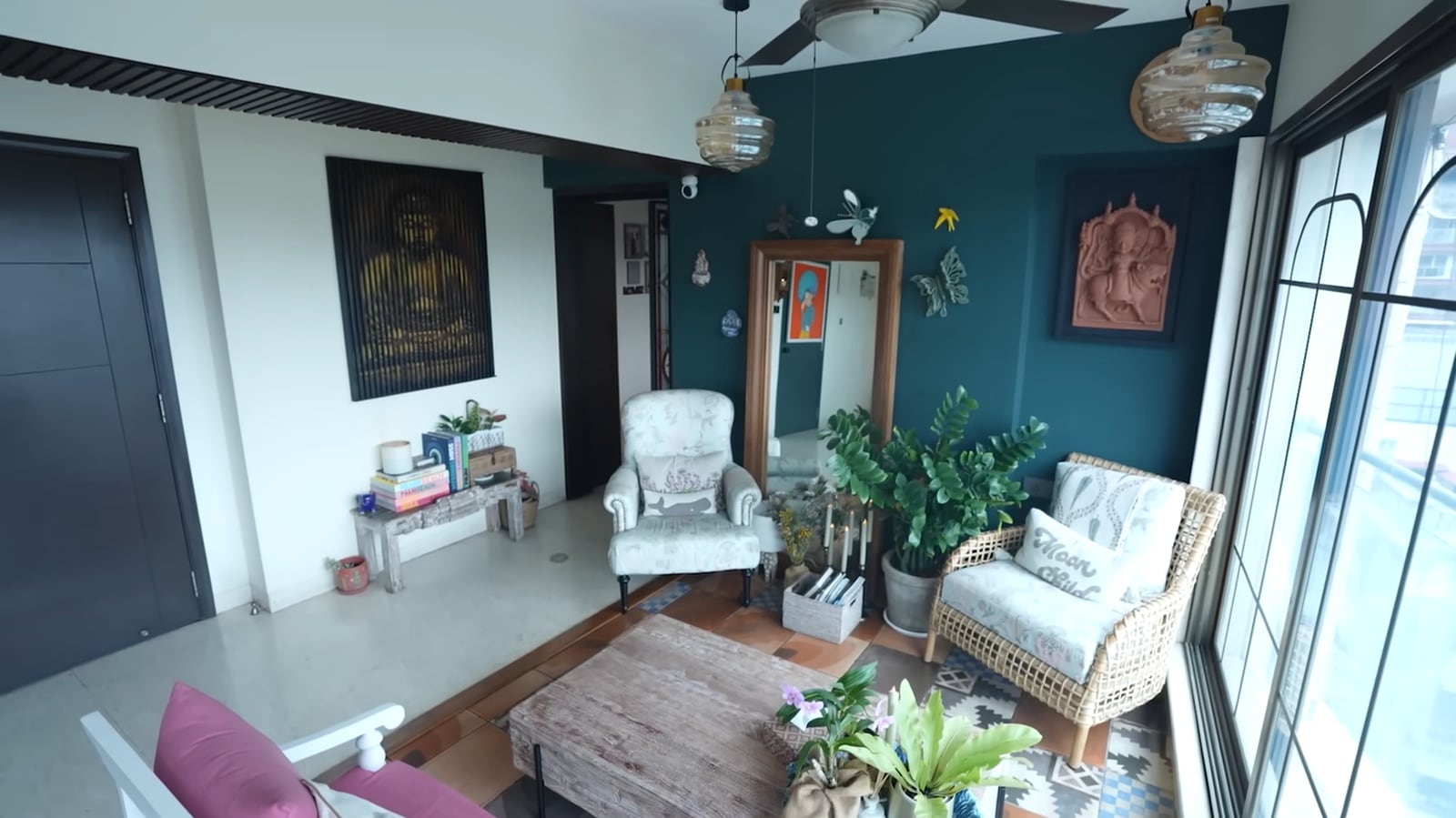
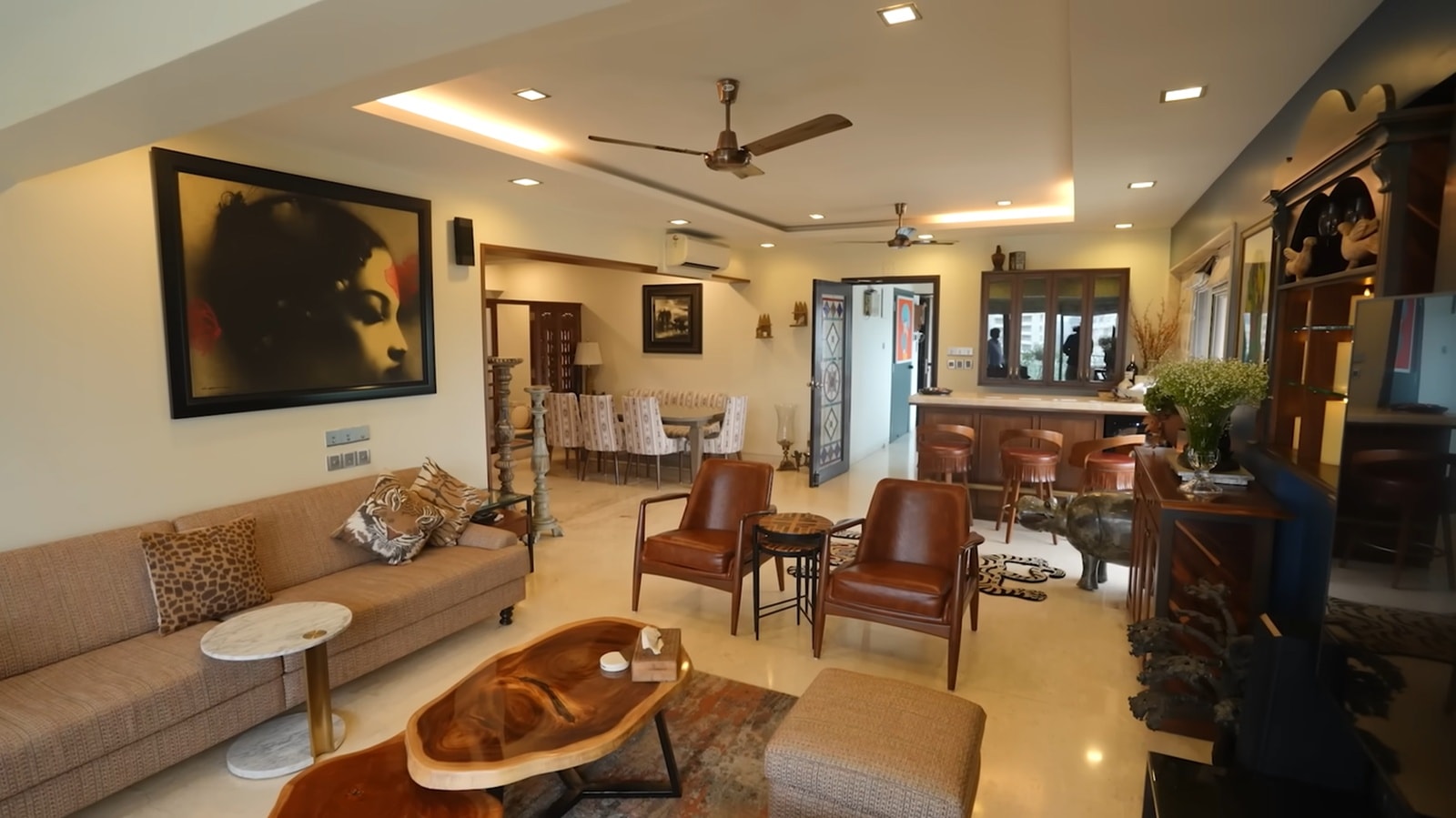
Step inside Shaan’s Mumbai home and what stands out immediately isn’t opulence, but intention. Spread across a thoughtfully designed triplex, the space reflects a balance between creativity and comfort, something that becomes even more evident through the family’s interactions during the home tour with Farah Khan. With earthy tones, layered textures, and clearly defined zones for work and rest, the house feels lived-in rather than staged.
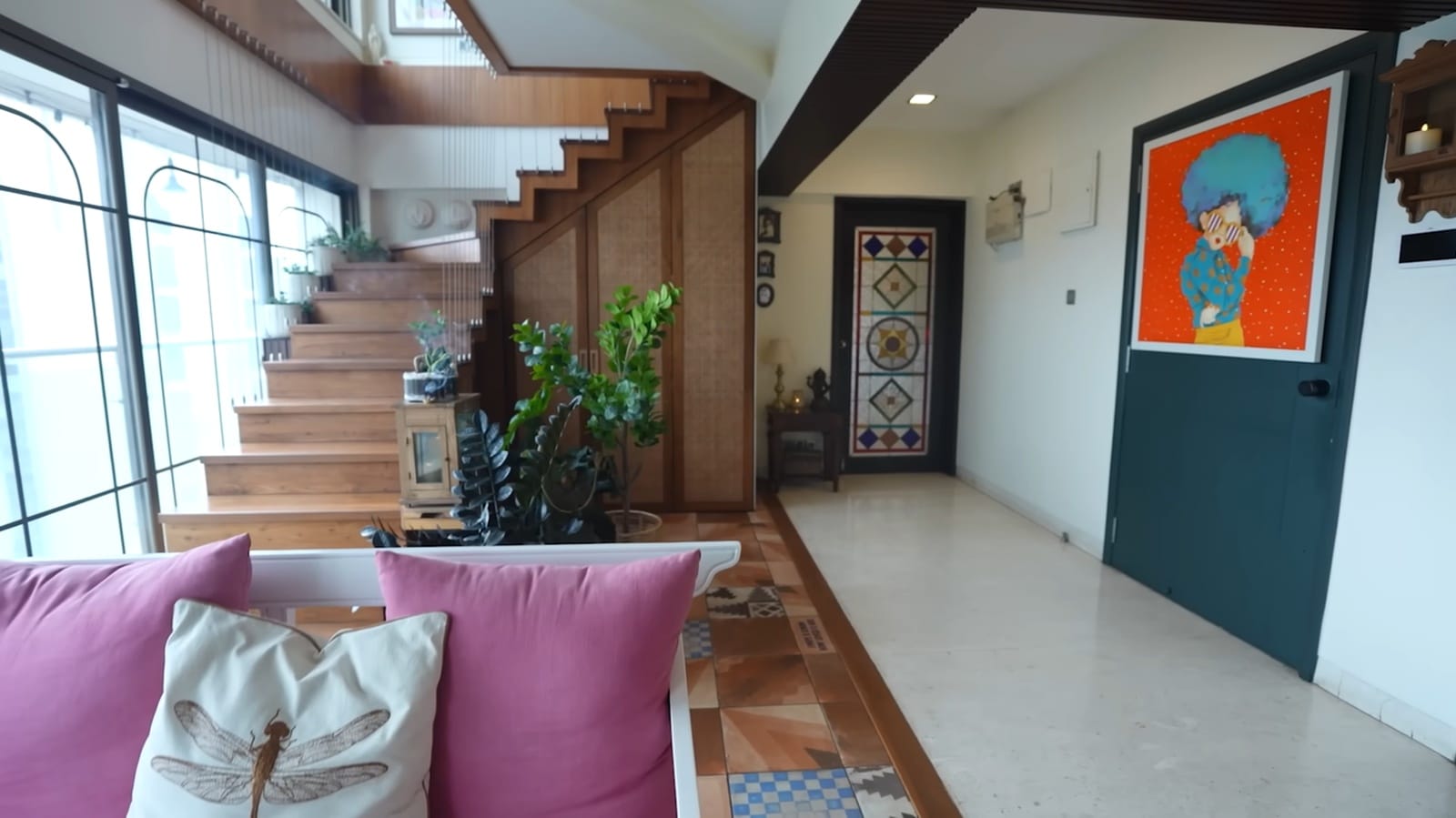
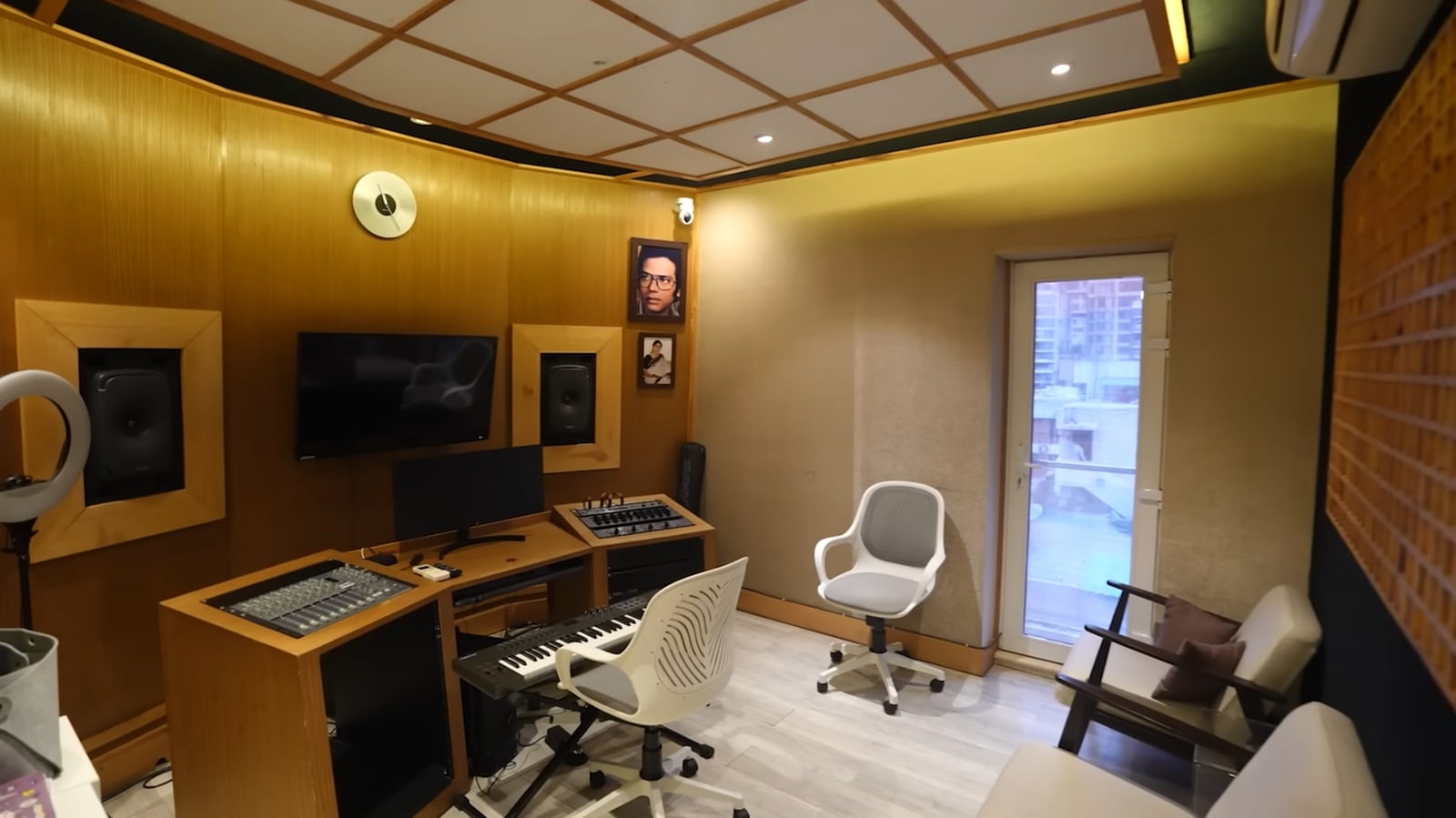
What anchors the home is the sense of family woven into its design. Early in the tour, Farah reads out a line displayed in the house — “Family makes this house a home.” That philosophy seems to echo through the layout: from cosy seating corners to the open dining area that encourages togetherness. The triplex structure itself supports this rhythm, as Shaan explains, “We have a duplex here, and then a studio on the first floor,” highlighting how different levels cater to different emotional and functional needs.

 (Source: YouTube/Farah Khan)
Much of the credit for the interiors goes to his wife, Radhika Mukherjee, whose design sensibility shapes the home’s personality. Farah acknowledges this directly, saying, “Radhika, you have done a stunning job.” There’s also an emphasis on evolution rather than perfection — their son notes, “Very complicated. Because mom is always changing something in the house,” pointing to a dynamic space that adapts over time instead of remaining the same.
The home also integrates creativity into everyday life. With a dedicated studio for Shaan and his sons, and casual areas that blend work and relaxation, the lines between professional and personal spaces blur in a way that feels organic.
 (Source: YouTube/Farah Khan)
Homes that prioritise warmth, earthy tones, and shared family spaces
Sonal Khangarot, licensed rehabilitation counsellor and psychotherapist, The Answer Room, tells indianexpress.com, “Homes that emphasise warmth, earthy tones, and shared family spaces tend to create a felt sense of safety at both a sensory and emotional level. From a psychological perspective, colours rooted in nature, like browns, beiges, and muted greens, are processed by the brain as familiar and non-threatening, which helps regulate the nervous system and reduce baseline stress.”
 (Source: YouTube/Farah Khan)
Equally important is the presence of shared spaces, she notes. “When families organically come together in common areas, it increases opportunities for connection, even in subtle, everyday ways. These repeated interactions foster predictability and belonging—two core components of emotional security.”
Warm lighting and softer textures further reduce sensory overstimulation, allowing individuals to unwind more easily. Khangarot notes, “Over time, such environments condition the mind to associate home with calm, restoration, and support, rather than tension or withdrawal. In essence, thoughtful design doesn’t just shape a space—it shapes how safe and held a person feels within it.”
Story continues below this ad
 (Source: YouTube/Farah Khan)
When homes are constantly evolving
From a psychological lens, Khangarot states, constantly evolving home environments can be both stimulating and destabilising — it largely depends on frequency, intention, and the individual’s need for predictability. Moderate, intentional changes, like refreshing decor or rearranging furniture, can enhance mental stimulation, creativity, and a sense of renewal. Novelty activates the brain’s reward system, which can uplift mood and break monotony.
However, when changes are too frequent or lack consistency, they can disrupt a person’s internal sense of stability. Humans rely on environmental cues to feel grounded; a constantly shifting space can subtly signal unpredictability, leading to restlessness or even low-grade anxiety, especially for those already sensitive to change.
“The key lies in balance — maintaining a stable ’emotional anchor’ within the home, such as familiar corners or personal objects, while allowing for periodic updates. This way, the home remains both engaging and reassuring, supporting psychological comfort without sacrificing stimulation,” concludes Khangarot.