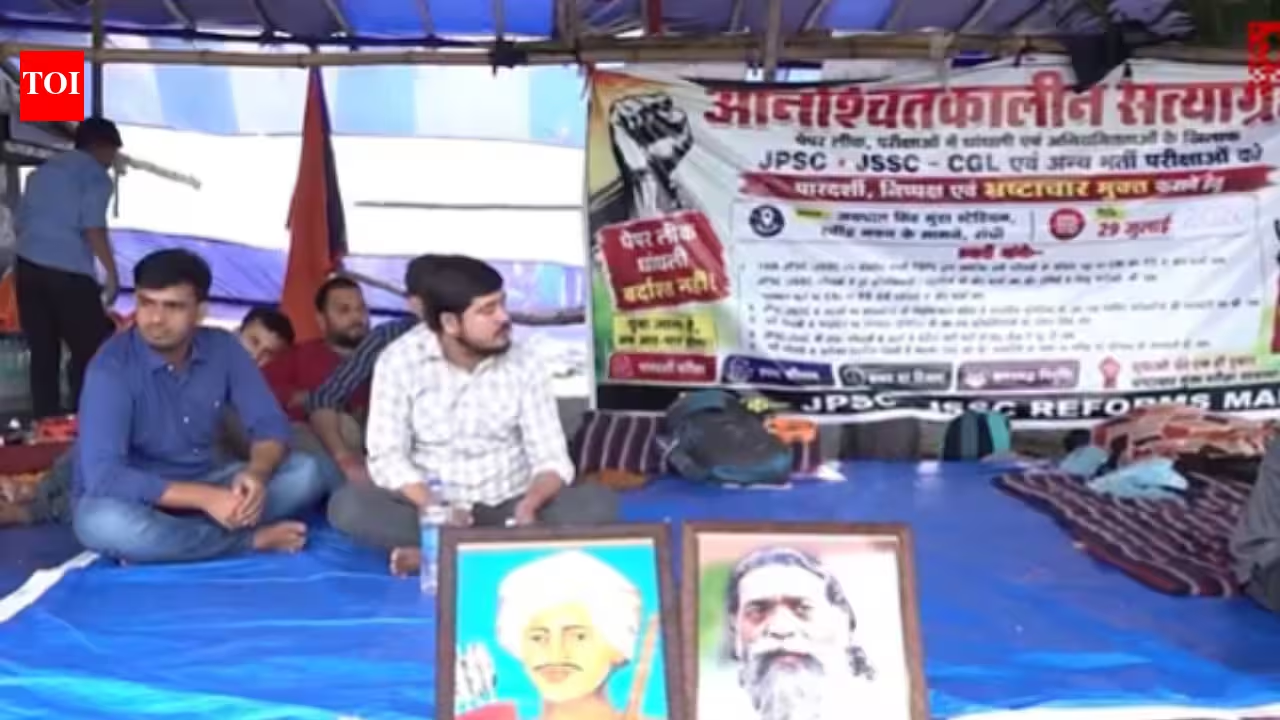









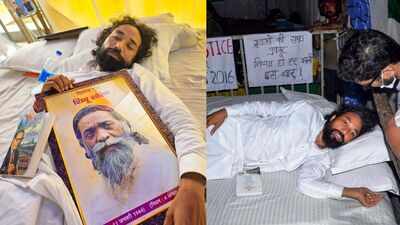
RANCHI: As protests over alleged irregularities in Jharkhand’s recruitment examinations gather momentum, student leader Devendra Nath Mahto has emerged as the face of the agitation, drawing comparisons with activist Sonam Wangchuk after launching an indefinite hunger strike and receiving his public support.Mahto, who began his indefinite fast on August 2 at Ranchi’s Jaipal Singh Munda Stadium, is leading a movement demanding transparency in the Jharkhand Public Service Commission (JPSC), Jharkhand Staff Selection Commission (JSSC) CGL and other recruitment examinations. Student groups have alleged repeated paper leaks and irregularities in the state’s recruitment process.His protest gained national attention after Sonam Wangchuk spoke to him over the phone on Wednesday, urging him to end his waterless fast. After the conversation, Mahto agreed to consume water and salt while continuing his indefinite hunger strike.Speaking after the call, Mahto said Wangchuk’s support had boosted the morale of protesting students and strengthened their resolve to continue the agitation until their demands were met. He said he accepted water and salt only after Wangchuk assured him of continued support for the movement.The protests began after the results of the 14th JPSC Civil Services Preliminary Examination were declared on July 5, with aspirants alleging irregularities in the recruitment process. Protesters are demanding cancellation of the preliminary examination, reforms in the JPSC and JSSC, and an independent probe into the alleged recruitment scam.The agitation has intensified in recent days. Five more protesters, including two women, joined the indefinite hunger strike, taking the total number of people on fast to six. The protesters have also demanded a CBI probe or an inquiry by an independent panel of retired high court judges from outside Jharkhand.Chief Minister Hemant Soren has said his government is sensitive to the concerns of students and assured that action would be taken after the ongoing investigation reaches its conclusion.