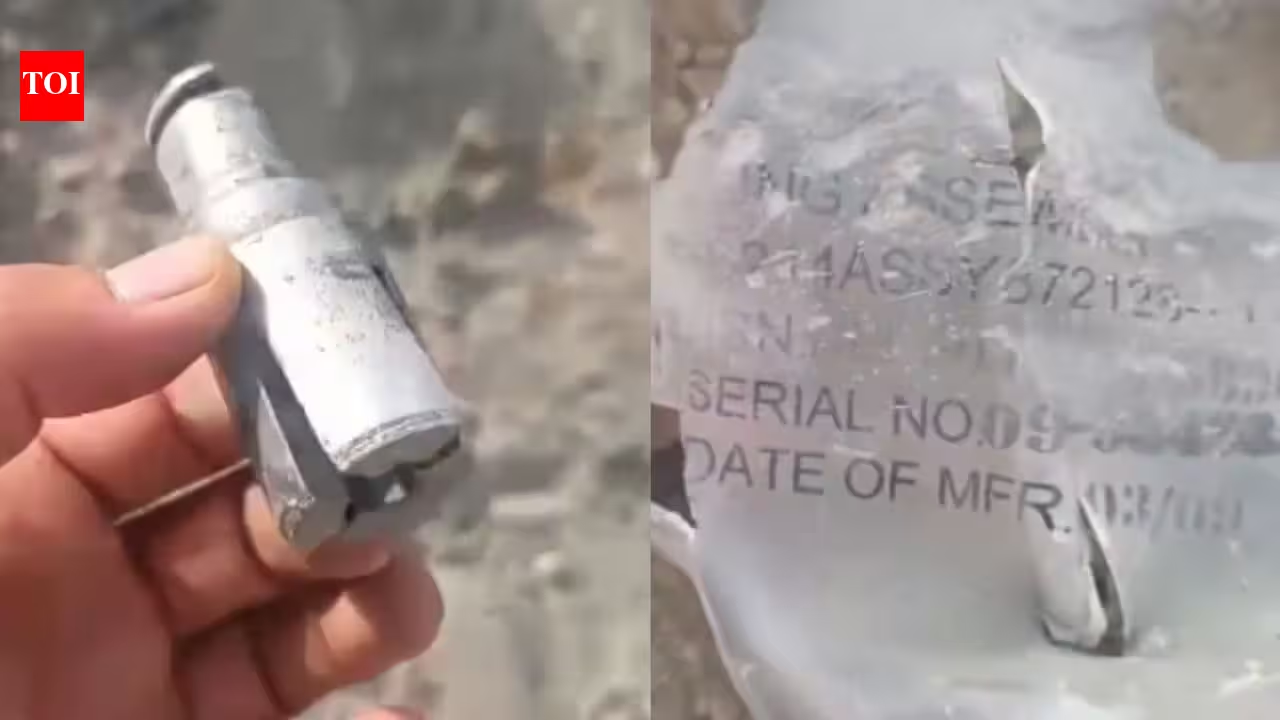









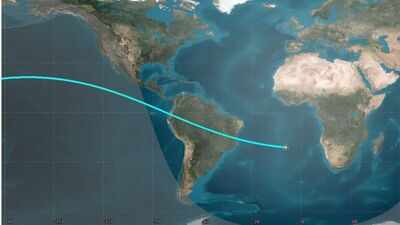
BENGALURU: The upper stage of Isro’s LVM3-M5 rocket re-entered Earth’s atmosphere on July 30, 2026, less than nine months after its launch, in what the space agency said was a demonstration of planned efforts to limit the orbital lifetime of rocket stages.“The C25 upper stage launched the CMS-03 communication satellite from Sriharikota on Nov 2, 2025. After deploying the satellite into its intended geostationary transfer orbit (GTO), the stage was passivated to reduce the risk of an accidental break-up and left in a highly elliptical orbit,” Isro said.Isro’s System for Safe and Sustainable Space Operations Management (IS4OM) monitored the stage as its orbit gradually decayed. The Multi Object Tracking Radar at Sriharikota also tracked it where possible, while the US Space Command routinely monitored the object.“The stage’s most probable impact point was estimated to be in the Atlantic Ocean at around 12.08 UTC on July 30. Most of the stage was expected to burn up during atmospheric re-entry, although components such as gas bottles, the nozzle and tanks, made from high-melting-point materials, could survive the heating,” Isro said.Isro added that the stage’s orbital lifetime had been deliberately considered while planning the mission. For launches into GTO, even a change of a few minutes in lift-off time can significantly alter how long an upper stage remains in orbit, with lifetimes potentially ranging from months to decades.For LVM3-M5, the pre-launch estimate was that the C25 stage would remain in orbit for less than a year, based on the 5.26pm IST lift-off time. Its actual lifetime of less than nine months was therefore close to the prediction.The short lifetime is significant because rocket stages left in orbit can add to the growing population of space objects and debris.International guidelines recommend that objects ending their missions in low-Earth orbit should not remain there for more than 25 years. India’s Debris Free Space Mission guidelines set a more stringent five-year limit for rocket stages that pass through the heavily populated low-Earth orbit region.Isro said the LVM3-M5 stage met both requirements, demonstrating how mission planning and the selection of launch timings can help reduce the long-term presence of rocket bodies in space