





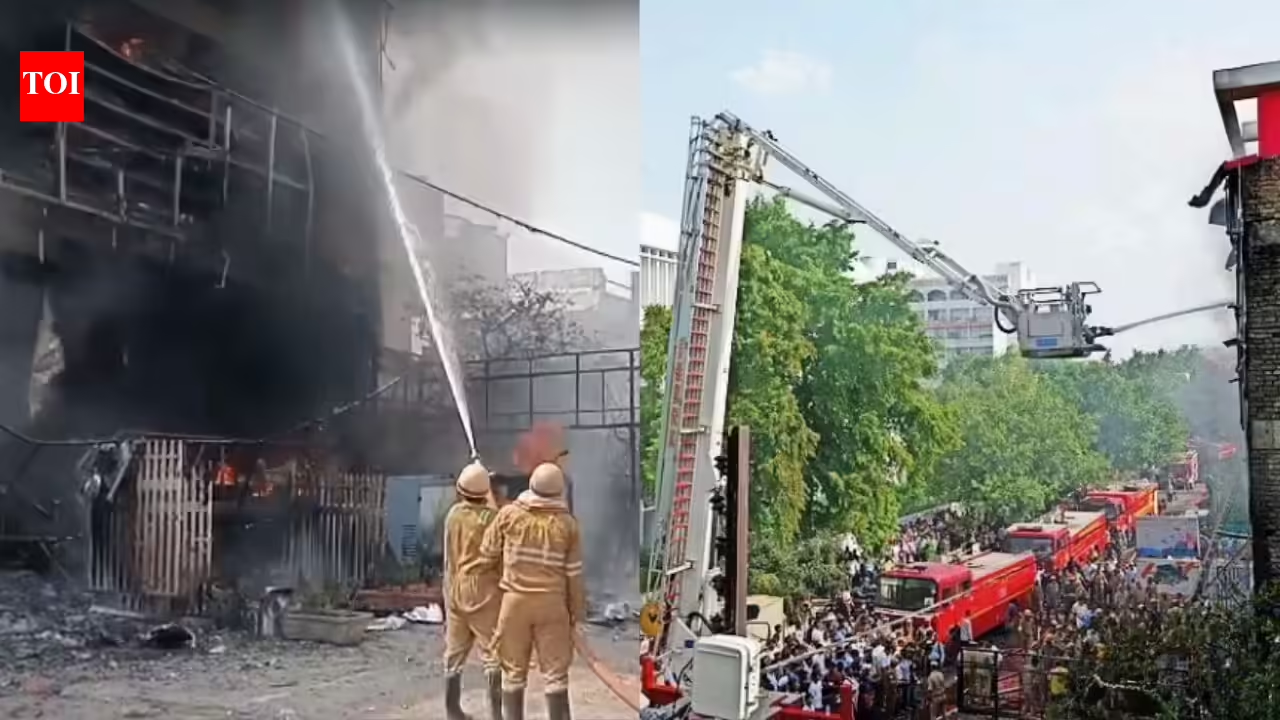
LUCKNOW: A suspected short circuit in an air-conditioner inside a pet shop may have triggered the devastating fire that killed at least 15 people, including five women, in Lucknow’s Aliganj on Monday. Meanwhile, fire safety experts and firefighters involved in the rescue operation say the scale of the tragedy was the result of multiple structural and fire-safety failures that turned the building into what they described as “a disaster waiting to happen”.The blaze spread rapidly through the structure, fuelled by highly combustible materials and aided by inadequate evacuation routes, trapping several students and employees inside.The basement, ground and first floors housed a pet shop and veterinary clinic, while the second floor accommodated Learning Space library and Head Hopper Studio, a gaming and animation firm offering skill-development training to students.“The tragedy was not caused by a single factor. It was a combination of poor building design, combustible materials, lack of ventilation and inadequate evacuation routes,” said senior fire safety consultant Krishna Kumar, who reviewed photographs and videos of the structure.“The moment the fire gained intensity, there was enough combustible load inside the building to sustain it for a long time,” said a firefighter who was part of the rescue effort.Fire experts pointed out that several sections lacked adequate windows and natural ventilation, causing smoke and toxic gases to accumulate quickly.Originally approved as a residential building, the structure was later converted into a commercial establishment housing a pet shop, veterinary clinic and a gaming and animation studio. Experts said such mixed occupancy significantly increases fire risks when safety norms are not upgraded accordingly.“In most fire incidents, smoke kills before flames do. If smoke cannot escape, occupants become disoriented and unconscious within minutes,” an expert said.Investigators are examining whether an automatic access-control system delayed evacuation. Yash, an employee who escaped, claimed the studio’s main entrance operated on a biometric (thumb-impression) system. “When the fire spread, the gate remained locked. Valuable time was lost trying to open it,” he alleged. Officials have not confirmed this claim but said it is being examined as part of the probe.According to firefighters who entered the building during rescue operations, combustible material was present on almost every floor. Bags of pet food, wooden partitions, furniture, electrical equipment, plastic packaging, decorative materials and office furnishings provided fuel for the rapidly spreading blaze.The first alert was raised by a sanitation worker, Marzeena, who noticed smoke and heard cries for help. Locals informed police and fire services.


