




Several migrant workers who recently returned to West Bengal have alleged that they were forced to flee their homes in Coochbehar’s Dinhata after facing threats and extortion linked to the implementation of the Bangla Awas Yojana.
The allegations have brought renewed attention to an alleged ‘cut money’ syndicate operating in the area. Villagers claimed that local Trinamool Congress (TMC) leaders demanded illegal commissions from beneficiaries of the housing scheme and resorted to intimidation when payments were refused.
“Cut money” refers to the unofficial commission allegedly demanded by local politicians or intermediaries in West Bengal to facilitate approval or release of government welfare benefits and development funds.
According to the villagers, beneficiaries were asked to pay Rs 20,000 from the Rs 1.20 lakh housing subsidy provided under the Bangla Awas Yojana. The subsidy is released in two instalments of Rs 60,000 each. Victims alleged that local leaders rejected offers of 10,000 and insisted on receiving a flat Rs 20,000.
Villagers told India Today’s sister channel Aaj Tak that many families were forced to take high-interest loans to meet the demands. They alleged that refusal to pay led to severe threats, including warnings that cattle would be slaughtered in front of their homes, that women in their families would be abducted, and that their houses would be demolished.
Several villagers who protested against the alleged extortion claimed they were forced to leave the state. Many spent a long period working as migrant labourers in Bengaluru.
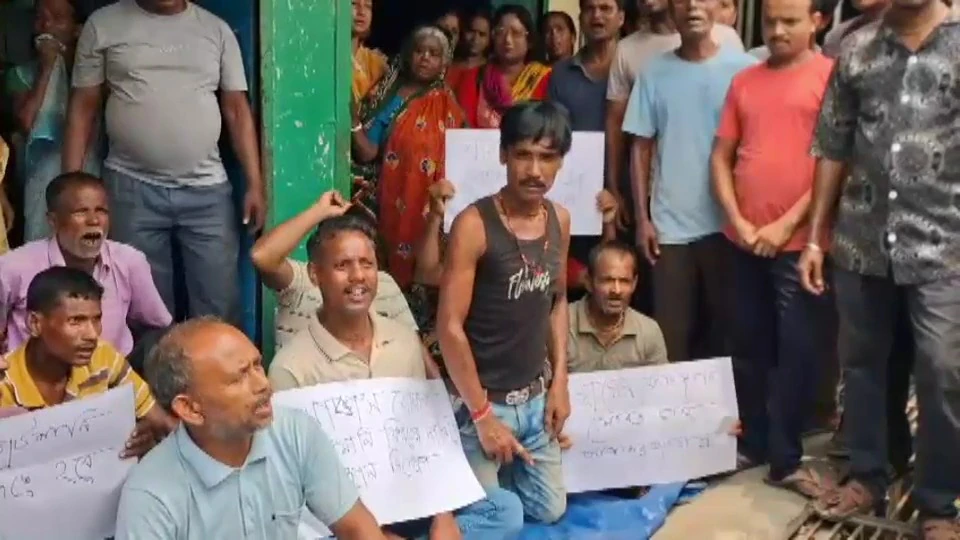
Following recent political shifts in Bengal, several of these migrant workers have now returned to their villages. After returning, aggrieved beneficiaries staged a massive demonstration outside the Gram Panchayat office, demanding a full refund of the money they alleged was extorted from them.
The protesting villagers said they want the allegedly collected ‘cut money’ returned and have demanded action over the threats and extortion they claim to have faced.
– Ends
With inputs from Mansur Habibullah


