







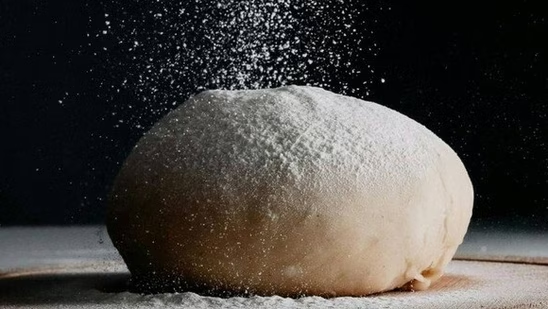
Dhruv Oberoi, Executive Chef of Olive Bar & Kitchen in New Delhi, is making a kulcha. It started yesterday — a biga of flour, water, honey, and barely a whisper of yeast, mixed without kneading and left overnight at 18°C. Today, he’ll build a second dough around it, stretch and fold it over two to three hours, then bake it at 250°C until it leopard-spots. It will be topped with duck leg rendered in its own fat, finished with kasuri methi and plum aachar. It is an extraordinary amount of effort for a flatbread.
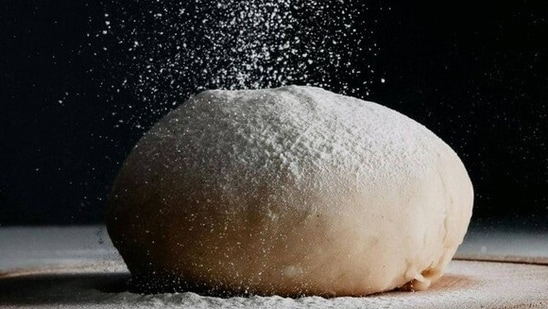
The flour he is using is not a specialist bread flour. It is Khapli atta — the same ancient Emmer wheat that has been grown in Karnataka and Maharashtra for thousands of years, the same grain that sat in Indian grandmothers’ kitchens long before the Green Revolution replaced it with higher-yield modern varieties. And the reason Dhruv is using it, rather than anything else available to him, is the same reason three very different cooks are using it right now: it is, in his words, “genuinely, stubbornly interesting.”
Khapli is Emmer wheat. In Italy it goes by farro; in southern India, samba; in Maharashtra and Karnataka — where it is still grown today, on black cotton soil — it is simply Khapli. It fell out of fashion when high-yield modern varieties made it economically unviable: more labour, more patience, less yield. For a generation, it belonged to grandmothers. Now it is coming back, and brands like Aashirvaad Chakki Khapli Atta are a significant part of why — making genuine stone-ground Khapli accessible, consistently, at a price point that doesn’t require a speciality food budget.
The first thing every cook who uses it mentions is the flavour. Earthy. Nutty. Distinctly its own. Nikhil Merchant, Mumbai-based F&B consultant and food writer, switched his daily rotis to Khapli and found the decision required almost no discipline, because he actually preferred it. “Beyond the health benefits,” he says, “they have a distinctly earthier, more rustic flavour that I truly enjoy.” Sadaf Hussain, Delhi-based chef and author, remembers the first roti he ever ate made with Khapli — at his late food mentor Ashish Chopra’s home in Noida, a roti that looked different from every roti he had grown up eating. “It had this soft, slightly nutty quality that felt very distinct from regular wheat.” That was years ago. He still keeps a batch of Khapli atta in his kitchen.

The flavour is a function of how the grain is made. Aashirvaad Chakki Khapli Atta uses a traditional “chakki jaisi pisai” method — stone-like grinding that works the grain slowly, preserving its natural architecture rather than stripping it down under industrial roller pressure. The result is a flour with a confirmed Water Absorption Percentage of 73%, measurably higher than most wheat flours, which is what gives dough made with it that characteristic depth and resistance. It absorbs water more slowly, develops gluten more gently — what Dhruv describes with a professional’s precision as a flour that “rewards patience very nicely.” He is not being romantic. He is describing what actually happens when you put this flour to work.
What happens next, in his kitchen, is that Duck Khurchan Kulcha. It is, by any measure, an ambitious thing to do with a flour most people associate with a simple chapati. But that is part of what Khapli does to cooks who spend time with it — it opens up. “It connects technique with memory,” Dhruv says. “Whether it’s a simple phulka or a more contemporary application, Khapli brings a sense of grounding to the plate.”

That grounding shows up in the numbers too. Per 100g, Aashirvaad Chakki Khapli Atta carries 11.4g of dietary fibre against 2.76g in refined flour. Three rotis provide around 34% of your daily fibre requirement and 23% of your daily protein — iron and calcium both run significantly higher than in maida. It is, as Nikhil says, “one of the most valuable ancient grains available today” — and one that is lower in gluten than modern wheat, though not gluten-free, a distinction worth keeping clear. The nutrition is not the story, exactly, but it is the reason a lot of people first go looking. What keeps them is the cooking.
ALSO READ: Whole Grains vs. Refined Grains: What Indian Diets Need to Know
The cooks who have fallen for Khapli are not all using it the same way, and that range is itself an argument for the grain’s versatility. Nikhil’s recipe of choice is savoury pancakes — Khapli flour, egg, buttermilk, onion, green chilli, coriander and cumin, battered and rested ten minutes before hitting the pan, cooked until crisp and golden, plated with burrata or hung curd, herb oil and cherry tomatoes. “A wholesome, savoury breakfast that lets the nutty, earthy flavour of Khapli wheat truly shine.” It is a long way from a chapati. Sadaf, meanwhile, takes the opposite view entirely: “The beauty of Khapli lies in not overcomplicating it. The simpler you keep it, the more naturally its nutritional and culinary qualities come through.” His go-to recipes — a Khapli Sattu Litti, stuffed with spiced sattu and served with chokha and melted ghee, and a Khapli Soft-Shell Taco, thin flatbreads cooked on a hot tawa until just spotted — are arguments for restraint. Let the flour do the work, he says. It will.

YOU MAY LIKE: Swipe Right on Khapli Atta
What makes all of this possible at scale — the ability to buy Khapli atta with confidence that it is what it says it is, processed the way it should be — is something Aashirvaad has built deliberately into its Chakki Khapli Atta. Every pack carries a UID-traceable quality certificate, verifiable by the consumer. The wheat comes from farmers in Karnataka and Maharashtra, and goes through 40+ quality checks from grain to grinding. For Sadaf, this matters in a particular way: “I keep returning to it because it has both flavour and function.” For Dhruv, it is what allows technique to become vision: a flour he trusts enough to build a two-day recipe around.
And for Neha Deepak Shah, culinary creator and former MasterChef runner-up, it is something simpler and perhaps more durable than either: “Khapli wheat is one of those ingredients that instantly connects you to older Indian food traditions.” Not a trend. Not a superfood. A grain, with a very long memory, that is finally getting a kitchen worthy of it.
GOOD TO KNOW: All Your Questions About Khapli Atta, Answered
Want to try it? Aashirvaad Chakki Khapli Atta is available on Blinkit and Swiggy Instamart.
Note to readers: This article is part of HT’s paid consumer connect initiative and is independently created by the brand. HT assumes no editorial responsibility for the content, including its accuracy, completeness, or any errors or omissions. Readers are advised to verify all information independently.
Want to get your story featured as above? click here!