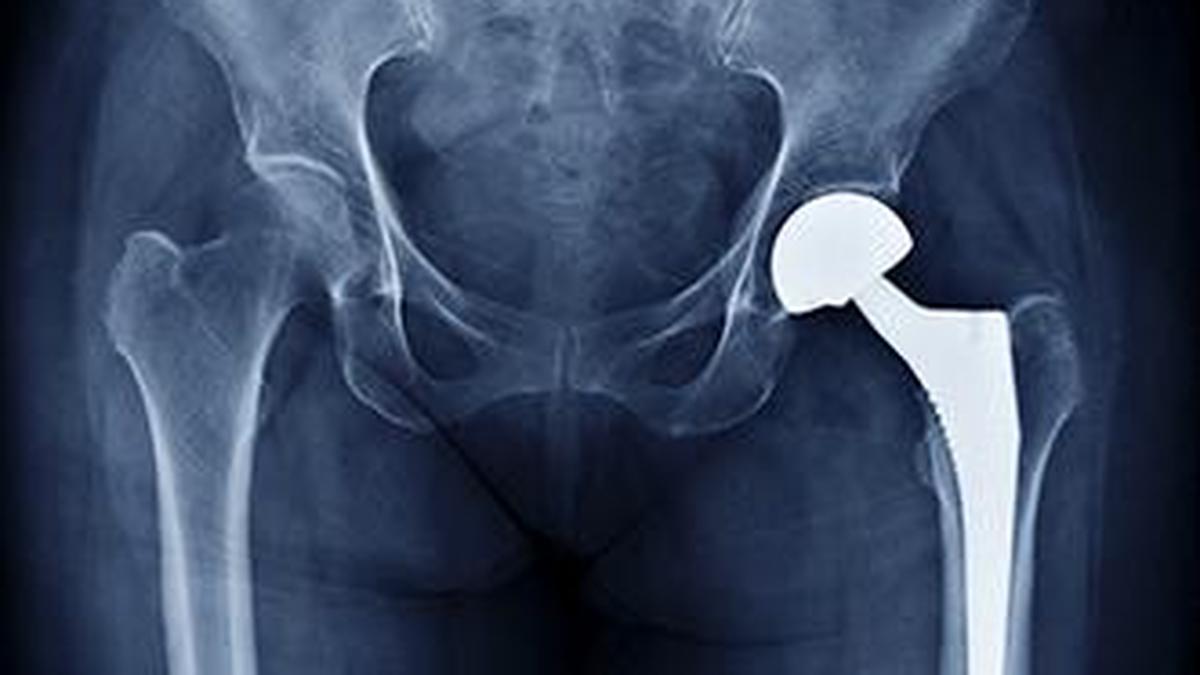
A 15-year study conducted at two tertiary care referral hospitals has found that infections and fracture-related complications are becoming increasingly important reasons for revision hip replacement surgeries in India. This shift reflects the large number of young patients with demanding lifestyles who undergo these surgeries and subsequently experience such complications.
The study, recently published in the Journal of Clinical Orthopaedics and Trauma, analysed 252 revision total hip arthroplasty (rTHA) procedures performed between 2011 and 2025 at SPARSH Hospital for Advanced Surgeries, Bengaluru, and KIMS Sunshine Hospital, Hyderabad. Both these institutions are tertiary referral centres that routinely receive complex failed hip replacement cases performed across different hospitals and regions of the country. Therefore, the study reflects the broader pattern and complexity of revision hip arthroplasty cases presenting in India, the authors said.

Additional surgery
Revision hip arthroplasty refers to additional surgery performed when a previously implanted artificial hip develops complications such as loosening, infection, instability or fractures around the implant.
Researchers noted that aseptic loosening – where implants gradually lose fixation without infection – continues to remain the single most common reason for revision surgery. However, its relative contribution has steadily declined over the years due to availability of better implants and techniques. At the same time, infections, instability and fracture-related complications are becoming more prominent causes for complex revision procedures.
The authors emphasised that modern hip replacement surgery remains one of the most successful procedures in orthopaedics, with a majority of patients experiencing excellent pain relief, mobility, long-term implant survival and quality of life. However, with an increase in both young and elderly patients undergoing joint replacement surgery and their longer life span with implants, the overall number and complexity of revision surgeries are naturally expected to rise over time.
Ravikumar Mukartihal, Consultant Orthopaedic Surgeon at SPARSH Hospital and one of the lead authors of the study, said revision surgeries today are technically far more advanced than in the past as techniques and variety of implants available have dramatically improved. “We are now increasingly managing infections, instability and fractures, which often require advanced reconstruction techniques and careful patient optimisation,” Dr Mukartihal said.
Higher risk
One of the important findings of the study was the higher complication risk seen in medically vulnerable patients. Researchers found that patients with two or more uncontrolled comorbidities had significantly higher risks of infection following revision surgery.
A V Guruva Reddy, Chief Joint Replacement Surgeon at KIMS Sunshine Hospital and co-author of the study, said careful pre-operative medical optimisation plays a major role in improving outcomes. “Conditions such as diabetes, nutritional deficiencies and cardiovascular disease can influence recovery and infection risk. Careful preparation before surgery is essential in achieving good long-term outcomes,” Dr Reddy said.
Sharan S. Patil, Chief Orthopaedic Surgeon at SPARSH Hospitals and another co-author of the study, said the findings highlight the need to create centres of excellence for these highly specialised revision arthroplasty services.
Advanced techniques
The increasing availability of advanced reconstruction options, including Indian-manufactured 3D-printed acetabular implants and customised revision systems, is improving the management of severe bone loss and complex revision hip surgeries in India. These technologies are enabling surgeons to perform difficult revision procedures more effectively while improving accessibility and affordability for patients, he said.
The findings underscored the importance of long-term follow-up after primary hip replacement surgery, as early detection of infection, implant loosening or instability could reduce complications and improve outcomes, the researchers said.
They added that advances in implant design, surgical techniques, infection prevention and perioperative care continue to improve the durability and success of modern hip replacements. Despite the increasing number of revision surgeries and their growing complexity, the authors emphasised that primary hip replacement surgery continues to have very high success rates, with most patients experiencing sustained pain relief, improved mobility and better quality of life for many years after surgery.
Published – June 02, 2026 07:00 am IST