




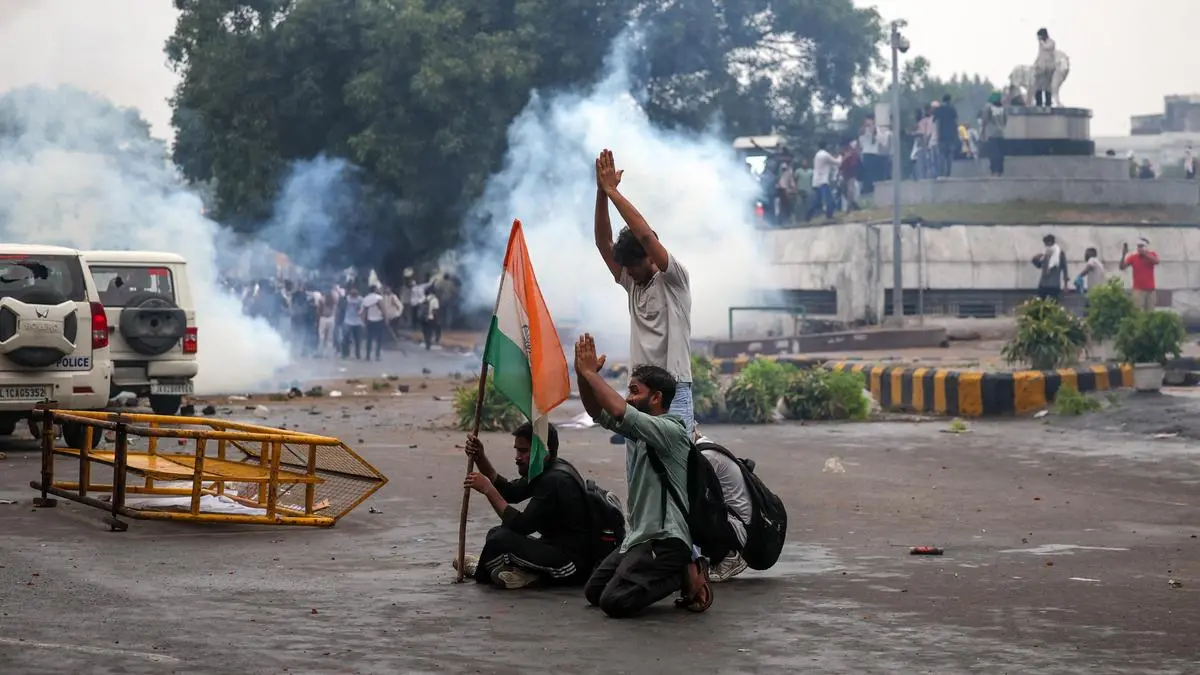

Protesters with an Indian flag gesture in request for the police not to use tear gas as supporters of India’s Cockroach Janta Party demonstrate on the opening day of the Indian parliament’s monsoon session, in New Delhi, India, 20 July, 2026.
| Photo Credit: Anushree Fadnavis/Reuters
At its best, democracy means being able to speak freely, live with difference, protest without fear and choose your government through credible elections. At the very least, it means that people get to decide who governs them. India, ranked 157th among 180 countries in the 2026 World Press Freedom Index, is doing poorly on the first count. The past year has also seen Assembly election results that disrupted several long-standing political patterns, along with the deletion of 1.5 crore names from existing voter lists. That makes the basic question of how freely and fairly people can choose their government harder to ignore.
For India’s 80th Independence Day, this package brings together Frontline stories from the past year on the things that make democracy work: a free press, the right to protest, a society that can accommodate difference, and elections in which every vote counts. Together, they offer a snapshot of where Indian democracy stands today, and what is at stake for a generation that will inherit it.