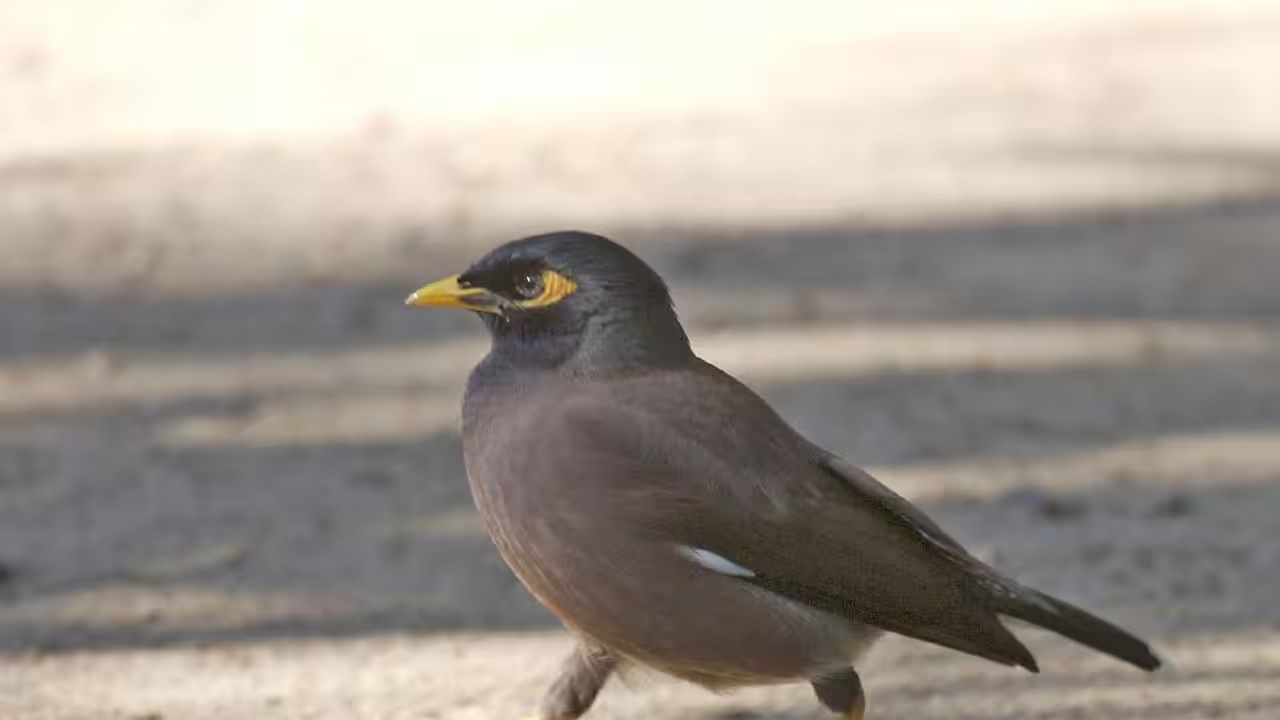
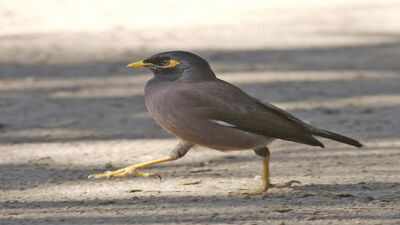
When you walk through suburban parks or a busy city square, it is hard to miss the bold brown bird striding across the grass. The Common myna, otherwise called Indian myna, has become such a common sight in cities because of its yellow eye patch, colourful bill, and brown feathers. But there is more to this bird than its familiar appearance suggests.In 1862, Victorian agricultural officials sought a natural way to manage insect pests affecting market gardens around Melbourne. To help protect crops, the Common myna was introduced from Asia with the expectation that it would feed on pest insects. However, the species adapted readily to urban environments and exploited a wide variety of food sources, allowing it to spread well beyond its original introduction.According to the Australian Museum, the Common myna (Acridotheres tristis) has a highly opportunistic diet that includes insects, fruit, seeds, pet food and discarded human food. The species forms long-term breeding pairs and defends nesting territories, using tree hollows, roof spaces, wall cavities and other sheltered sites to build nests made from twigs, leaves and a variety of natural and human-made materials.These traits have helped the bird thrive in many human-altered habitats. Currently, the Common myna is one of three bird species listed as one of the world’s 100 worst invasive alien species in the Global Invasive Species Database. The attempt to use the bird to control insect pests around Melbourne instead helped turn it into an invasive pest.Territoriality of the bird species and its impact on native faunaThe common myna’s aggressive territorial behaviour during the breeding season is one of the main concerns about the species. The breeding pairs aggressively guard both their nesting and feeding sites and compete with other native birds for nesting sites.According to the Department of Natural Resources and Environment Tasmania, the species poses recognised risks to biodiversity, agriculture and urban environments. The report notes that Common mynas compete with native hollow-nesting birds and mammals for nesting sites, damage soft fruit crops and can create problems around homes and buildings through their nesting activities, noise and the presence of bird mites.The department also reports that Common mynas gather in large communal roosts, sometimes numbering hundreds or even thousands of birds in dense vegetation or urban structures. These roosts can generate substantial noise, large accumulations of droppings and unpleasant odours. When birds nest in roof spaces, gutters and building cavities, they can also block drainage systems and create ongoing maintenance issues for property owners.Their flexible diet adds another challenge when they live near farmland. Even though they have been introduced to eliminate insect pests, Common mynas also eat ripening fruits, as well as livestock feed and stored grains, which could influence agricultural output in some cases.Beyond physical displacement, there is considerable concern over the species’ wider impact on environmental and public health. Common mynas can carry avian pathogens and bacterial disease agents, including Salmonella and avian malaria (Plasmodium spp.), which pose health risks to native bird populations and humans. As aggressive competitors for nesting cavities, they frequently evict native birds, often destroying eggs and fledglings in the process, which reduces the reproductive success of native wildlife. Furthermore, because they regularly roost and nest in wall cavities and roof spaces of residential buildings, they increase the likelihood of parasites like bird mites (Ornithonyssus bursa) migrating indoors, causing severe skin irritation and discomfort to occupants.
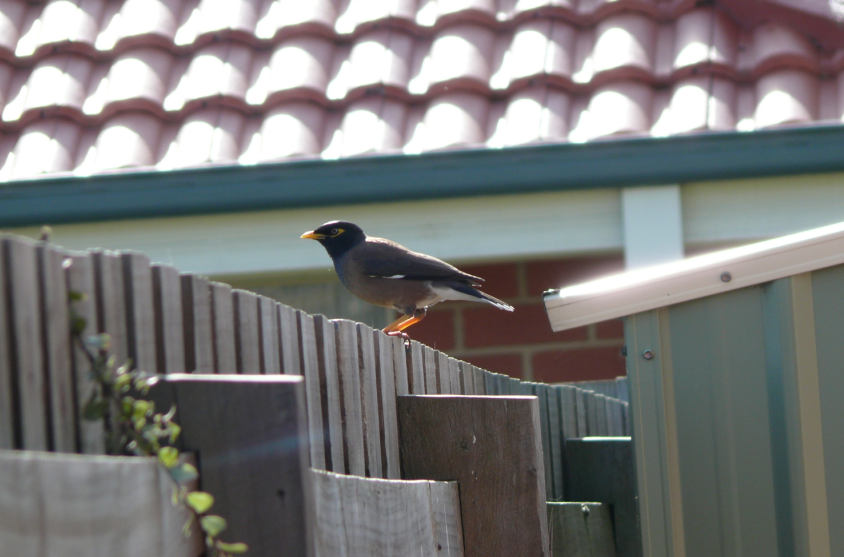
Large communal roosts create noise and droppings, causing maintenance issues. Managing these invasive populations requires community participation and habitat restoration. Image Credits: Wikimedia Commons
Management of invasive speciesManaging common myna populations requires community participation and long-term habitat management. Because the species thrives in human-altered environments with abundant food, reducing food sources may help.Regional biosecurity guidance also highlights the importance of maintaining healthy native vegetation. Common mynas generally prefer open, disturbed habitats over dense native vegetation. Preserving or restoring native trees, shrubs and understorey plants can create habitat conditions that favour native wildlife while being less attractive to mynas.In some regions, local councils and community organisations also operate humane trapping and monitoring programmes as part of broader invasive species management efforts. When combined with habitat restoration and ongoing monitoring, these measures can help reduce pressure on native wildlife in affected areas.The history of the common myna shows how introducing a species to achieve one goal can produce unwanted results. Understanding the bird’s ecology and using evidence-based management are essential to conservation.