







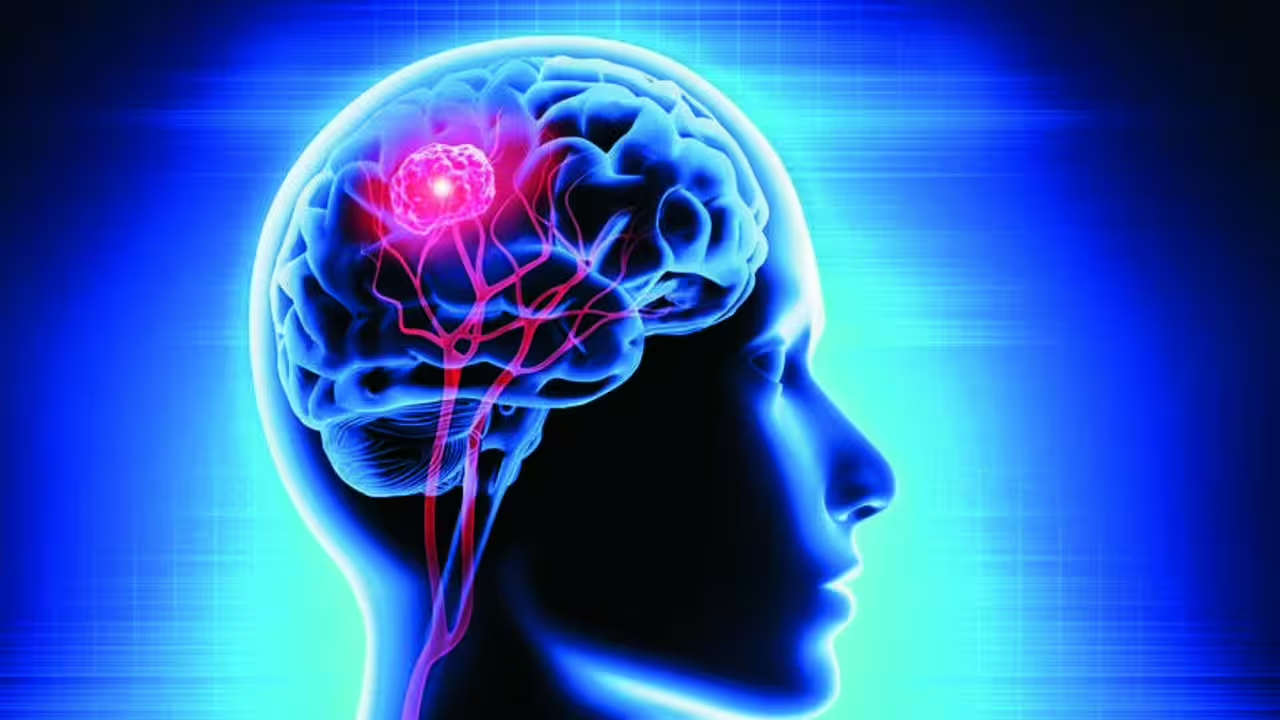
Hyderabad: A Hyderabad-based research institute has launched a study to investigate subacute sclerosing panencephalitis (SSPE), a rare and fatal neurological disorder that can emerge years after a child recovers from measles. The research aims to understand why only a small proportion of children who contract measles develop SSPE and also to generate evidence for a larger national-level study.Speaking at an event in Hyderabad recently, Dr Chandrashekhar Thodupunuri, whose Manikonda-based Resplice Autism Research Foundation and Institute is currently studying three children with SSPE, said the disease is extremely rare and remains poorly understood. According to the WHO, SSPE affects about four to 11 people per one lakh measles cases worldwide. There is currently no cure.“We have only three cases now. First, we want to understand the science behind this disease. After that, we will apply to the Indian Council of Medical Research (ICMR) for approval to carry out a larger study,” he added.Experts said one of the children reached the institute in the early stage of the disease, while the two children from Maharashtra were brought for evaluation at an advanced stage. “The research will examine the children’s clinical features, immune response, genetic and environmental factors, and other biological markers to understand why some children become vulnerable to SSPE after measles infection,” Dr Chandrashekhar said.To identify more cases and collect research data, the institute will organise a free medical camp on August 9 for children with a history of measles, those diagnosed with SSPE, and children who developed neurological problems after measles or MMR vaccination. The findings from the camp will be added to the ongoing study.Ramesh Pole, a parent from Hingoli in Maharashtra whose son is suffering from SSPE and is part of the research, said the disease had devastated his family. “We have been searching for answers for years, but there is no cure. We came to Hyderabad with the hope that this research will help doctors understand the disease better and find a solution in the future,” he said.In 2025, Dr Chandrashekhar and his team received ICMR approval to conduct a clinical trial on faecal microbiota transplantation (FMT), a treatment that restores healthy gut bacteria and has shown promising results in improving behavioural symptoms in children with autism.


