





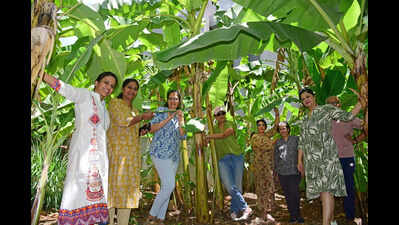
The sky is overcast, but residents of Koramangala 1st Block refuse to let the weather dampen their spirits. On a vacant plot inside the layout, they have created a thriving organic garden, nurturing banana, drumstick and hibiscus plants.A key strength of the initiative called Pratham Garden is the way residents draw on the knowledge and expertise of senior citizens living in the community while planning and building the farm. “Residents like Rajagopal and Kousalya guided us by suggesting what plants to grow, how to support banana plants when heavy with fruit, and how to space banana plants to improve fruiting. We also learnt what to grow in the shade of larger plants. We grow pumpkin, lemongrass, and other intercropped plants here,” says Padmashree Balaram, president of the RWA, adding that the layout has 362 plots and is home to over 1,000 people.Garden produce is sold through the RWA group: Photos of the harvest are posted, and a woman living oppo site the garden helps store and sell the produce. A portion of the proceeds is reinvested into the garden, helping sustain inputs and upkeep without placing the burden on a few individuals.Beyond the produce, the garden has become a space where neighbours meet, work side by side, and build familiarity across age groups.Community gardening brings everyone together, and the joy of harvesting organic fruits and vegetables grown with collective care is hard to match. Across the city, these small kitchen gardens have become hubs for community engagement, learning, and shared responsibility.Small Spaces, Big Harvests Sattva Greenage has several fruit trees in its orchard. “Recently we sold our mangoes and jackfruits to residents at a market price,” says Ram Ghatage, a resident. “Now our jamun trees are laden with fruits. We are trying to figure out how to harvest and preserve them,” he says.Community farms set up in common areas (1,000 to 2,000sqft) can provide a consistent supply of fresh, pesticide-free vegetables to apartment residents.Schools are also joining in. Orchids The International School and Apollo National Public School have integrated community farming into their curriculum, educating children on food, economics, and circular systems.Lessons Learnt, New Plans Ahead While leaving her corporate career in 2016, Anamika Bist wanted to chase something slower, and perhaps older. She wanted people to feel the soil again. That served as the seed of Village Story, Bengaluru’s most recognisable community farming experiment. What began as a handful of workshops soon grew into farmers markets, composting sessions, and community farming. The experiment was paused during the pandemic. Now, after a decade of learning, the team is readying a pivot. “The next chapter is under wraps,” smiles Bist. “We are all set to make a return, taking everything we’ve learned — the wins, the friction, the truths. We are building something more sustainable,” she adds.Sprawling Community Garden A farming community, which is part of HSR Citizen Forum, grows vegetables at Swachagraha Kalika Ken dra, guided by Dr Shanthi, a medical professional and environmentalist. This 5,000sqft space has since become a living example of how citizens can come together to create a greener and healthier neighbourhood. “We meet at the garden regularly, share our knowledge of dig ging, sowing, weeding and watering, and enjoy community farming to gether. Beyond farming, these interactions have fostered a deep sense of community spirit,” says Rajini Bopaiah, founder member of HSR Citizen Forum, who is part of the initiative, adding the harvest is shared among the members.Seasonal greens, gourds, cabbage, brinjal, tomatoes, chillies, and beans thrive in the fertile soil, enriched by compost produced from segregated kitchen waste. Fruit trees like gooseberry, avocado, and dragon fruit add diversity and beauty to the land scape. The harvest is shared among volunteers. “The community garden has also become a learning centre, demonstrating practical aspects of composting and urban farming,” says Bopaiah.
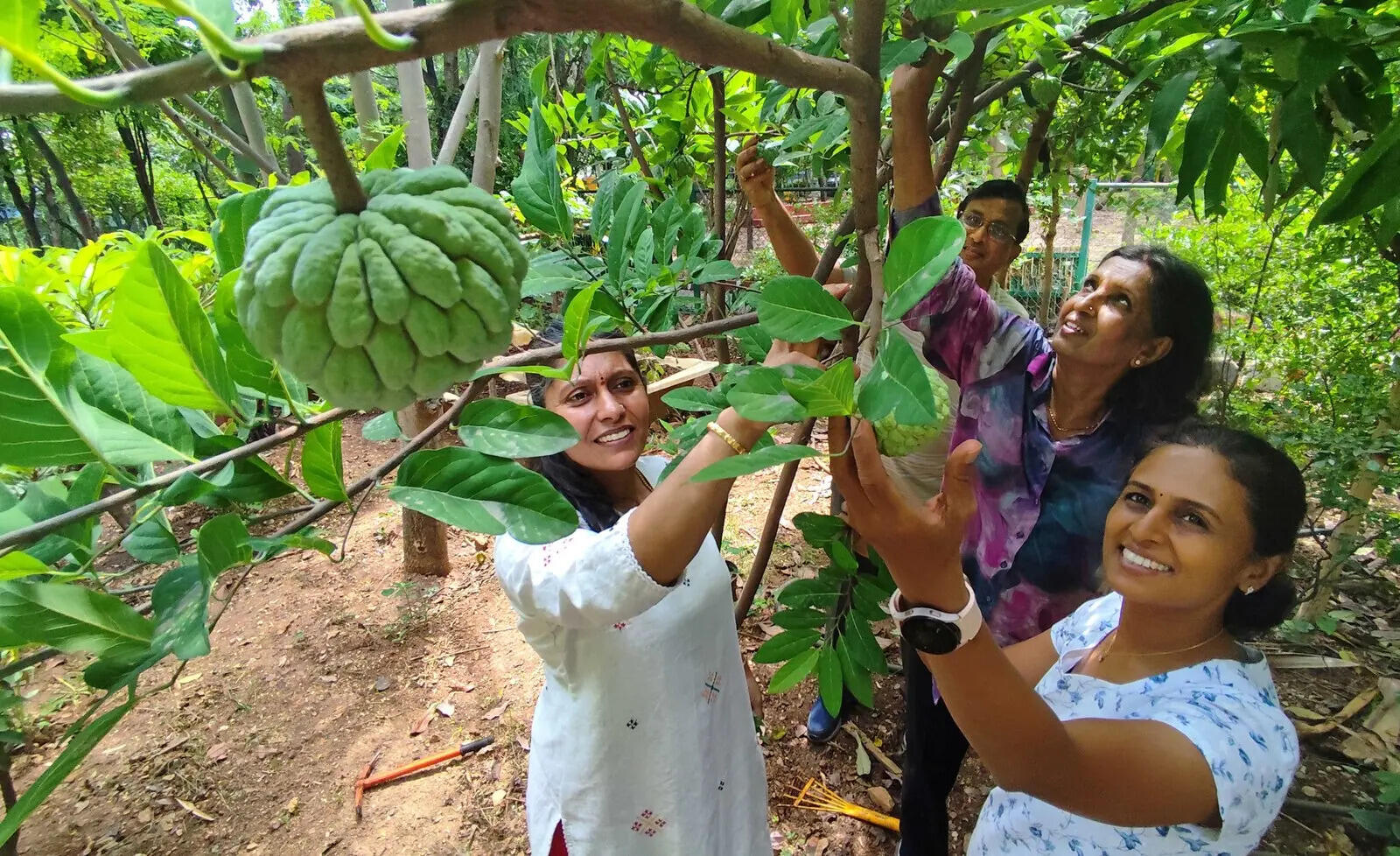
HSR Citizen Forum manages a community garden spread across 5,000sqft
The team also distributes seeds, saplings, compost, and surplus produce to gardening enthusiasts across HSR Layout. The compost generated at Swachagraha Kalika Kendra is regularly supplied to residents who wish to nourish their plants, thereby extending the benefits of the initiative far beyond its boundaries, says Bopaiah.Green CommunityB’luru residents Sameer Shisodia and Shubha Ramachandran are part of a unique farming community — The Tamarind Valley Collective in Thagatti, Tamil Nadu. Around 50 families jointly own a 100-acre farm. They cultivate millets, tamarind, ground nuts and vegetables while regenerating the natural landscape for native plants. Produce is shared amongst the residents. Residents make decisions together and experiment with a living style that reduces consumption and incorporates naturally supported cyclical systems. For instance, homes made of natural materials like mud. The project welcomes visitors.Farming As Weekend Recreation Some opt for community farming on the weekends on the outskirts of the city by leasing small plots of land and growing vegetables. For a small fee, you get a 20×20 plot to grow your chosen produce, says Arunkumar Sivanesan, a software engineer and resident of Harsha Landmark Apartment.A farmer handles land preparation, sowing, and upkeep, while families engage in weekend cultivation and crop monitoring, fostering are warding connection with their food. “It is a win-win situation for everyone involved. Families get a unique recreational experience and chemical free food. Farmers receive a steady source of income and community support,” says Sivanesan, who used to rent land at a community farm in Whitefield, along with five of his apartment buddies.