



4 min readAmritsarUpdated: Jun 6, 2023 04:04 PM IST
In June 1984, the Indian Army conducted a controversial operation inside the premises of the Golden Temple in Amritsar. Codenamed Operation Blue Star, it was aimed at flushing out Jarnail Singh Bhindranwale, the then head of Damdami Taksal and a pro-Khalistan ideologue, and his armed supporters who had fortified themselves within the Golden Temple complex.
The six-day-long operation, which concluded on June 6, resulted in significant damage to the Akal Takht building and led to the loss of many lives, including Army personnel, militants, and civilians. The exact number of casualties remains a subject of debate. It is estimated that over 1,000 civilians and militants may have been killed during the operation. Lieutenant General (Retd) Kuldeep Singh Brar, who as a major general commanded Operation Blue Star, recently said in an interview that around 300 to 400 soldiers lost their lives while the official figure stands at 83.

The controversial operation had far-reaching consequences and was followed by the assassination of then prime minister Indira Gandhi, and the massacre of Sikhs in Delhi and other cities across the country. It also triggered a decade-long period of militancy in Punjab, which eventually subsided in the late 1990s. The operation left a profound impact on the collective memory of the Sikh community.
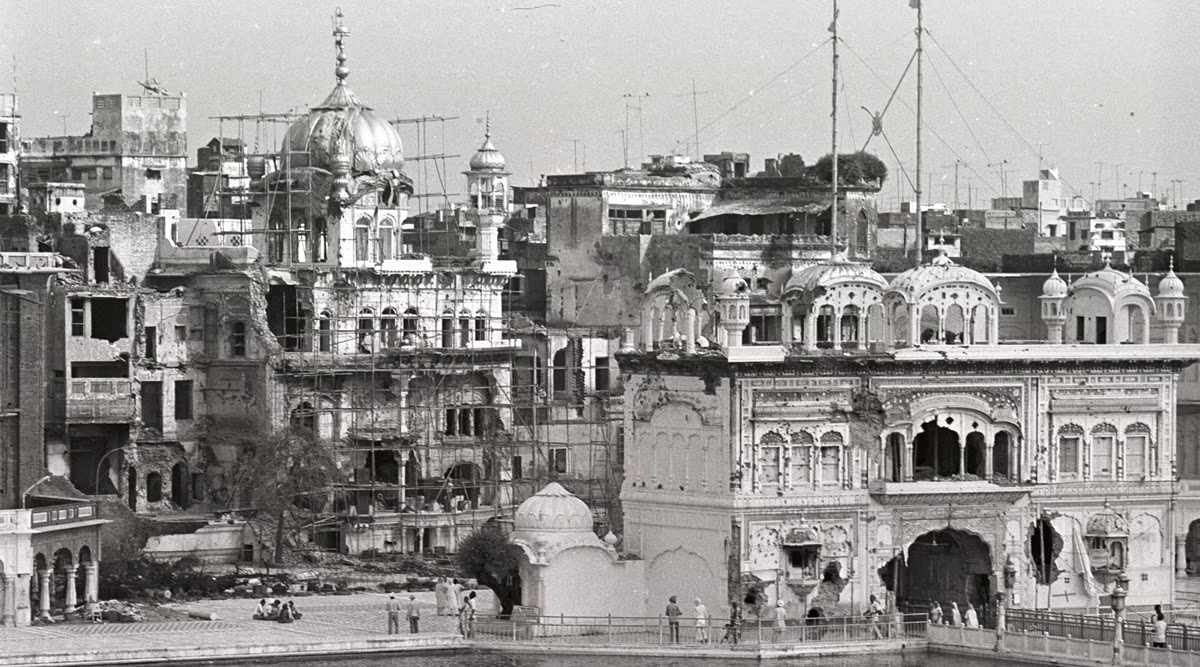
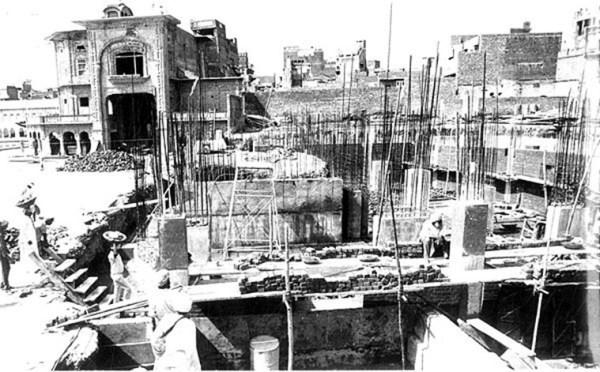 Construction work in progress after Operation Blue Star at Akal Takht, Amritsar. (Express archive photo)
SGPC
Shiromani Gurdwara Prabandhak Committee (SGPC) observes June 6 as ‘Ghallughara Diwas’ (Holocaust Day) and hold several events before the date. The Sri Akhand Path Sahib—the uninterrupted reciting of Guru Granth Sahib—starts at Sri Akal Takht Sahib on June 4, and the bhog or the concluding ceremony is held on June 6 every year. The Akal Takht Jathedar also issues a message for the community from the Akal Takht after the bhog ceremony.
Following his message, some family members of top Sikh militants killed in the Army action are also honoured. The function is observed between 6 am to 8 am on June 6. For the last few years, the holy saroop (copy) of Sri Guru Granth Sahib Ji, which was damaged during the military action in June 1984, is displayed on June 6 at Gurdwara Shaheed Baba Gurbaksh Singh Ji for the Sangat (congregation) to pay obeisance. The Shiromani Akali Dal Amritsar headed by MP Simranjit Singh Mann also actively participates in the Akal Takht function.
Sikh separatists
Story continues below this ad
Sikh separatists also attend the function at Akal Takht. Dal Khalsa organises a remembrance parade in Amritsar on June 5 every year. The radical Sikh outfit also gives a bandh call on June 6. Pro-Khalistan slogans are raised during the events. The current head of the Damdami Taksal Harnam Singh Dhuma also organises a separate function at the Taksal’s headquarters at Chowk Mehta, around 40 km from Amritsar. The event brings together different separatist groups, prompting the police to be on alert during the event. In the past, tension has been reported between SGPC staff and separatists during the anniversary event when the Shiromani Akali Dal Badal was in power.
Police
Tension builds up before Operation Blue Star’s anniversary and the police remain on alert mode. It allows the police, who are present inside and outside the Akal Takht during this occasion, to make a profile of separatists, find out about new recruitments, as well as about their strengths and limitations. No violence has been reported during the Operation Blue Star anniversary events since 2014 between SGPC staff and unorganised youth at Akal Takht. However, minor incidents have taken place.
Political parties
Though SGPC is the main organiser, Shiromani Akali Dal Badal’s top leadership avoids direct participation. The presence of the separatists at the event also keeps mainstream politicians away.