

3 min readChandigarhUpdated: May 14, 2026 10:21 AM IST
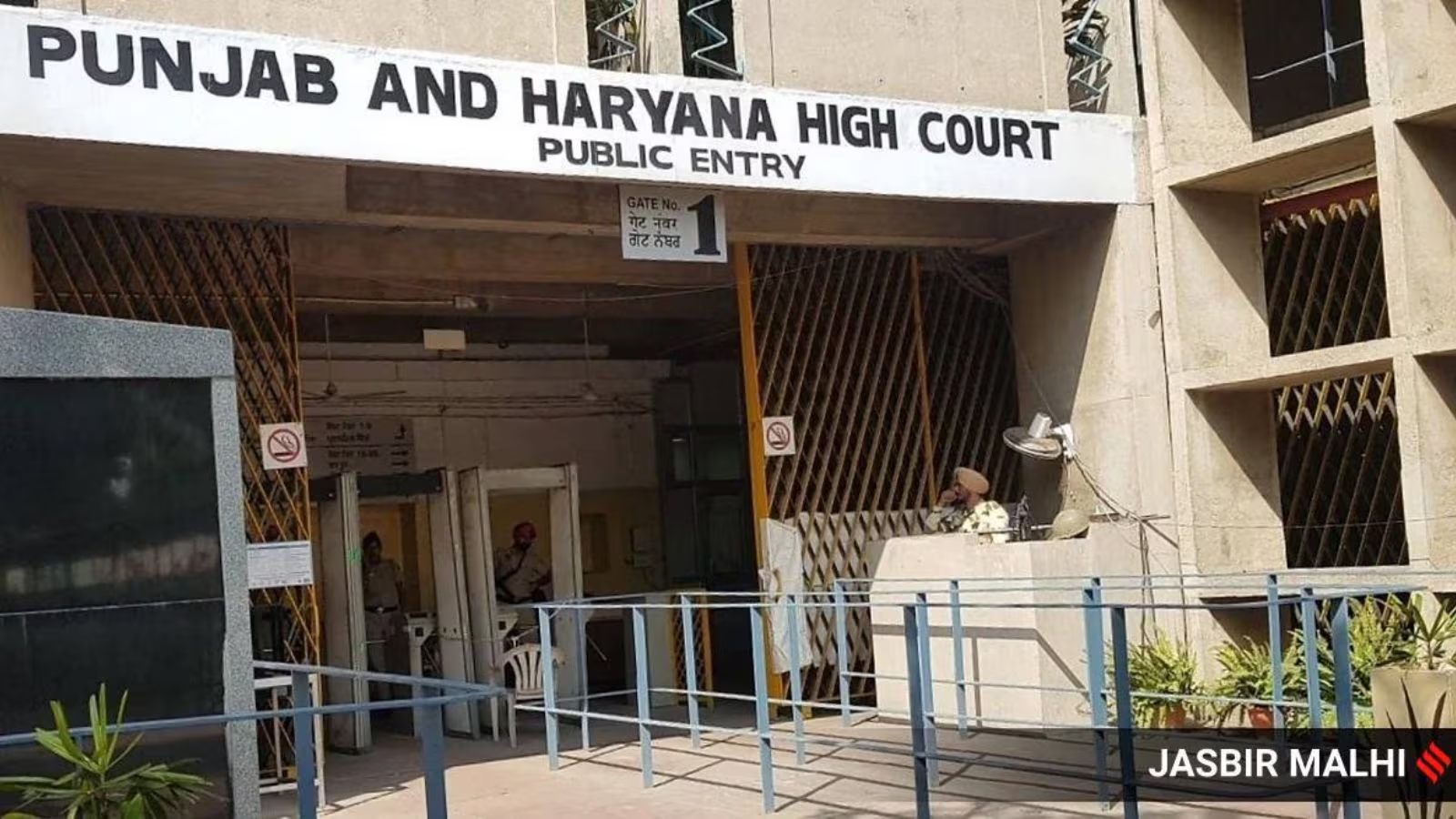
The Punjab and Haryana High Court on Wednesday reserved its verdict on petitions challenging the proposed Tribune Chowk flyover project in Chandigarh after amicus curiae Advocate Tanu Bedi argued that the city’s Master Plan 2031 prioritised pedestrians, cyclists and public transport over “flyover-centric” traffic solutions.
During the hearing, Bedi repeatedly referred to provisions of the Chandigarh Master Plan 2031 and submitted before the Bench: “A cyclist can use a rail underbridge, a pedestrian also can. They can’t use flyovers.”

Relying extensively on the city’s statutory planning framework, Bedi argued that the Master Plan consistently envisaged pedestrian-friendly infrastructure, dedicated public transport corridors and measures discouraging dependence on private vehicles.
Referring to page 290 of the Master Plan, Bedi argued that dedicated BRTS corridors had already been proposed, including along Dakshin Marg.
“Corridor 1 specifically has a route on Dakshin Marg. If that corridor had been started, they would not have even thought about a flyover at that place,” she argued, adding that “none of the corridors has even been conceptualised”.
Bedi also referred to provisions emphasising the augmentation of city bus systems and public transport infrastructure. Reading from the Master Plan, she submitted that “a good public transport system is a modern-day necessity” and that shortcomings in public transport had led to increasing use of personal vehicles.
According to her submissions, the Master Plan itself recorded that increasing traffic density had placed “even greater pressure on the infrastructure in terms of roads and other infrastructures associated with it”.
Story continues below this ad
Referring to page 298 dealing with “traffic integration”, Bedi submitted: “A major switchover to public transportation, adoption of cycling as a mode of transport, and improved pedestrian infrastructure is to be ensured. On the other hand, dependence on private vehicles has to be discouraged.”
“The flyover gives priority to private vehicles,” she argued, while also referring to what she described as the “traffic induction phenomenon”, contending that expansion of road infrastructure often leads to an increase in the number of vehicles on roads.
“Not only are we giving priority to private vehicles, we are also ensuring that their numbers increase on the roads, rather than decrease, which should be the purpose,” she submitted.
Bedi further referred to pages 305 and 306 of the Master Plan dealing with railway underbridges and underpasses. According to her submissions, the planning document specifically proposed underpasses at several locations, including Tribune Chowk.
Story continues below this ad
She read from the document that “railway under bridges shall be designed with adequate provisions for pedestrians and cyclists”, while arguing that the Master Plan stressed that “the primary focus must remain on retrieving the city for pedestrians and cyclists”.
On the other hand, senior advocate Amit Jhanji argued that the Chandigarh Master Plan did permit flyovers. He further submitted that only Sectors 1 to 30 of Chandigarh had been recognised as heritage zones, and not the entire city.