










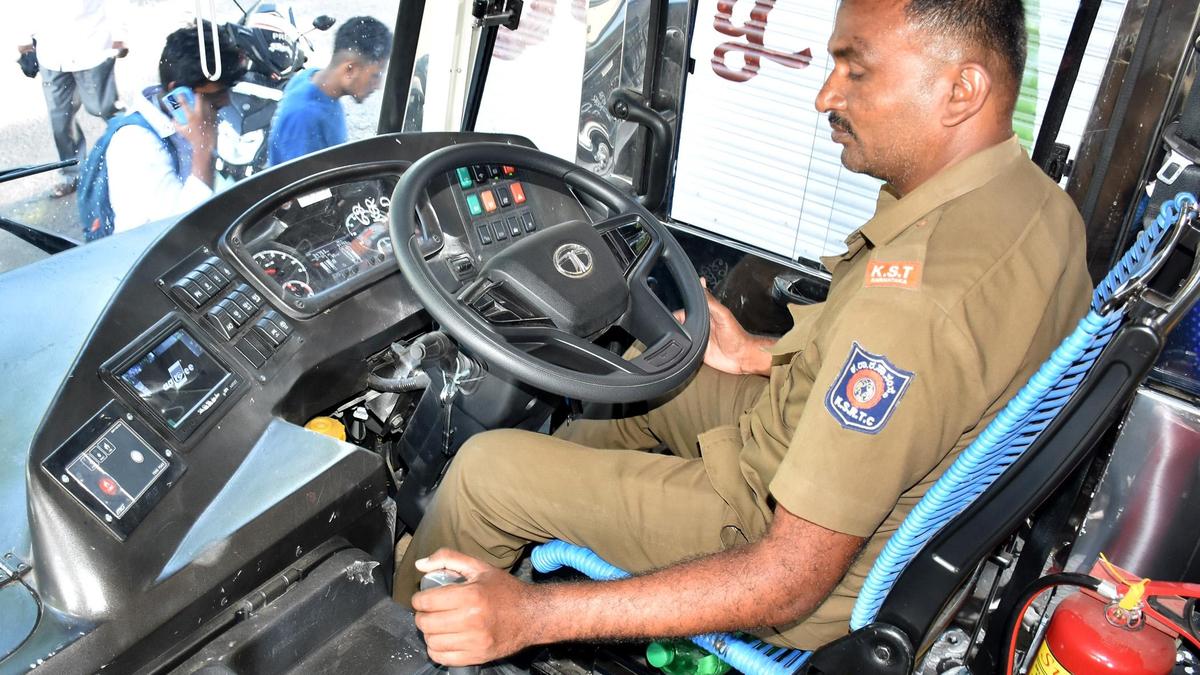
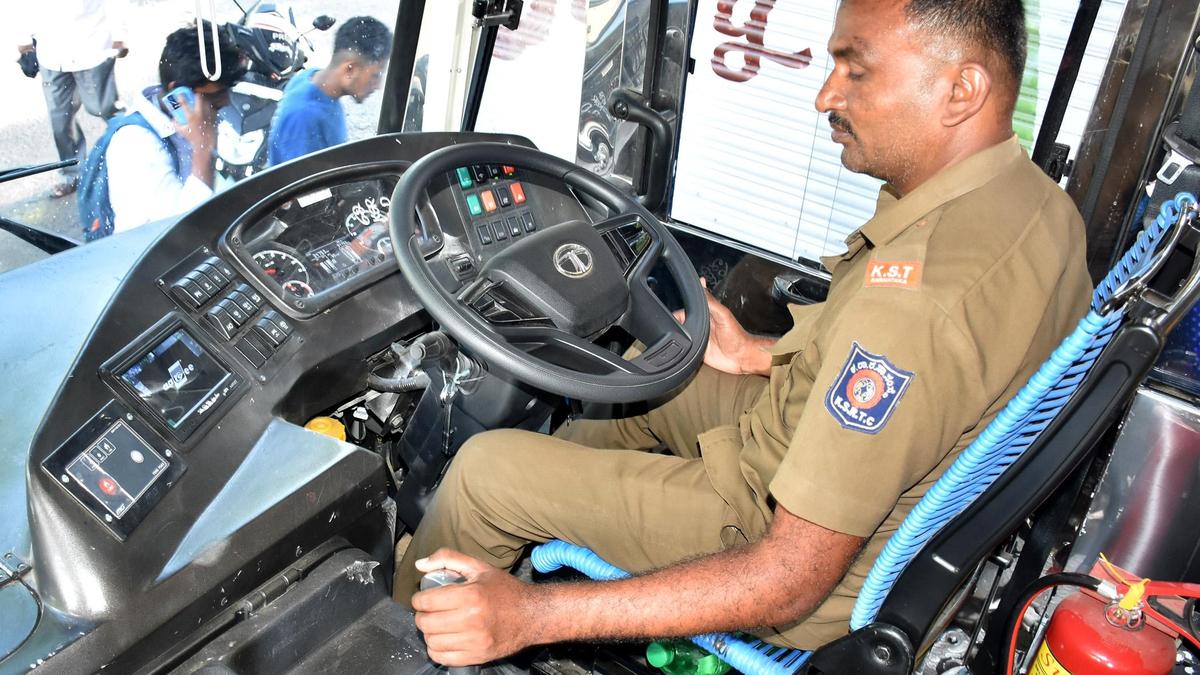
Some buses in the Mysuru Urban Division of KSRTC come with safety features like vehicle location tracking system and emergency panic button.
| Photo Credit: M A Sriram
Merely installing panic buttons, tracking devices or speed governors in transport vehicles may not serve any purpose in the absence of a proper command & control centre in each district and each State to track the movement of vehicles and other details, according to the Karnataka State Travel Operators’ Association.

Referring to Supreme Court directive on May 13 to all State Governments and Union Territories on mandatory installation of speed governors, Vehicle Location Tracking Devices (VLTDs) and emergency panic buttons in public transport vehicles, association President K. Radhakrishna Holla said though the court’s intention was good, the biggest challenge in India was effective implementation of the directions.

These systems require continuous live monitoring, trained manpower, emergency response teams, integrated software systems and strong accountability mechanisms. Without proper monitoring centres, many of these electronic safety gadgets risk becoming only compliance formalities, he said.
Command & Control Centres
Mr. Holla said India today has more than 40 crore vehicles, nearly 6.5 crore km of road network, and over 800 districts. In such a massive and complex system, merely framing rules or installing electronic devices would not automatically ensure public safety.
Since 2019, the Central Government has allocated substantial funds (about ₹8,000 crore) for road safety projects, Intelligent Traffic Management Systems (ITMS), Command & Control Centres, and digital monitoring infrastructure. Yet, serious questions remain about how many States have fully operational monitoring centres that function effectively 24×7.
Data presented before the Supreme Court reveal that even after eight years of the mandate, less than 1% of public transport vehicles have properly functioning AVLTDs, exhibiting the huge gap between policy announcements and actual execution. Around ₹460 crore was sanctioned specifically for State-wise vehicle tracking platforms, panic button systems, AIS-140 compliant VLTDS and integrated monitoring infrastructure.
Unified architecture
He said if the country truly wants to reduce accidents and fatalities, it needs a unified national digital road safety architecture. All State capitals, districts, highways and urban centres should be connected through integrated command and control centres capable of real-time tracking, emergency response co-ordination, accident evidence collection, and live enforcement.
Common safety standards should apply not only to public transport vehicles, but also to private vehicles, commercial fleets, government vehicles and departmental transport systems. Vehicle manufacturers should be required to install advanced onboard safety technologies, vehicle-to-vehicle accident protection systems, automatic emergency braking (AEB), driver alert systems, and live monitoring capabilities at the manufacturing stage itself.
Published – May 15, 2026 09:51 am IST