








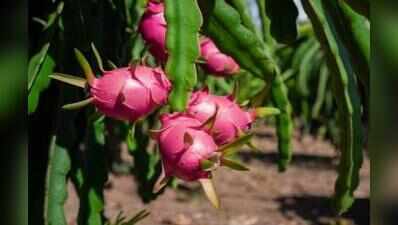
Panaji: Experts from the ICAR-Krishi Vigyan Kendra (KVK) believe dragon fruit could emerge as a game-changing crop for the state’s young agri-entrepreneurs. Requiring little water, virtually no pesticide use and minimal maintenance, the exotic fruit is increasingly being seen as a profitable alternative to conventional farming.“Goan farmers already prefer organic cultivation. Dragon fruit fits naturally into that approach because it requires very few chemical inputs,” said Nivya KR, specialist in floriculture and landscaping, KVK North Goa.“Dragon fruit is a hardy crop and is essentially a cactus. It doesn’t require intensive care, frequent irrigation or heavy fertiliser application. The only recommendation for Goa is to improve the soil with organic manure at the time of planting,” she said.Unlike many horticultural crops that are vulnerable to pests and diseases, dragon fruit has so far shown resilience.“There are hardly any pest or disease problems in this crop. Once the plantation is established, maintenance costs are extremely low. Farmers don’t have to invest much in irrigation, plant protection or fertilisers,” she said.The only major investment comes at the beginning, when farmers need to buy planting material and erect support structures for the climbing cactus.“After the initial investment, the crop continues producing for six to eight years with very little maintenance,” she said.Dragon fruit is currently selling from Rs 150 onwards per kilogram in the market, making it one of the more lucrative horticultural crops. Among the available varieties, the pink-fleshed dragon fruit is emerging as the preferred choice due to its higher nutritional value.“The pink-fleshed variety contains betalains, similar to the pigments found in beetroot, along with higher fibre content. These compounds are associated with antioxidant properties and better nutritional benefits, making it more popular than the white-fleshed varieties,” she said.In Goa, the crop’s flowering begins around June, with harvesting starting in Jan and Feb before continuing through the summer months, providing farmers with a prolonged harvest season.ICAR-KVK recently trained 20 rural youth on scientific methods of cultivation of dragon fruit.“For young entrepreneurs looking to enter agriculture, this is one of the most promising horticultural crops. It offers high market acceptance, low maintenance, long productive life and good returns,” she said.