





- Police denied surveillance, citing law and order video recording.
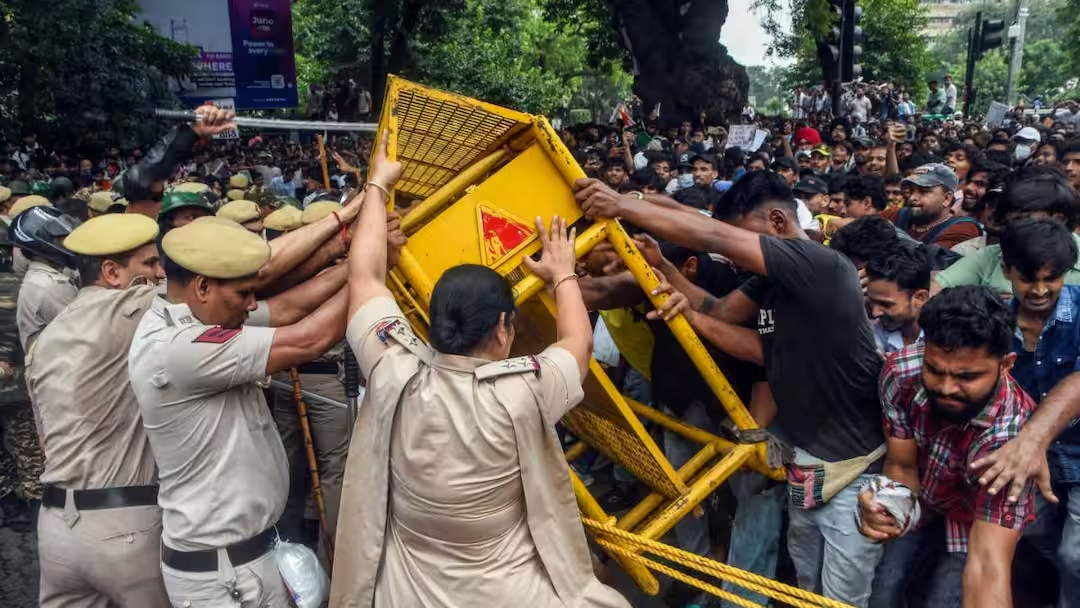
The Delhi High Court on Monday questioned the Delhi Police over the alleged surveillance of protesters participating in the Cockroach Janta Party (CJP)-led agitation at Jantar Mantar, asking whether the force was complying with Supreme Court guidelines on surveillance. Hearing a petition filed by former Jawaharlal Nehru University Students’ Union president Aishe Ghosh, the court sought clarity on whether the monitoring of protesters adhered to the legal principles governing privacy and proportionality.
Court Seeks Clarity
The petition alleges that since the CJP protest began at Jantar Mantar on June 20, demonstrators have been subjected to continuous photography, videography and round-the-clock monitoring through a surveillance tower. It claims the recording extends beyond documenting the protest and captures protesters’ routine personal activities, including eating, resting, receiving medical assistance and other day-to-day moments.
The plea also alleges that women protesters were photographed and filmed even during rainfall when their clothes had become wet, raising concerns over their right to privacy. The protest is being held over the demand for Union Education Minister Dharmendra Pradhan’s resignation.
Also Read: CJP Protest Turns Violent; ABP News Team Attacked During Jantar Mantar Coverage
Police Deny Surveillance Claims
A Bench comprising Chief Justice DK Upadhyaya and Justice Tushar Rao Gedela questioned whether Delhi Police had examined and complied with the Supreme Court’s directions governing surveillance. The court referred to the landmark 2017 judgment recognising the right to privacy as an intrinsic part of Article 21 of the Constitution, which also established the principle that any state surveillance must satisfy the test of legality, necessity and proportionality.
Responding to the allegations, Solicitor General Tushar Mehta, appearing for the Delhi Police, denied that protesters were under surveillance. He argued that video recording is routinely carried out at all protests held at Jantar Mantar to maintain law and order and is not intended for surveillance. Mehta added that numerous participants themselves were recording videos and creating social media content during the protest.
After hearing both sides, the High Court said it would take up the matter for further hearing on July 21.
Also Read: ‘Will Continue Fasting’: Sonam Wangchuk After CJP Protesters Clash With Police