




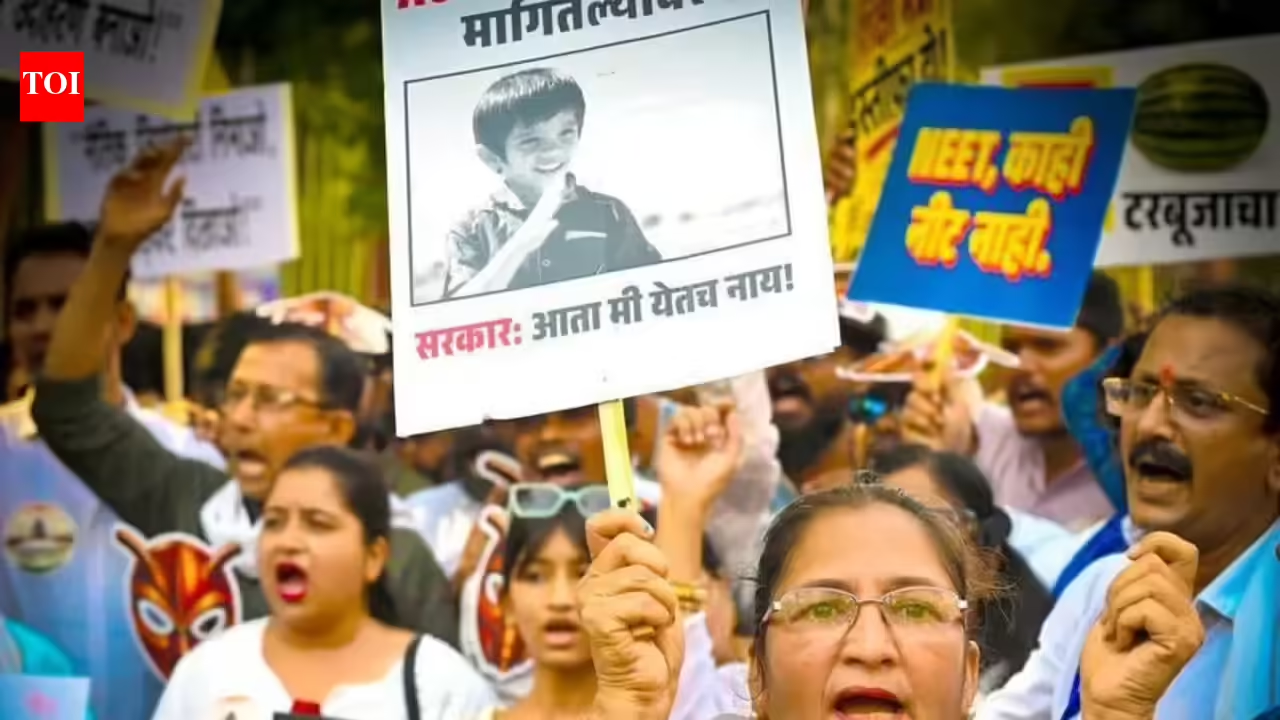
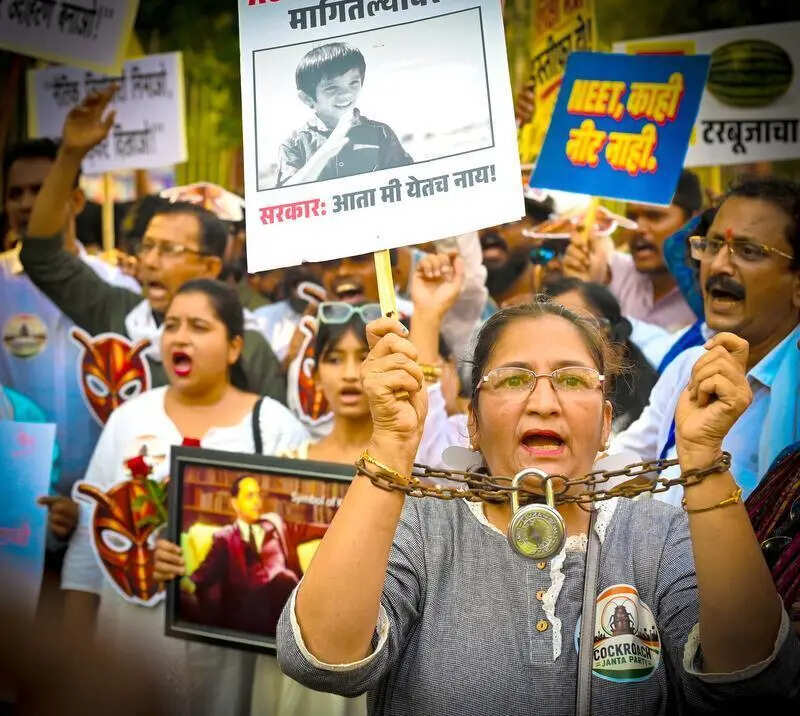
Nagpur: Cockroach Janata Party (CJP) founder Abhijeet Dipke on Tuesday met the family of Akanksha Chaturvedi, whose suicide is linked to the stress over NEET paper leak and subsequent retest, before leading a massive protest at Samvidhan Square.Dipke, who has been spearheading a nationwide campaign seeking the resignation of Union education minister Dharmendra Pradhan, demanded the Centre sanction a compensation of 1 crore each to all NEET victims. The protest served as a launchpad before Dipke hits the centre-stage at Delhi’s Jantar Mantar on June 20.At a press conference under heavy police protection, Dipke alleged individuals who attacked him during a recent agitation in Jaipur were members of Rashtriya Swayamsevak Sangh (RSS). Dipke claimed an examination of social media profiles of attackers revealed photographs of them wearing the organisation’s traditional uniform and carrying lathis.The satirical-political group founder also announced that CJP’s next big move would be at Jantar Mantar in Delhi on June 20, a day before the NEET re-exam to intensify its demand for resignation of Pradhan. “On June 20, we will not budge till Pradhan resigns,” he said.Dipke also called upon Prime Minister Narendra Modi to apologise to families of students who allegedly died by suicide due to examination-related stress. “PM organises events like Pariksha Pe Charcha, but he hasn’t even put out a condolence message on his social media handle,” he said.Later in the day, hundreds of youths and students gathered at Samvidhan Square carrying banners, placards and posters demanding Pradhan’s resignation and seeking greater transparency in conduct of national-level examinations. “The Centre used the Indian Air Force to transport NEET re-exam papers, but if this method was so foolproof, why wasn’t it utilised earlier,” he said.Launching a sharp attack on BJP, Dipke drew parallels between the present govt and the British colonial administration. Referring to treatment of activist-engineer Sonam Wangchuk, he alleged dissenting voices were being suppressed in a manner reminiscent of the colonial era.(Inputs by Siya Punyani & Saara Shrivastava)