




Brihanmumbai Municipal Corporation’s (BMC) inquiry into tree-falling in Chembur, in which a child was killed, concluded holding the contractors accountable and giving a clean-chit to its own officials from garden and road departments, with recommendation for mandatory tree-root protection clause in all the tenders.
However, urban forestry experts argue that the findings overlook the shared responsibility of civic agencies and that a one-size-fits-all clause is neither practical nor sufficient to prevent future tree collapses.
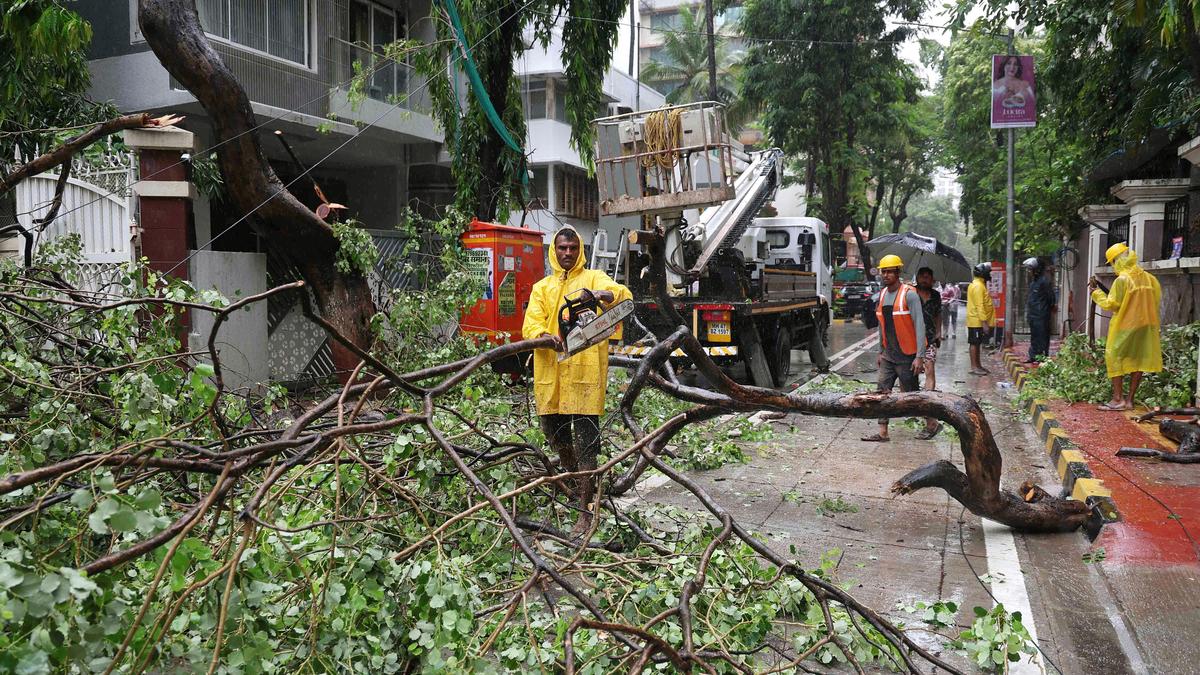
On June 30, Vihaan Shrivastav died and several school children were injured after a Peepal tree fell on a school bus near Diamond Garden in Mumbai’s Chembur (West). It took one death for the BMC to constitute a panel and recommended to put SOPs in place for tree pruning, regular ‘Tree Risk Assessment’ and ‘GIS-based inventory’ of all roadside trees.

“Tree risk assessment cannot be a post-tragedy ritual,” B. N Kumar of NatConnect Foundation said. He pointed out that it must be a continuous, scientific exercise led by a senior officer of the rank of Additional Municipal Commissioner, reporting directly to the Municipal Commissioner.
“In fact, the entire Mumbai Metropolitan Region needs a comprehensive, GIS-based tree risk audit backed by certified arborists, with accountability fixed at the highest level. Climate Action Now begins with protecting our trees. If we cannot safeguard the city’s oldest natural infrastructure, all our climate resilience plans will remain hollow promises,” he added.
The report submitted to Commissioner Ashwini Bhide recommends to appoint tree experts while tree pruning work is in progress, during concreting the roads, a 3m x 3m area near the base of the trees should be kept in the asphalt surface area for trees to breathe and grow, and a policy-based Standard Operating Procedure (SOP) for the departments implementing the project with the help of a tree consultant.

Recommendations and suggestions
The report with 25 points suggestions, includes native tree species plantation, minimise excess concretisation and maintain sufficient permeable soil in the ‘critical root zone’ (main root area), scientific pruning of trees by certified personnel, and others.
The suggestions also call for establishment of a coordination mechanism between the Engineering, Roads, SWD, Garden and utility departments for infrastructure projects, with a dedicated nodal officer to supervise the protection of trees.
Implementing the Standard Operating Procedure (SOP) should be developed and implemented for the inspection, maintenance, pruning and half-yearly safety audits of urban trees. The inspection reports should be reviewed and validated by the concerned department heads together with an independent tree expert, as per the report.
The report states to strengthen public awareness through educational campaigns and practical training to contractors, supervisors and field staff engaged in urban tree management.

To resolve the consistency of supervising the work, report proposes to appoint “Registered Empanelled Tree Expert” by the Garden Department for ease of business on the ground. For a possibility of mould on trees, so as a precautionary measure, mould prevention measures should be implemented, just as pesticides are used. Under the Vrikshmitra concept, the tree lovers in the respective areas should take care of the said trees, cultivating them, and help in tree conservation.
The Garden Department should also develop an app system for people to inform them about the weak trees.
The controversial suggestion is following the circular of the Municipal Commissioner dated July 3, regarding ‘Maintenance of existing trees while reconstructing infrastructure’ should be strictly followed, which stated- “During construction of roads, footpaths or storm water drains, an open space of 0.3 metres to 1 metre shall be maintained around the trunk of every existing tree. Where the tree trunk is small, a clearance of 1 metre shall be maintained. Where the trunk is large, a minimum clearance of 0.3 metres shall be maintained.”
Environmentalist Stalin D. of Vanshakti foundation, has called it unscientific and harmful, saying, “Such shallow tree basins mean that the water will collect under the base and loosen the soil. This destroys the structural stability, and the tree is unable to balance itself. We call upon you to urgently withdraw the circular and issue one based on scientific facts.”

Is a penalty enough?
The committee comprising Deputy Commissioner (Special Engineering), Purushottam Malvade and Deputy Commissioner (Engineering) Shashank Bhore, and Horticulture and Landscape Consultant Robert Fernandes, formed on July 3, suggested to impose a fine of ₹5 lakh on the contractor Gawar Construction Limited and ₹2 lakh on Mahimtura Consultant firm for negligence, while ruling out fault at the end of BMC’s Gardens and Roads Departments.
The experts raised suspicion over the panel, saying an internal inquiry giving a clean chit to its own departments raises more questions than it answers.
“In a tragedy that claimed the life of a child, transparency cannot be sacrificed for institutional convenience. Such an inquiry should have been entrusted to an independent external agency so that the findings command public confidence, not suspicion,” said Mr. B.N Kumar.
The version challenges the credibility of the internal probe while shifting the focus to systemic reform.
The inquiry committee submitted its report to Municipal Commissioner Mrs. Ashwini Bhide on Monday (July 13, 2026).
The findings of the report suggest that the rainfall recorded at the incident site in Chembur was at an average of 62.80 mm on June 28, 2026, an average of 71.6 mm on June 29, and 13.6 mm till 3 p.m. on June 30, 2026, i.e., the time of the tree fall. Also, the wind speed was 25.7 kmph at the time of the tree fall. According to the data received from the Emergency Management Cell, about 1,158 trees/branches have fallen in Mumbai city during the period of heavy rainfall from June 28 to July 5. These trees are not only on both sides of the roads, but also include trees in societies, parks, open plots, and open spaces.
“The monsoon alone cannot be blamed for collapsing of tree, this is just to save the culprits putting it on the nature. No big tree in the world can survive and remain safe in a one metre deep and wide space. Big trees and even medium-size trees largely depend on lateral roots that spread halfway or more into the drip zone of the tree canopy and that helps anchor the trees while providing nourishment from the soil at the same time,” said Dharmesh Barai, Founder of Environment Life Foundation.
Published – July 15, 2026 01:20 pm IST