









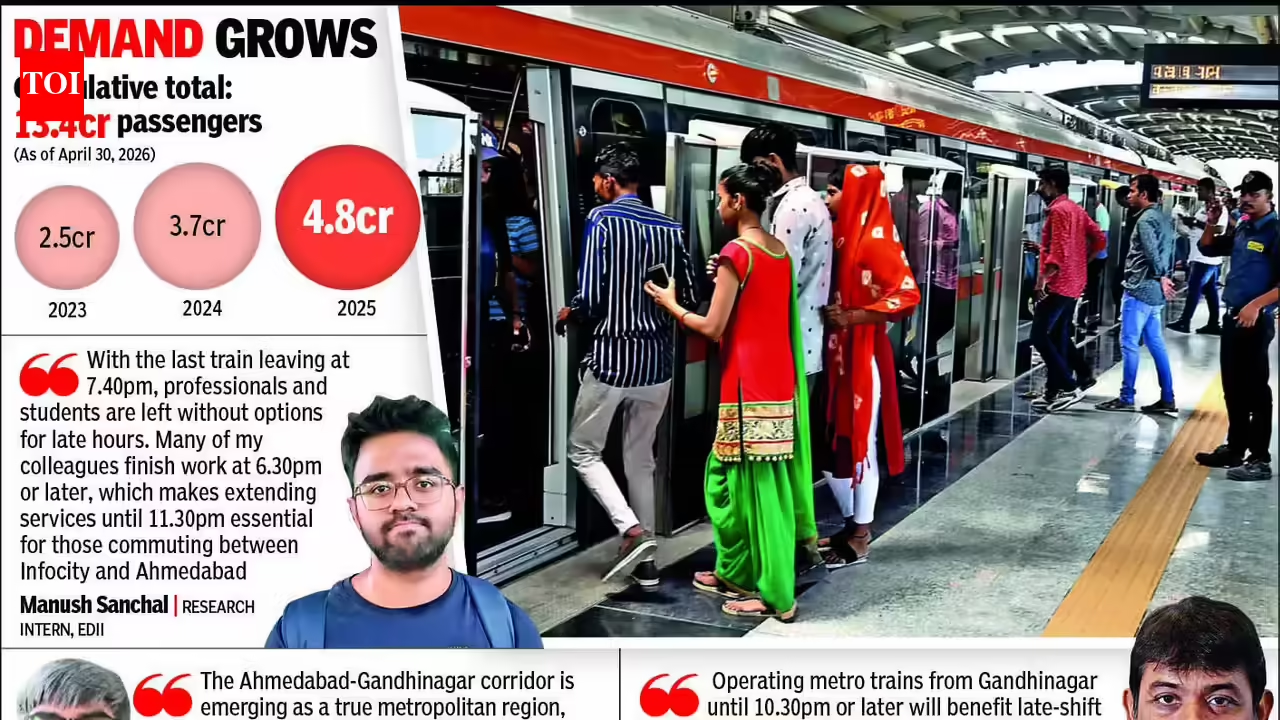
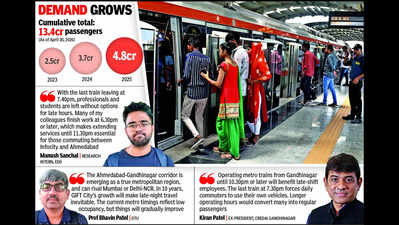
Gandhinagar: Every night, the Ahmedabad-Gandhinagar Metro clocks out before people working in several Gandhinagar offices can.At 8.30pm, when software engineer Ayush Patel finishes work at Infocity in Gandhinagar, the Metro is already winding down. The last trains on the Yellow Line leave Mahatma Mandir between 7.43pm and 8.09pm, while services from Ahmedabad end as early as 7.22pm, forcing hundreds of office-goers to fall back on cabs, bike taxis and private vehicles.The route, by most measures, has done well. Since its 2022 debut, daily ridership has tripled to 1.52 lakh passengers between January and April 2026, and the network has carried 13.4 crore people in total. However, demands for longer operating hours are growing louder. Urban planners say the metro cannot serve a “global business hub” on daytime timings alone.For a capital region packed with universities, govt institutions, IT parks and financial hubs where work often stretches late into the night to match global time zones, commuters and urban planners say the metro’s early bedtime has become one of its biggest shortcomings.“A large number of people travel daily between Ahmedabad and Gandhinagar for work. Metro connectivity should be available till at least 10.30 pm,” said former Credai Gandhinagar president Kiran Patel. “Right now, many people simply use their own vehicles.”The route also connects major hubs including GIFT City, IIT-Gandhinagar, NFSU, DA-IICT, PDEU, NID, NIPER, GNLU, RRU, INFLIBNET, TCS-Garima Park and several coaching institutes and govt offices.At GIFT City alone, more than 1,100 firms are currently operational, employing over 25,000 professionals across banking, finance and technology sectors. Many of these firms inside GIFT City — India’s first International Financial Services Centre designed as an answer to offshore financial hubs such as Singapore’s financial centre and Dubai’s DIFC — work across international time zones and continue operations well into the night. “GIFT City was built as a global financial hub. Cities operating on global business hours cannot have public transport shutting down before 8pm,” said a professional working in the area.Sources in GIFT City told TOI, “Discussions are underway with Gujarat Metro Rail Corporation (GMRC) to improve train frequency and extend connectivity.”Pankaj Kotak, head of business development at Mindspace Business Parks IT-SEZ, believes even a gradual extension could dramatically improve ridership. “Start by extending services till 9pm, then move to 10pm later. The infrastructure already exists. The residential catchment exists. What is missing is just two more hours,” he said. Kotak pointed to the rapidly growing residential belt near Koba Circle, where nearly 40,000 residents live within a few kilometres of metro stations.Urban transport experts say this is not unique to Gujarat. An IIT-Delhi and Infravision Foundation study found many Indian metro systems operate at only 25%-35% of projected ridership, often because operational timings and feeder connectivity do not match commuter needs.Residents say that is exactly what is happening here. “Buses and taxis remain more practical because they run till 10-11pm,” said Rajesh Mehta, a resident of Sector 22. “The metro shuts too early for several office-goers.”GMRC officials, however, point to lower passenger numbers on the Gandhinagar stretch. Officials said stations such as Sachivalaya currently see only around 500 passengers daily. Unlike the busy Thaltej-Vastral corridor, where trains run every seven minutes during peak hours, the Gandhinagar-GIFT City stretch currently operates at 12-minute intervals throughout the day.Kotak calls this circular logic: low demand used to justify the very gaps that hold demand back. “It is a natural growing need,” he says. “Let it deliver its benefits.”Even metro staff acknowledge that trains on several routes remain crowded. “Trains towards Thaltej, Vastral, Mahatma Mandir and Akshardham are usually packed,” a metro security staffer said.For commuters like content writer Devanshi Desai, the appeal of the metro is obvious. “It saves time and money. It is much safer compared to buses, and in this heat, the AC makes a huge difference,” she said. But until the last train runs later into the night, many commuters say the metro still feels like a system that leaves office-goers stranded before the work day truly ends.(With inputs from Niyati Parikh and Shinjini Sen)
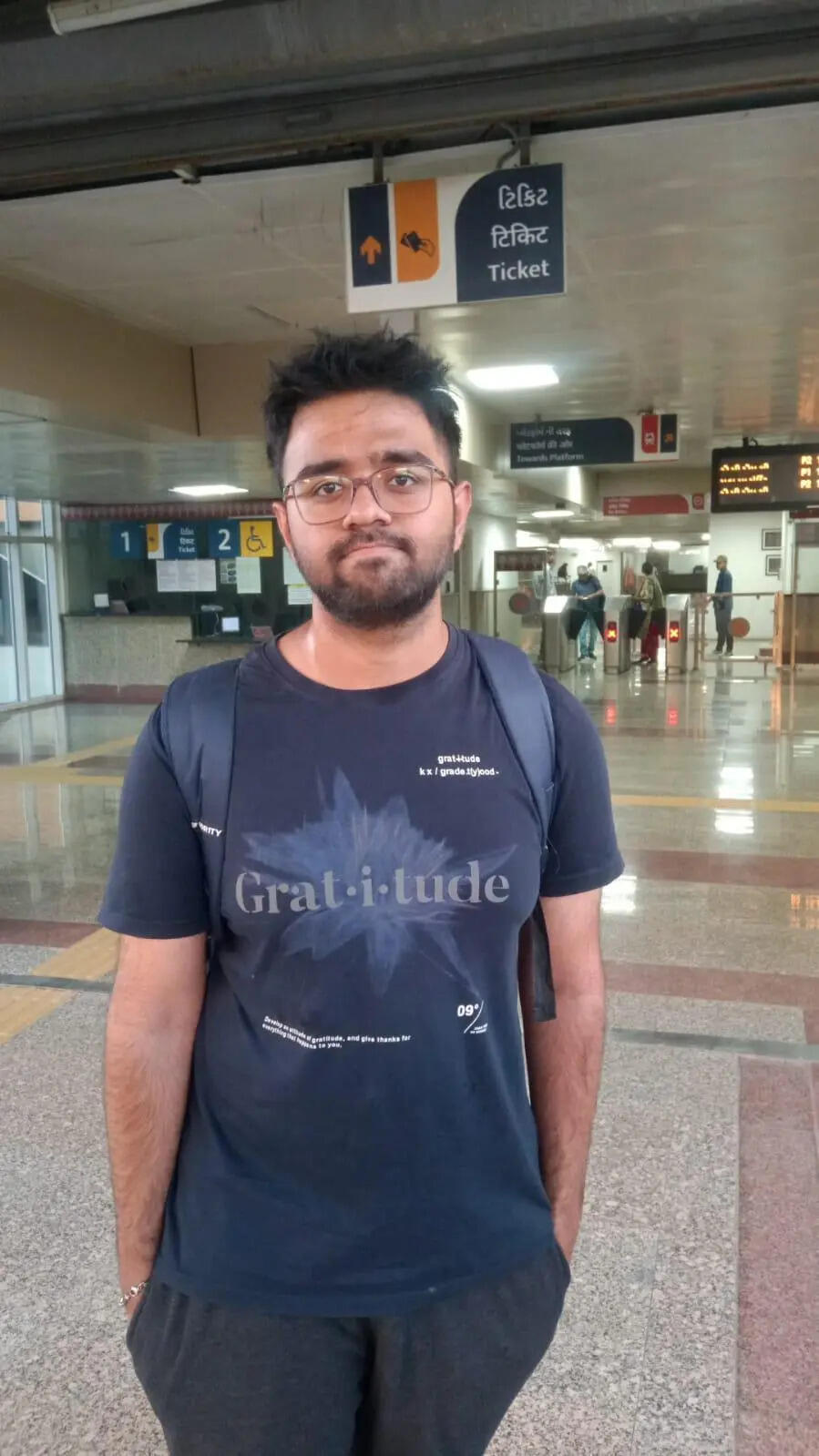
Manush Sanchala at Infocity in Gandhinagar
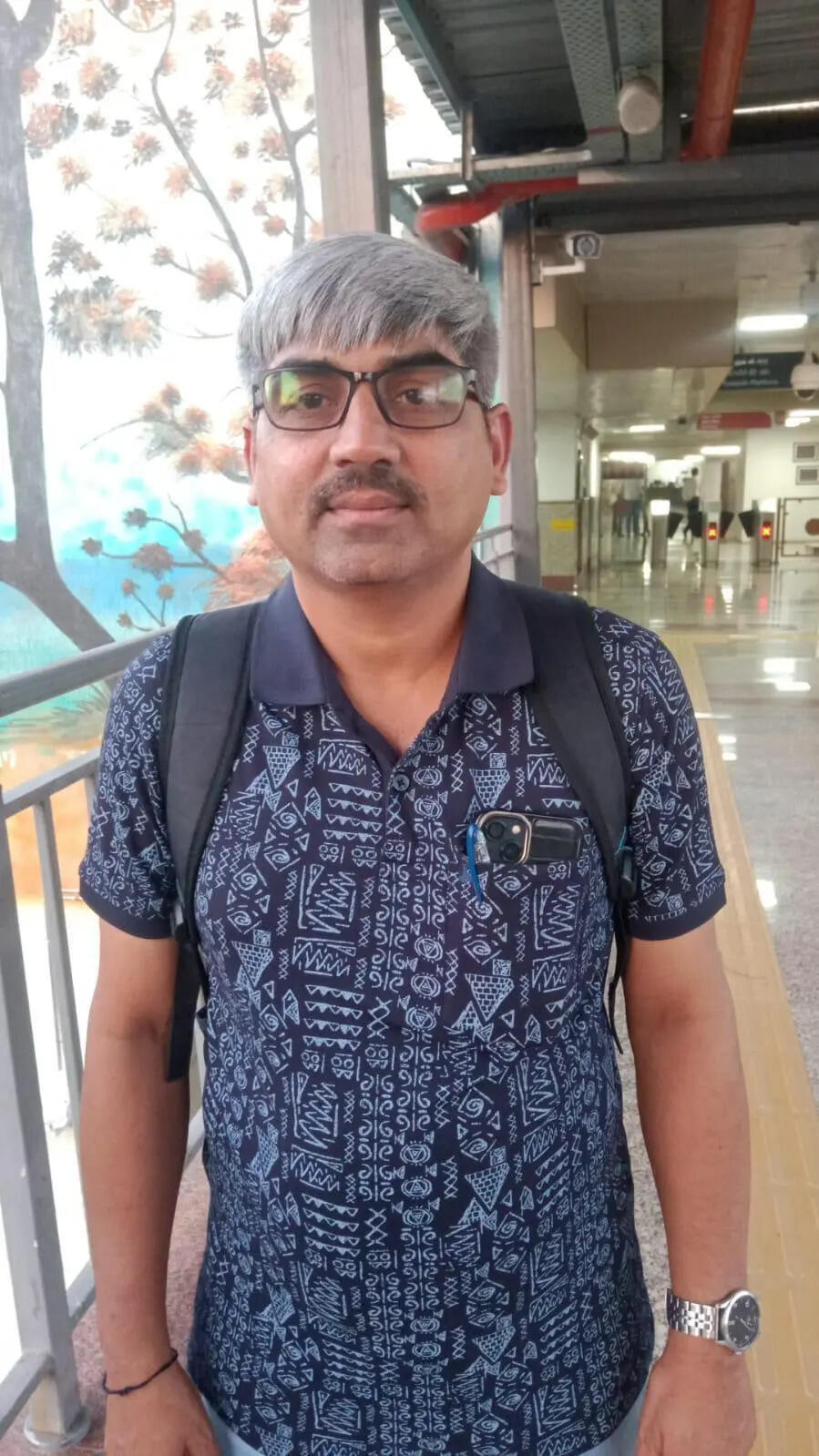
Prof Bhavin Patel at Infocity Metro station in Gandhinagar
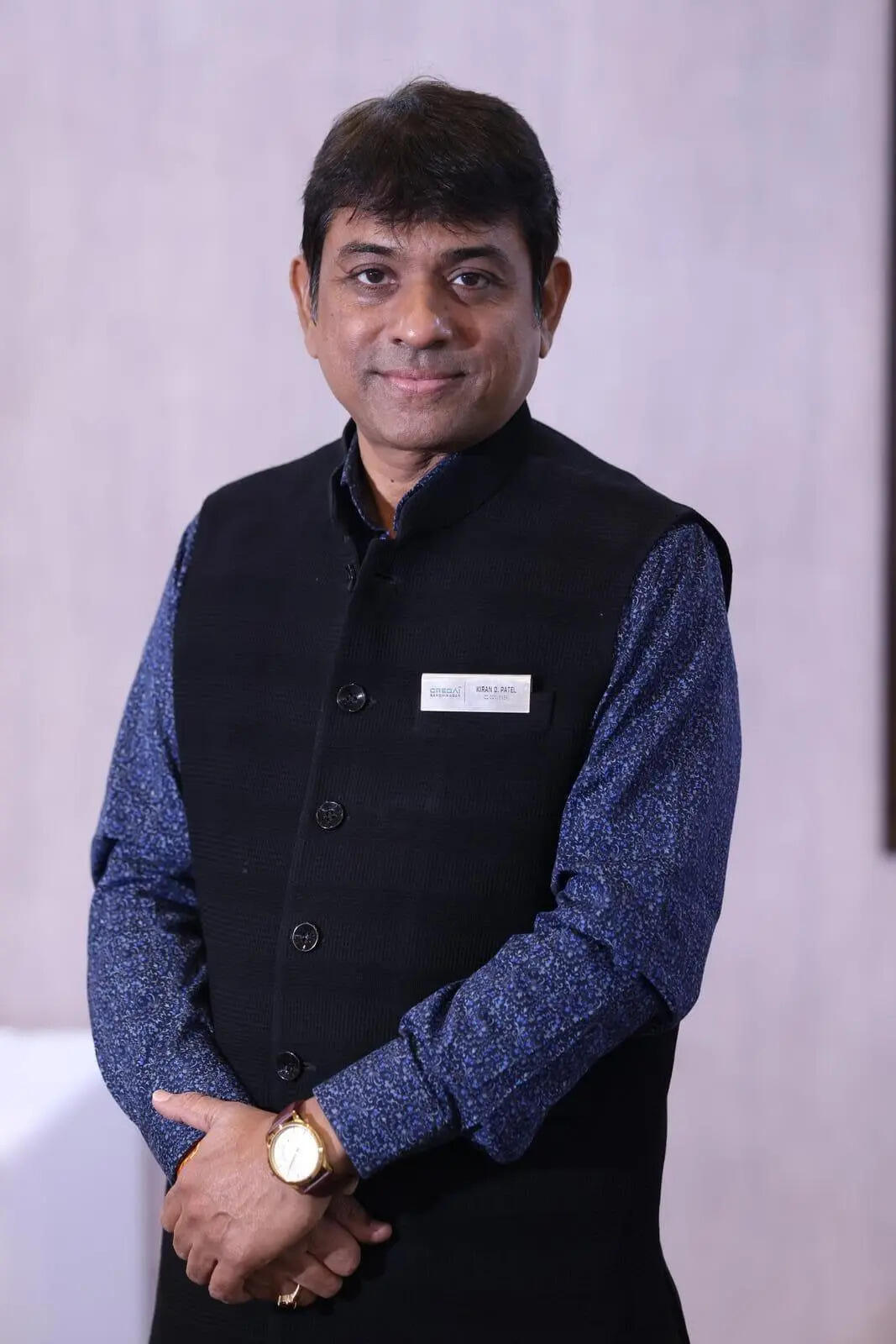
Former CREDAI president for Gandhinagar