


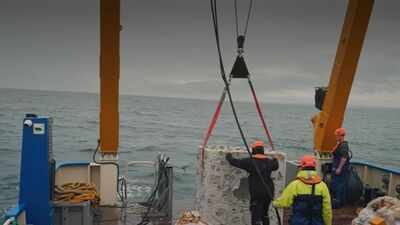
While one might assume that lowering huge white blocks of concrete into the sea was an attempt at dumping construction waste offshore, in Britain’s North Sea it is a conservation effort. The country is dumping 20 carefully designed structures into the deep waters to restore the population of the European native oyster, Ostrea edulis, along England’s northeast coast.The 2025 operation combined the reef cubes with 4,000 mature oysters, more than 35,000 juveniles and about 44 US tons of repurposed scallop shells. In the United Kingdom, the number of native oysters has fallen by more than 95% since the 1800s and the project is studying whether sturdy engineering can give a lost ecosystem the foothold it needs to rebuild, as per a report by econews.
Twenty cubes for a new seabed
Each reef cube weighs about 6.6 US tons, meaning the 20 structures together weigh around 132 tons. They have been created from Marine Crete, a seawater-resistant material that the project team describes as a carbon-neutral alternative to ordinary concrete.They have been designed with ridges, textured surfaces and large openings to give oysters a place to attach while creating hiding spaces for fish, lobsters, sponges and other marine life. Volunteers attached 4,000 adult oysters to the cubes with specialist reef adhesive. The team also lowered juvenile oysters already growing on shells, and recycled scallop shells known as “clutch” onto a site about 1.1 miles offshore.The new cube designs reflect lessons learned from an earlier deployment in 2023. Conservationists placed 10,000 mature oysters on roughly 827 US tons of shell and stone off Whitburn, but Storm Babet and other severe weather conditions moved some of that loose reef material soon afterwards. Monitoring has still found oysters surviving and establishing in the area. Even so, the exposed North Sea coastline is a rougher testing ground than a sheltered bay or estuary, where currents and waves are less likely to scatter a young reef. That is why the heavy cubes now act as anchors.As for the oysters, before they went to sea, 90 volunteers cleaned and scrubbed them at North Shields Fish Quay. The work reduced the risk of unintentionally moving other organisms into the restoration site. Nearly 100 more volunteers then helped attach oysters to the reef cubes. A survey vessel carried the structures, juveniles, and shell material offshore before carefully lowering everything onto the seabed.
A special place for the oysters
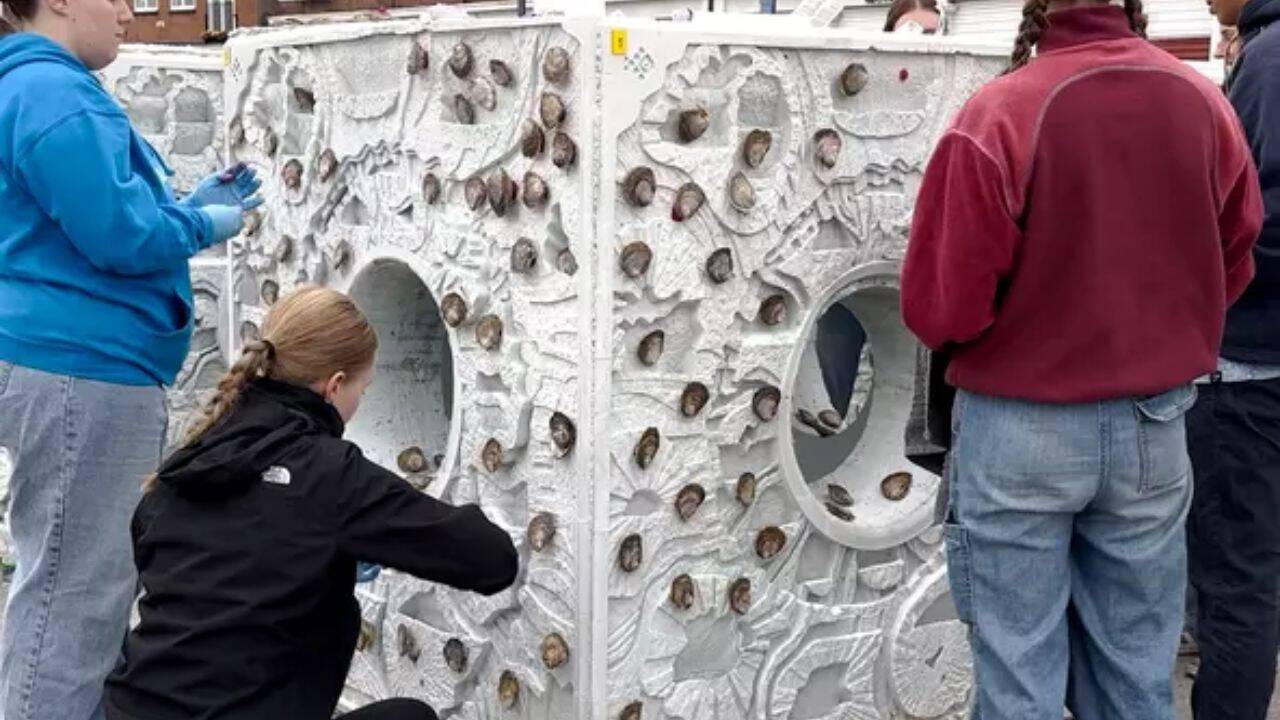
Fish, crabs, shrimp, and many small invertebrates can use its gaps for food and shelter, which is why restoring oysters is about much more than restoring one shellfish species.
Young oysters begin life as tiny larvae moving through the water. When they are ready to settle, they need a firm surface, often an older oyster shell, where they can attach and continue growing.But with a vanished reef, this single requirement becomes a major obstacle. A flat or shifting seabed offers fewer safe places to settle, while a layer of shells can work like the foundation of a crowded underwater neighbourhood. As generations grow on top of earlier shells, the reef becomes three-dimensional. Fish, crabs, shrimp, and many small invertebrates can use its gaps for food and shelter, which is why restoring oysters is about much more than restoring one shellfish species.
95% collapse changes European seas
One of the major factors that played a big role in the loss of native oysters was overharvesting them faster than they could recover. Then pollution, disease and habitat destruction added more pressure to it. Native reefs disappeared from this part of northeast England more than a century ago, and oysters are now locally extinct or functionally absent across much of their former range.A wider assessment led by ZSL and the University of Edinburgh found that Europe’s native oyster reef ecosystem met the criteria for being classified as “collapsed.” Historical evidence indicated that these reefs once covered more than 4.2 million acres across Europe, creating complex habitats that looked very different from today’s mostly flat seabeds.
Why native oysters are important
Native oysters are filter feeders, meaning they draw in seawater and remove suspended material as they feed. As per the Zoological Society of London, one adult can filter around 53 gallons in a day, although the total effect depends on oyster numbers and local conditions. This filtration helps improve water clarity and cycle nutrients.While it is not a substitute for controlling sewage, pollution or runoff, a healthy reef can become part of the sea’s natural maintenance system. “They may be small, but oysters can play an important role in keeping our seas clean and healthy,” said Celine Gamble, the Wild Oysters Project manager, as per econews.Now, the project awaits success which would mean survival, reproduction, new juvenile settlement and a gradual return of a self-sustaining reef that supports a wider community of marine species. Researchers will also be watching whether the structures attract fish and invertebrates, improve habitat complexity, and remain stable through winter storms.