






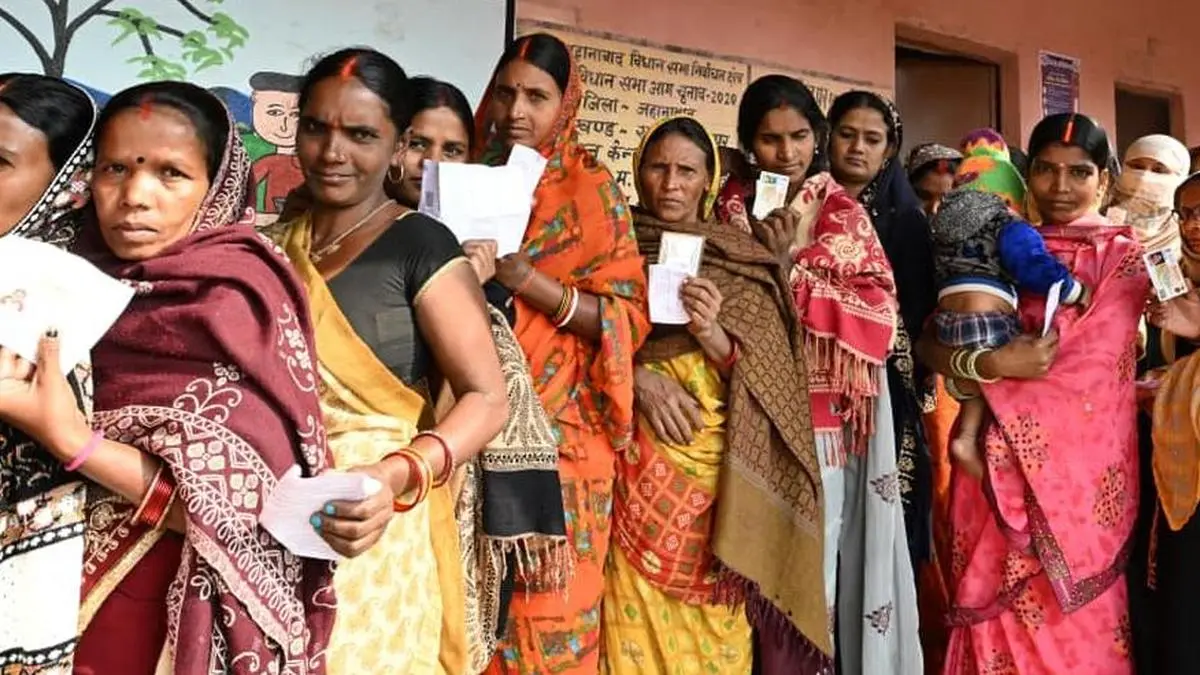
A key issue the Supreme Court dealt with while adjudicating the constitutional validity of the Special Intensive Revision (SIR) of the electoral rolls in Bihar was whether the Election Commission can ask already enrolled voters to prove their eligibility—including whether they are citizens of India—or whether those already on the list can be presumed to be eligible voters.
The court, in its judgment on the Bihar SIR delivered on May 27, ruled that the Commission can verify the eligibility of voters, including their citizenship. It held, however, that such verification is limited to the purpose of cleansing the electoral rolls and does not constitute a final determination on an individual’s citizenship. It also directed that the names of persons excluded on grounds of doubtful citizenship must be forwarded to the “Competent Authority” for final adjudication.
The ramifications of the judgment—particularly on the citizenship question—are now being widely discussed. Legal experts say that placing the burden of proving citizenship on an enrolled voter overturns what was, until now, a well-settled legal principle: that persons already on the voters’ list are presumed to be citizens. They warn that a large number of poor people, who have already been disenfranchised by inadequate documentation, could be caught in a prolonged citizenship determination process and simultaneously lose access to government welfare schemes.
The court said that in view of the statutory requirements under Section 16 of the Representation of the People Act, 1950, the Commission, in the course of preparing or revising rolls, “is undoubtedly empowered to examine questions bearing upon citizenship”. It made clear, however, that such an inquiry can only be made for the purpose of determining inclusion in or exclusion from the electoral rolls, and does not amount to a declaration that an individual excluded from the voters’ list is not a citizen.
The two-judge bench, comprising Chief Justice of India Surya Kant, Justice Joymalya Bagchi, stated in the judgment that where the Commission is not satisfied that a person meets the statutory conditions for inclusion in the electoral rolls, “it would be incumbent upon it to refer such an individual to the competent authority within the Central government for adjudication in accordance with law.”
“Regarding persons whose names have been deleted from the 2003 roll on account of the Commission being of the opinion that they are not citizens, the Commission shall refer such cases within 4 weeks to the Competent Authority under the Citizenship Act, 1955, for adjudication of their citizenship,” the judgment said.
The Competent Authority, the court said, must decide such questions within a reasonable time-frame—and in any event before the next Parliamentary, Legislative Assembly, or local body elections in the concerned State or constituency—so as to ensure that the individual’s electoral rights are not left in prolonged uncertainty.
The court also held that if the Competent Authority finds that a person whose name was deleted from the voters’ list is a citizen, that person shall be restored to the electoral roll. It further said that all persons domiciled in Bihar whose names were erroneously deleted on grounds of being absent, dead, shifted, or listed in duplication may challenge the Commission’s decision through judicial review.
When the state deems you a stranger
Senior Advocate Sanjay Hegde raised a critical question arising from the judgment: who is the Competent Authority, and under what framework will it function? “The government will have to set up a Competent Authority. There have been disastrous results of this kind of thinking in Assam under the old Foreigners Act of 1946. Since there was no other authority, whenever the Election Commission marked somebody as doubtful, the individual would be sent to the foreigners’ tribunal. This took a heavy toll on the poor and the undocumented,” Hegde said.
He also said the Commission cannot forward names of doubtful voters to the Competent Authority in bulk—it will be required to state specific reasons for exclusion and doubt in every individual case.
The ground reality of the poor and the marginalised, lacking the required documents, was a defining feature of the Bihar SIR. Feedback from the field indicated that a majority of voters did not possess even one of the 11 documents the Commission had listed as proof of eligibility. Many had only an Aadhaar card—which the Commission later included in the list of acceptable documents after the Supreme Court’s intervention—or a ration card or voter ID.
In Bihar, 65 lakh voters were removed before the draft list was published. A further 3.66 lakh were removed from the draft list, while 21.53 lakh were added. The voter count on June 24, 2025, stood at 7.89 crore; in the final list published on September 30, 2025, it fell to 7.42 crore.
“The majority of voters in Bihar who were excluded from the list were in rural areas. Those worst affected were the poor and the marginalised—they had no documents. And we have to take into account the conditions in which the SIR was conducted: there were monsoon rains and floods, and many people were displaced because of work or other reasons,” said Major General Anil Verma (Retd.), head of the Association for Democratic Reforms, the lead petitioner in the challenge to the SIR before the Supreme Court.
The process of proving citizenship could itself become a punishment for those excluded, Verma said. “The majority of these voters are poor people who struggle to earn their daily bread. Where will they find the time or resources to fight a legal battle to prove their citizenship? We saw in West Bengal how ordinary people had to struggle to get heard in the tribunals set up to examine the claims of voters excluded from the rolls,” he said.
Concerns have mounted among experts over the SIR’s cascading effect on those excluded from the voters’ lists—not just on the citizenship question, but on their status as beneficiaries of State-run welfare schemes. The BJP government in West Bengal and the BJP-led NDA government in Bihar have reportedly decided to prune the list of welfare scheme beneficiaries to exclude those whose names were removed from the electoral rolls during the SIR.
“There is already a chaotic situation unfolding, with some State governments saying they will not provide welfare benefits to those whose names do not figure in the electoral rolls. A whole set of entitlements gets taken away from people who are poor and disempowered. This is economic warfare against the poor,” Hegde said.
The citizenship probe aspect of the SIR opens the possibility that the poor and the disadvantaged will bear the heaviest burden of proving they belong.
Also Read | Bonds, trusts, and missing transparency
Also Read | Form-7’s journey from a civic chore to a political weapon


