




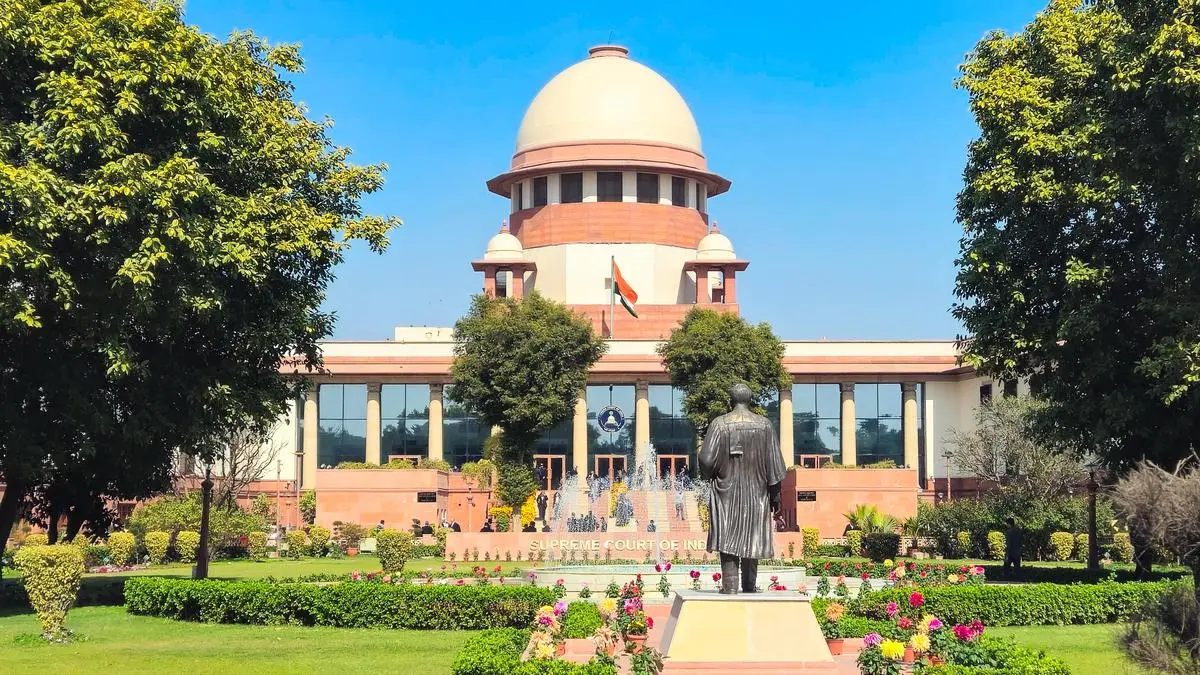
During the National Emergency declared from June 25, 1975, to March 21, 1977, one case stands out in Indian constitutional history as both cautionary and instructive: Additional District MagistrateJabalpur v. Shivkant Shukla, AIR 1976 SC 1207. A five-judge bench of the Supreme Court, headed by Chief Justice A.N. Ray, ruled by a 4:1 majority that during a national emergency, citizens could not approach the High Courts by way of a habeas corpus writ to challenge their detention—effectively suspending the right to life and personal liberty under Article 21 of the Constitution. The judgement was widely condemned. The argument, held by both popular and legal opinion, was that fundamental rights guaranteed by the Constitution could not be so readily overridden, least of all by the very court charged with their protection.
Additional District Magistrate,Jabalpur v. Shivkant Shukla, AIR 1976 SC 1207—popularly known as the Habeas Corpus case—was decided by the Supreme Court on April 28, 1976. The five-judge bench comprised Chief Justice A.N. Ray and Justices H.R. Khanna, M.H. Beg, Y.V. Chandrachud, and P.N. Bhagwati. Justice Khanna was the lone dissenter.
The case arose when Kiran Vijay Singh, Additional District Magistrate of Jabalpur, appealed to the Supreme Court against the release of Shivkant Shukla—a detenu held under the Maintenance of Internal Security Act (MISA) along with thousands of others during the Emergency. The bench, over several earlier High Court precedents that had favoured the detenus, ruled that the presidential proclamation of June 27, 1975, had the effect of suspending the locus standi of individuals to approach courts for relief. Constitutional scholar Gautam Bhatia has observed that the majority treated the state of Emergency as one where citizens could no longer invoke Article 21—the right to life and personal liberty—to challenge their arrest or detention through a habeas corpus writ before the High Courts under Article 226.
The four-judge majority concluded:
“In view of the Presidential Order dated 27th June 1975 no person has any locus to move any writ petition under Article 226 before a High Court for habeas corpus or any other writ or order or direction to challenge the legality of an order of detention on the ground that the order is not under or in compliance with the Act or is illegal or is vitiated by mala fides factual or legal or is based on extraneous considerations.”
This meant that thousands of dissenters held under MISA had no judicial recourse.
Justice Khanna’s dissent
Justice Hans Raj Khanna, the lone dissenter, took a different view. He reasoned that Article 21—the right to life and personal liberty—predated the Constitution itself. Even before India’s Constitution came into force, no person could be deprived of life and liberty without the authority of law, and that legal protection continued under Article 372, which preserved pre-constitutional laws in force. The right to life, in his view, was not a bounty granted by the state; the Constitution recognised it, but was not its source.
In his dissent, Justice Khanna wrote:
“[…] judges are not there simply to decide cases, but to decide them as they think they should be decided, and while it may be regrettable that they cannot always agree, it is better that their independence should be maintained and recognised than that unanimity should be secured through its sacrifice. A dissent in a Court of last resort, to use his words, is an appeal to the brooding spirit of the law, to the intelligence of a future day, when a later decision may possibly correct the error into which the dissenting Judge believes the court to have been betrayed.”
Justice Khanna knew his dissent would cost him. He told his sister before delivering the judgement that it would end his chance of becoming Chief Justice of India. It did. In January 1977, Indira Gandhi’s government superseded him—bypassing the seniority convention—and appointed his junior colleague Justice M.H. Beg as Chief Justice of India. Khanna resigned in protest. All four judges who had concurred with the majority eventually became Chief Justice. The lone dissenter did not.
The 44th Amendment and the Puttaswamy correction
After the Emergency ended and Indira Gandhi’s Congress lost power at the Centre, Morarji Desai’s Janata Party government moved to repair the constitutional damage. The 44th Constitutional Amendment Act, 1978, provided that Articles 20 and 21 could not be suspended even during a national emergency—a direct legislative response to the ADM Jabalpur majority. Years later, Justice Bhagwati admitted that Justice Khanna’s dissent had been correct and expressed regret for his own vote with the majority.
The formal judicial overruling came much later. In 2017, a nine-judge constitutional bench of the Supreme Court, in Justice K.S. Puttaswamy v. Union of India—the Right to Privacy case—overruled the ADM Jabalpur majority. At paragraph 119, the bench, endorsing Khanna’s dissent, observed:
“Neither life nor liberty are bounties conferred by the State nor does the Constitution create these rights. The right to life has existed even before the advent of the Constitution. In recognising the right, the Constitution does not become the sole repository of the right.”
The Bengal SIR and the suspension of the right to vote
In a separate matter, before the West Bengal Legislative Assembly elections scheduled for April 23 and April 29, 2026, the Election Commission of India (ECI) conducted a Special Intensive Revision (SIR) exercise of the State’s electoral rolls. Over 27 lakh names were removed. Nineteen appellate tribunals were constituted to hear challenges from voters whose names had been deleted. Given the volume—each tribunal was tasked with disposing of over one lakh appeals before polling began—the process was structurally unequal to the task.
On April 6, 2026, a Supreme Court bench led by Chief Justice Surya Kant heard petitions from affected voters. The court declined to set a deadline for the tribunals to complete their work. It also refused to grant interim voting rights to those whose appeals remained pending at the time of the election.
The result was a de facto disenfranchisement on a large scale. Before the first phase of polling, the tribunals had cleared 139 names; before the second phase, another 1,468—a total of 1,607 voters restored across both phases. Fourteen names were struck off as ineligible. Against a pending backlog of 27 lakh appeals, the ratio of restoration to exclusion was roughly 1:15,000. Voters with minor spelling discrepancies in names or addresses were deleted under a new category invented specifically for the West Bengal exercise, termed “logical discrepancy”—a criterion not applied in earlier SIR exercises in Bihar or other states.
The SIR had been first conducted in Bihar in mid-2025, where approximately six lakh names were not included in the final electoral list. Rather than triggering a review of the process, the exercise was subsequently expanded in a second phase to nine states—Chhattisgarh, Gujarat, Goa, Madhya Pradesh, Uttar Pradesh, Rajasthan, Kerala, Tamil Nadu, and West Bengal—and three Union Territories: Andaman and Nicobar Islands, Lakshadweep, and Puducherry, covering 51 crore people across 321 districts and 1,843 assembly constituencies. The legal basis for the exercise, and whether it could be fairly conducted within such compressed timeframes, remained unresolved before the court.
The constitutional question of whether the right to vote is a fundamental or a statutory right bears directly on the court’s handling of the case. In People’s Union for Civil Liberties v. Union of India (2003) and Kuldip Nayar v. Union of India (2006), the Supreme Court held that the right to vote is a statutory right, not a fundamental right under the Constitution. The reasoning is institutional: if voting rights were treated as fundamental rights, every electoral dispute would become a constitutional dispute, overburdening the courts. The anomaly, however, is that courts remain the only avenue of redress for a disenfranchised citizen—and by declining to grant interim relief or impose procedural safeguards on the tribunals, the court effectively foreclosed that avenue for millions of voters before polling day.
The election results, declared on May 4, 2026, showed the Bharatiya Janata Party (BJP) winning 207 of 293 declared seats—its first-ever majority in West Bengal—while the All India Trinamool Congress (AITC) was reduced to 80 seats. In many constituencies won by the BJP, the number of deleted or disputed voters exceeded the margin of victory. The Supreme Court’s refusal to grant interim relief has since drawn criticism from legal scholars, who have described it as contrary to the principles of democracy and constitutional governance.
The parallel with ADM Jabalpur is not exact, but it is difficult to avoid. In 1976, the majority suspended Articles 21 and 226, stripping citizens of judicial recourse during an emergency. In 2026, the Supreme Court, while not formally suspending the right to vote, declined to protect it from a procedural exercise that stripped millions of citizens of their electoral status before they could be heard. In both instances, the apex court treated the rights at stake as procedural rather than substantive—and in both instances, the consequences fell disproportionately on ordinary citizens with little means to navigate an overwhelmed administrative apparatus.
Justice Khanna’s dissent in ADM Jabalpur was vindicated forty-one years after it was delivered. The right to universal adult franchise—one person, one vote; one vote, one value—is no less foundational to Indian democracy than the right to life.
Bhargav Oza is a lawyer and labour researcher based in Ahmedabad.
Harsh Kinger is a lawyer and works as an advocacy consultant at Criminal Justice and Police Accountability Project in Bhopal
Also Read | What the Supreme Court missed about hate speech
Also Read | Draft IT rules threaten to kill safe harbour protections for social media platforms