
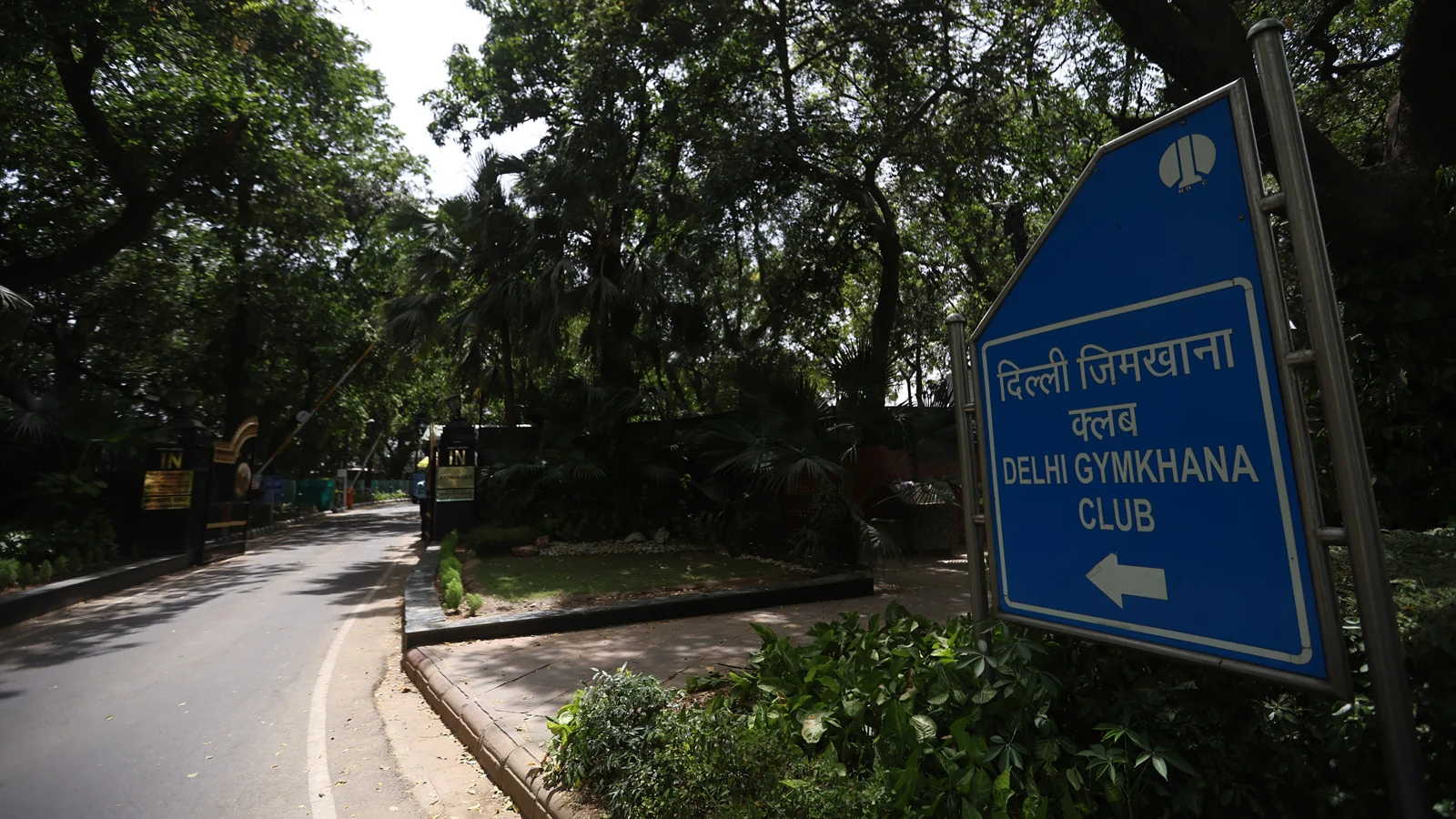
The Centre’s order to the Delhi Gymkhana Club to vacate its 27.3-acre premises by June 5, citing the need to “strengthen and secure defence infrastructure”, is the latest in a series of such moves. Since March, the Indian Polo Association and the Delhi Race Club have also moved the Delhi High Court against eviction notices issued to them by the government.
In December 2023, the Land Development Office (L&DO) under the Ministry of Housing and Urban Affairs had revised Gymkhana Club’s rent retrospectively from April 2018, based on prevailing institutional land rates.
The revised demand amounted to Rs 4.1 crore per year, which the Club had termed a hike of “10,000 times the original rent”. While the Club, since 2023, sought HC’s intervention to quash a series of notices, the total dues demanded had climbed to Rs 47.59 crore by April this year.
The Club has cited several grounds – from the lack of an opportunity to be heard, a bar on retrospective revision of rent under the Centre’s own 1983 office order and an inability to pay, given that it has been under a court-appointed management since an order issued by the National Company Law Appellate Tribunal (NCLAT).
On May 7, Justice Purushaindra Kaurav of the HC directed the Club and the L&DO to hold a joint meeting. By May 14, the Club told the court that an amicable resolution was being explored, and the matter was deferred to July 21.
In March this year, the L&DO also served simultaneous 15-day eviction notices on two of Delhi’s oldest sporting institutions – the Indian Polo Association (IPA), which manages the Jaipur Polo Ground near Race Course Road, and the Delhi Race Club (1940) Limited, spread across 53 acres on Kamal Ataturk Marg. Both institutions moved the HC.
On March 25, Justice Mini Pushkarna stayed the proposed evictions in two separate proceedings, holding that if the government wished to resume the land, it would have to follow due process.
Story continues below this ad
In case of the IPA, the government moved the Estate Officer under the Public Premises (Eviction of Unauthorised Occupants) Act, 1971. A show-cause notice was issued to the IPA on April 17.
The IPA argued that the lease had continued by conduct, that the government had accepted rent payments as recently as April 2025, covering the period up to March 2030, and that its status as a National Sports Federation set it apart from ordinary occupants of public premises.
On May 20, the Estate Officer rejected all objections and ordered eviction. He held that payments accepted after March 1993 amounted to “use and occupation charges” and not rent under a valid lease, that the PP Act left no room for the Transfer of Property Act’s “holding over” doctrine, and that unauthorised occupation of public premises constitutes a continuing wrong, making limitation inapplicable. The IPA challenged the order before the HC.
The following day, a separate bench heard IPA’s petition seeking appointment of an arbitrator under its 1951 lease deed — which the court itself described as “subsisting up to 31.03.2030”. A notice was issued to the government, which has four weeks to respond.
Story continues below this ad
In the Delhi Race Club case, after Justice Pushkarna’s March 25 stay on the eviction notice, the civil suit was disposed of in April on the understanding that “the defendant shall not dispossess the plaintiff without resorting to due process of law”.
On April 17, the Estate Officer issued a fresh show-cause notice under Section 4 (1) of the PP Act. The Club filed a writ petition before the HC in which it relied heavily on an earlier round of litigation dating back to 1999, when the government had issued a similar notice under the Act. That notice was ultimately quashed by the HC in 2012 on the ground that the government could not treat the Club as an “unauthorised occupant” without first formally terminating the lease under the 1926 deed.
The Delhi Race Club argued the same defect applied now.
Justice Amit Sharma, noting the “chequered history of previous litigation,” issued notice and stayed further proceedings before the Estate Officer. The government filed an appeal, arguing the stay was premature — the show-cause notice “neither determines any rights of the parties nor results in eviction.”
Judgment in that appeal is expected on Tuesday.
The Union government subsequently appealed against the April notice.
Story continues below this ad
It said that the writ petition was only directed against a preliminary show-cause notice, “ which neither determines any rights of the parties nor results in eviction by itself”, and that “the premature interference at the show-cause notice stage has the effect of stalling the statutory adjudicatory process and defeats the legislative intent of providing a specialised mechanism for eviction and related disputes concerning public premises”.