







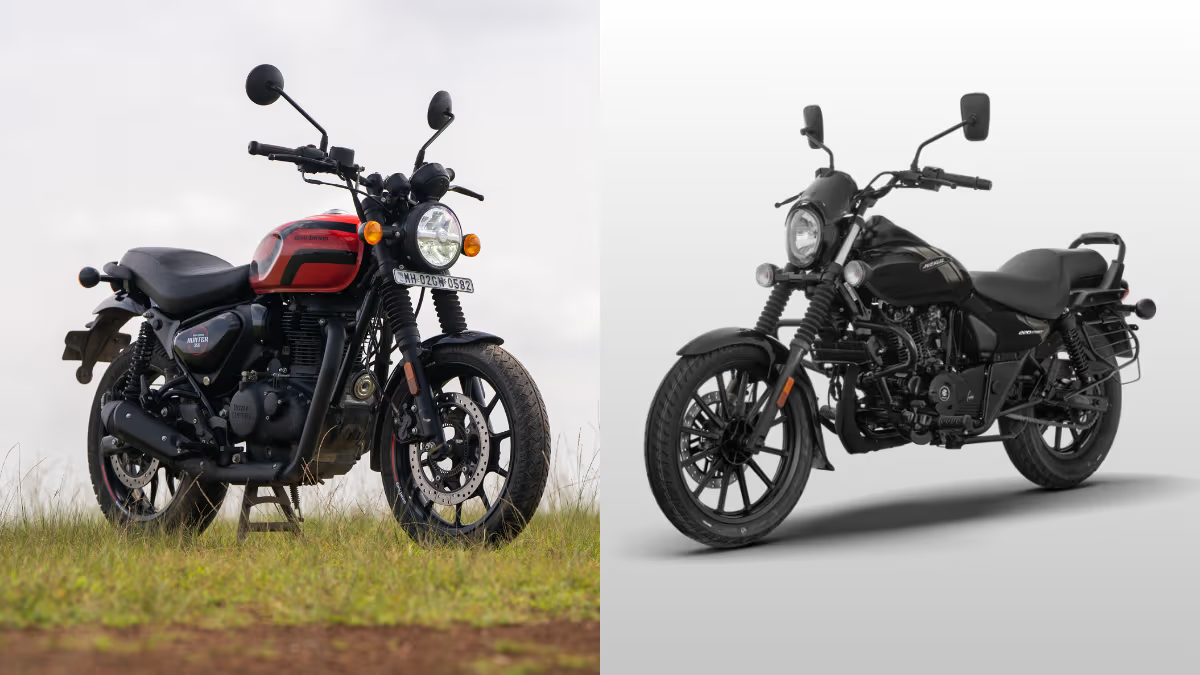
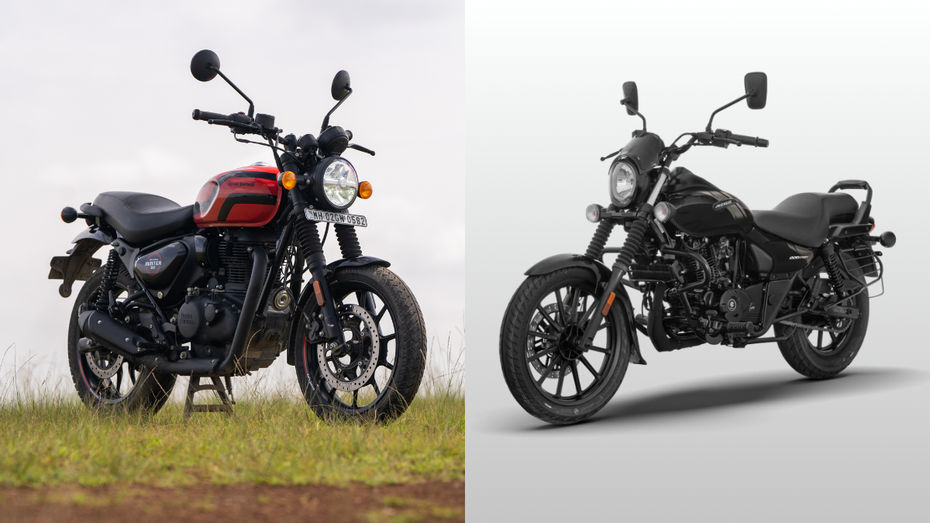
The Indian motorcycle market offers a wide variety of choices for buyers looking for practical yet characterful machines. Two such motorcycles that cater to very different riding styles are the Bajaj Avenger Street 220 and the Royal Enfield Hunter 350.
While both motorcycles fall into the sub-350cc retro segment, they are built around entirely different philosophies. The Avenger Street 220 is a low-slung cruiser designed for relaxed riding and comfort, whereas the Hunter 350 is a compact roadster aimed at urban agility and everyday usability.
Despite their contrasting approaches, both bikes are often considered by buyers looking for a stylish, affordable motorcycle that can handle daily commutes as well as occasional longer rides. On paper, they differ significantly in terms of engine size, dimensions, and hardware, which directly impacts their real-world performance and riding experience.
Let’s take a detailed look at how these two motorcycles compare across key parameters on paper:
Price & Variants
|
Bajaj Avenger Street 220 |
Royal Enfield Hunter 350 |
||
|
Colours |
Ex-showroom Price |
Colours |
Ex-showroom Price |
|
Ebony Black |
Rs 1,30,172 |
Factory Black |
Rs 1,37,640 |
|
Cocktail Wine Red |
Tarmac Black |
Rs 1,51,025 |
|
|
Rio White |
Rs 1,66,372 |
||
|
Dapper Grey |
|||
|
Graphite Grey |
|||
|
Rebel Blue |
Rs 1,71,077 |
||
|
London Red |
|||
|
Tokyo Black |
|||
|
Moonshot White |
|||
|
Mumbai Yellow |
|||
-
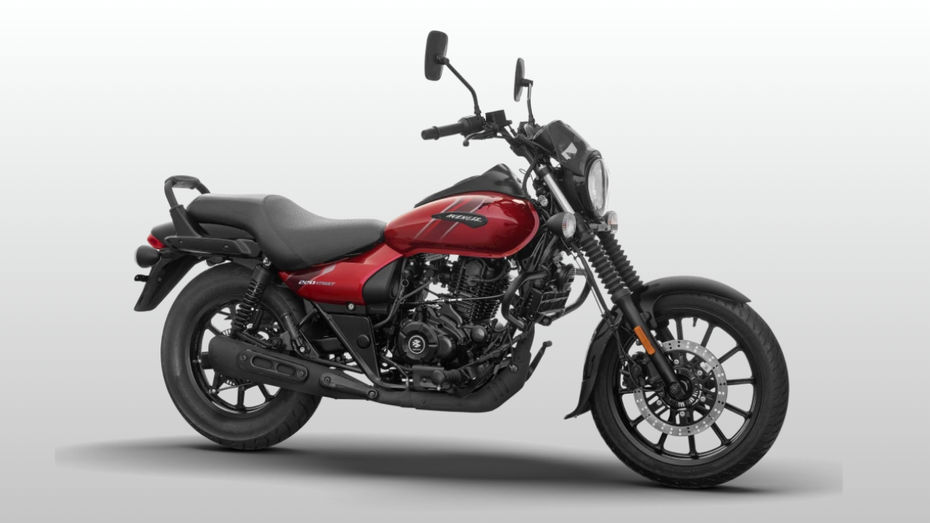
The Bajaj Avenger Street 220 is clearly the more affordable motorcycle, with a starting price of Rs 1.30 lakh (ex-showroom, Delhi). This makes it significantly more appealing for budget-conscious buyers.
-
The Royal Enfield Hunter 350 starts at Rs 1.37 lakh but goes up to nearly Rs 1.70 lakh depending on the variant. This range of variants with more colour options allows buyers to choose based on style and budget.
-
The Avenger keeps things simple with a limited number of variants, making the buying decision straightforward.
Dimensions & Design
|
Specifications |
Bajaj Avenger Street 220 |
Royal Enfield Hunter 350 |
Difference |
|
Wheelbase |
1,490 mm |
1,370 mm |
– 120 mm |
|
Ground clearance |
169 mm |
160 mm |
– 9 mm |
|
Fuel tank capacity |
13 litres |
13 litres |
– |
|
Seat height |
737 mm |
790 mm |
+ 53 mm |
|
Kerb weight |
160 kg |
181 kg |
+ 21 kg |
- The most obvious difference between the two lies in their overall proportions. The Avenger Street 220 has a significantly longer wheelbase, reinforcing its cruiser stance and enhancing straight-line stability.
-
The Hunter 350, with a much shorter wheelbase, is designed for agility and ease of handling in city conditions.
-
The Avenger’s extremely low seat height of 737 mm makes it one of the most accessible motorcycles in the segment, especially for shorter riders.
-
The Hunter 350’s higher seat height and upright stance provide better control and visibility in traffic.
-
The Avenger is also quite lighter, which should help in slow-speed, but it has a considerably longer wheelbase. The lighter kerb weight should make it easier to turn at higher speeds.
-
Ground clearance is slightly better on the Avenger, but the difference is marginal.
-
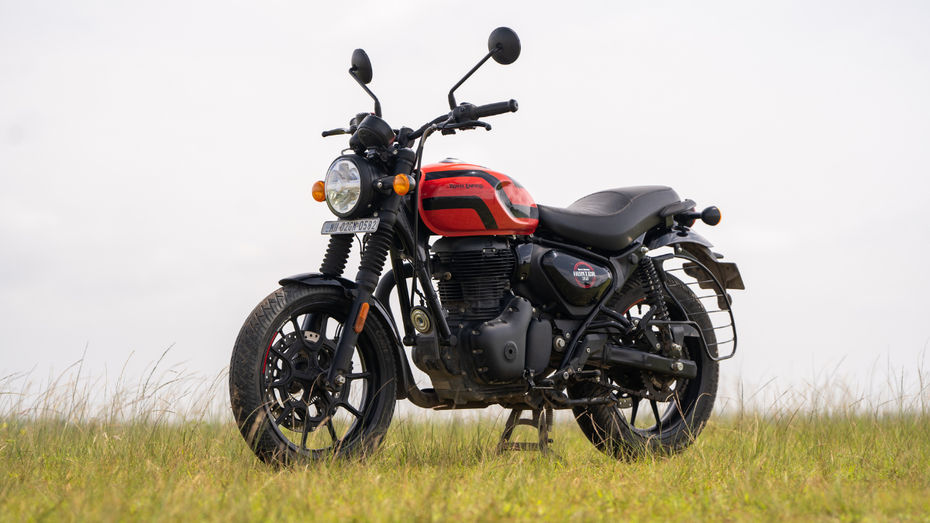
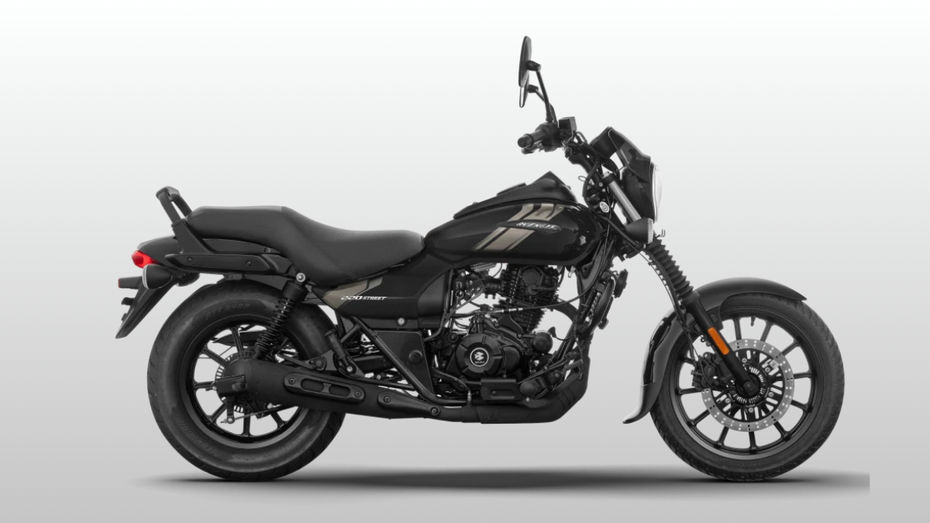
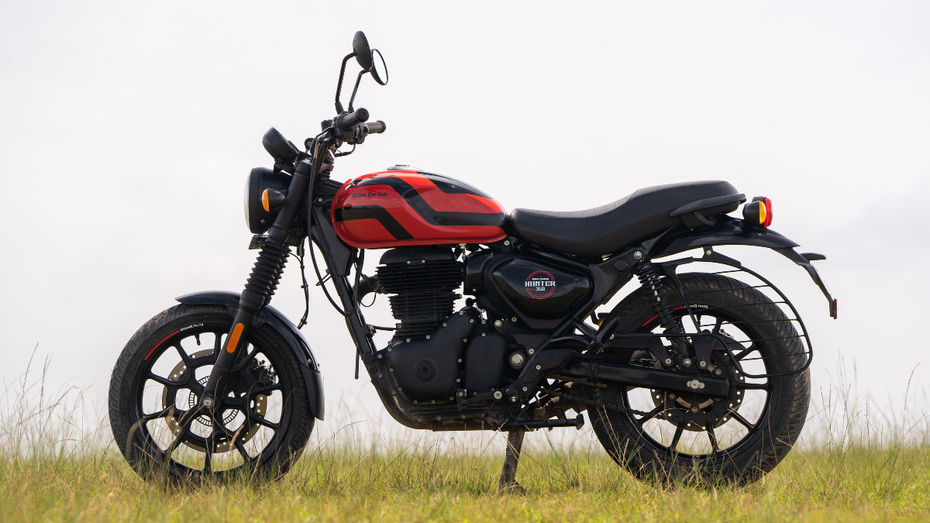
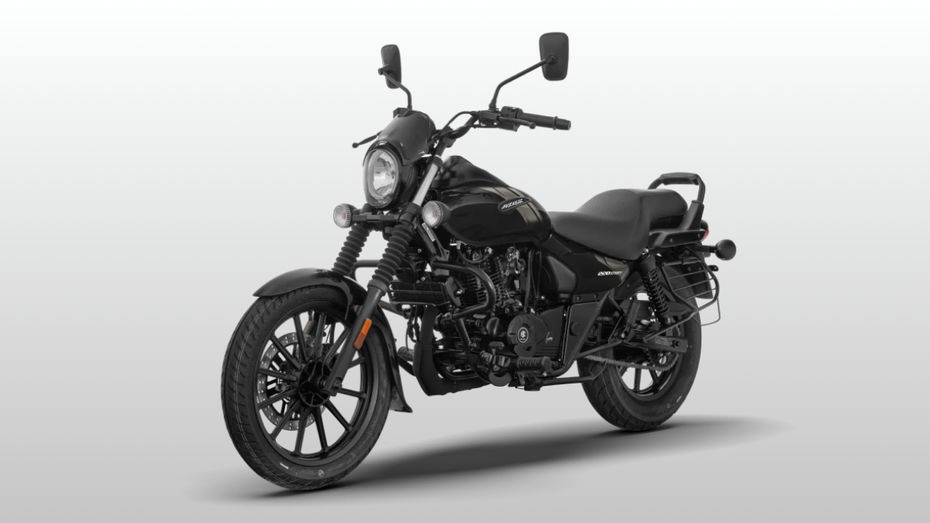
In terms of design, the Avenger Street 220 follows a classic cruiser design with forward-set footpegs, a long wheelbase, and a relaxed riding posture. It is clearly built for comfort and laid-back riding.
-
The Hunter 350 adopts a more modern roadster design with a compact body, upright ergonomics, and a youthful appearance.
-
The Avenger appeals to riders who prefer a traditional cruiser look, while the Hunter is aimed at younger buyers seeking a sporty yet retro-inspired design.
Underpinnings
|
Specifications |
Bajaj Avenger Street 220 |
Royal Enfield Hunter 350 |
|
Front suspension |
Telescopic fork |
Telescopic fork |
|
Rear suspension |
Twin shock absorbers |
Twin shock absorbers |
|
Front brake |
280 mm disc brake |
300 mm disc brake |
|
Rear brake |
130 mm drum brake with single-channel ABS |
270 mm disc brake with dual-channel ABS |
|
Front tyre |
90/90-17 |
110/70-17 |
|
Rear tyre |
130/90 – 15 |
140/70 – 17 |
- The Hunter 350 has a more robust braking setup, especially at the rear, which translates to better stopping performance.
-
The Avenger 220 Street has a drum brake at the rear and only single-channel ABS overall, which significantly reduces the safety quotient of the bike compared to the Hunter 350.
-
Wider tyres on the Hunter improve grip and stability, especially during cornering.
-
The Avenger’s setup is tuned more for comfort, while the Hunter’s hardware is designed for better handling and control.
-
Both motorcycles use similar suspension setups, but the Hunter feels more capable of spirited riding.
Features
|
Specifications |
Bajaj Avenger Street 220 |
Royal Enfield Hunter 350 |
|
Full-LED lighting |
No |
No |
|
Bluetooth connectivity |
No |
Yes (as an accessory) |
|
USB charging |
Yes |
Yes |
|
Instrument Console |
Semi-digital |
Semi-digital |
- The Hunter 350 offers Bluetooth connectivity for call and SMS alerts, along with turn-by-turn navigation through the Tripper navigation pod accessory. In the Bajaj Avenger Street 220, Bluetooth connectivity is not available even as an accessory.
-
USB charging is available on the Hunter 350 but the Bajaj Avenger Street 220 misses out on that feature as well..
-
The feature sets are simple, aligning with their positioning as affordable, everyday motorcycles.
-
The Bajaj Avenger Street 220 has a basic LCD instrument console, while the Royal Enfield Hunter 350 has a semi-digital instrument console with an analogue speedometer and a digital inset that shows fuel gauge, gear position indicator, odometer and tripmeter readouts.
-
The Hunter 350 is the clear winner of this segment with Bluetooth connectivity and USB charging.
Performance
|
Specifications |
Bajaj Avenger Street 220 |
Royal Enfield Hunter 350 |
|
Engine |
220cc, single cylinder, oil-cooled engine |
349cc, single-cylinder, air-oil-cooled engine |
|
Power |
19.03 PS at 8,500rpm |
20.2 PS at 6,100rpm |
|
Torque |
17.55 Nm at 5,650rpm |
27 Nm at 4,000rpm |
|
Gearbox |
5-speed |
5-speed |
-
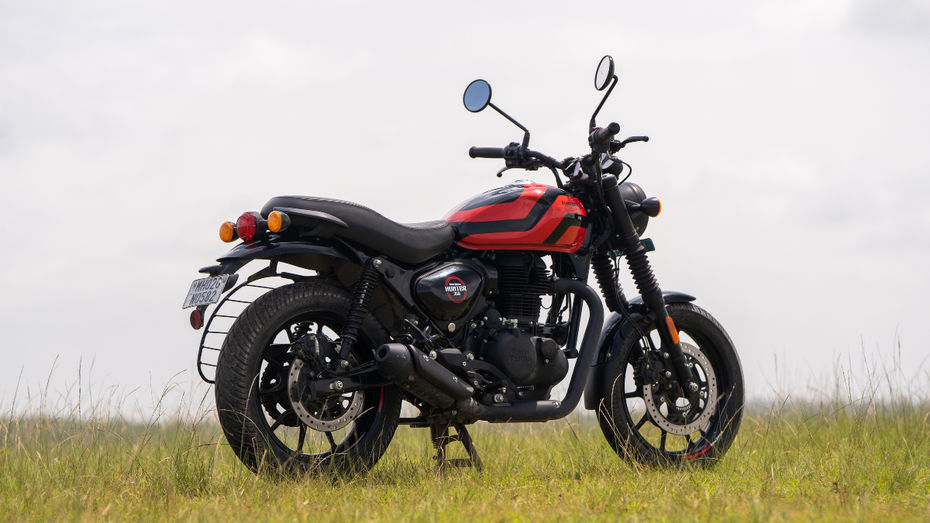
The Hunter 350 has a clear advantage in terms of torque, which translates to better low-end performance and easier rideability in city conditions.
-
The Avenger produces slightly less power and torque, but its lighter weight helps maintain decent performance.
-
The Hunter’s engine is tuned for strong low-end and mid-range performance, making it more versatile.
-
The Avenger’s engine feels smoother at higher revs, suited for relaxed cruising on the highways.
BikeDekho Says
The Bajaj Avenger Street 220 and the Royal Enfield Hunter 350 cater to very different types of riders despite occupying a similar price bracket.
The Avenger Street 220 is all about comfort and ease of use. Its low seat height, relaxed ergonomics, and affordable price make it an excellent choice for riders who prioritise comfort and cruising ability.
The Hunter 350, on the other hand, is a more versatile and capable motorcycle. It offers better performance, stronger braking, and improved handling, making it a better all-rounder.
If you want a comfortable cruiser for relaxed rides, the Avenger is the better choice.
If you want a more dynamic motorcycle for everyday riding with a better safety quotient and a more extensive features list, the Hunter 350 is the clear winner.
Other Rivals:
The Bajaj Avenger Street 220 is much more affordable, but the Bullet 350 offers smoother performance and better features.
The Bajaj Avenger Street 220 is available at a more affordable price point but the TVS Ronin feels more modern, agile with a more extensive features list.