







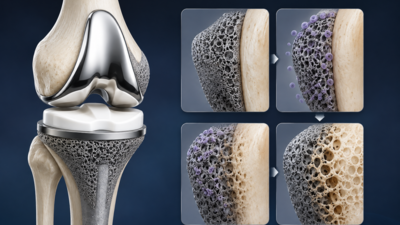
In over four decades of performing total knee arthroplasty (TKA), the profile of patients undergoing TKA has changed in ways that are both clinically significant and insufficiently acknowledged in how we approach fixation decisions. The patient presenting for knee replacement today is not the same patient for whom our primary fixation paradigm was designed, and this mismatch deserves to be readdressed. Additionally, there is the Shifting Epidemiological Burden of Obesity.Cemented TKA has been one of the most clinically successful procedures in orthopaedic surgery, with a long and well-documented record of reliable outcomes across diverse patient populations. Its’ status as the gold standard of treatment for end stage arthritis has been well earned. However, the epidemiology of the patient requiring TKA in India is changing in ways that challenge the assumption of a uniform fixation approach.Two convergent trends define this shift. India’s obesity incidence now stands at 40.3%, with a significantly higher prevalence in the urban population (44.17%) and in individuals over 40 years of age (45.81%)1. Obesity is a well-established independent risk factor for early-onset osteoarthritis, increasing intra-articular mechanical load, accelerating cartilage degradation, and compounding systemic inflammatory burden. Population-level data shows that approximately 20% of individuals under 50 years carry the burden of osteoarthritis; a prevalence that rises to 31% in the 50–59 cohort2. The result is a growing patient population that is younger, heavier, biologically more demanding of their implant, and statistically likely to outlive a fixation strategy not designed with them in mind.These patients also present with expectations that reflect their life stage. Return to recreational sport, physically demanding occupational functions, and sustained activity into the sixth decade are not outlier aspirations, they are the clinical norm for this cohort.Aseptic loosening: The mechanism behind fixation failureUnderstanding why cemented fixation may be suboptimal in this cohort requires examining the dominant failure mechanism. Long-term failures in cemented TKA are frequently attributable to aseptic loosening, a result of progressive degradation of the cement-bone interface under cyclical mechanical loading. This is not a failure of surgical technique; it is a material and biomechanical limitation that becomes increasingly relevant as body weight and activity levels increase.The data is instructive. A Mayo Clinic analysis of well-aligned cemented TKAs demonstrated that patients with a BMI ≥35 were at a higher risk (almost double) for aseptic tibial loosening3. In patients under 55 years of age, five-year revision rates approach 5.9%, compared to 2.1% in older cohorts, with aseptic loosening among the primary recorded drivers. For a 44-year-old patient with a BMI of 38 and a three-decade functional horizon, this is not a peripheral data point; it is the central clinical question.The biological fixation alternative: Clinical rationale and historical contextCementless TKA achieves fixation through osseointegration; the direct ingrowth of host bone into a porous implant surface rather than through mechanical interdigitation with cement. This distinction has important implications for load transfer and long-term interface stability, particularly in high-demand patients.It is important to contextualise this option within its clinical history. Early cementless designs in the 1980s encountered significant problems like inadequate porous coating coverage, polyethylene wear debris, and metal-backed patellar component failures which contributed to inferior outcomes and a retreat from cementless fixation through the 1990s and early 2000s4. The resurgence of cementless TKA is not a rehabilitation of those early designs, it reflects a substantive technological evolution. Contemporary implants incorporate three-dimensionally printed titanium porous architectures, peri-apatite hydroxyapatite surface treatments that actively promote osseointegration and additively manufactured tibial baseplates with controlled pore geometry engineered to optimise bone ingrowth. These represent qualitatively different implant science, not incremental refinement.The precedent for biological fixation in arthroplasty is well established. Cementless fixation has been the standard of care in total hip arthroplasty for younger, active patients for over two decades, with osseointegration reliability now comprehensively documented in long-term registry and clinical data. The learnings from hip arthroplasty, on porous coating performance, host bone response, and survivorship trajectories have directly informed the engineering and clinical application of modern cementless knee systems.Evidence in the populations that matter mostThe clinical evidence for cementless TKA in the patient cohorts most relevant to India’s evolving burden is substantive. In patients under 50 years of age, cementless cohorts demonstrate 100% all-cause survivorship at four-year follow-up, with significantly improved functional scores. In morbidly obese patients with BMI ≥40, a group in which cemented fixation has shown survivorship declining to 88.2% at eight years, cementless TKA demonstrates survivorship of 99.1% over the same period6. In patients with BMI between 30 and 40, cementless TKA is associated with higher satisfaction scores and sustained functional improvement at two years7.Long-term registry evidence provides further confidence. The Australian Joint Registry reports 95.5% all-cause survivorship for cementless femoral components at 15 years8. Data from multiple United States centres demonstrates over 99% survivorship for aseptic loosening of cementless tibial baseplates at 10-year follow-up9.Preserving clinical judgment in an evolving landscapeTo conclude- cementless fixation is not necessarily the ideal choice for every patient. Cemented TKA remains a clinically sound and well-evidenced option for a large proportion of those requiring knee replacement, particularly older patients, those with compromised bone quality, and those with lower functional demands. It is about choosing the most appropriate fixation for the individual patient and having the clinical freedom to do so.References & Bibliography:
- Venkatrao M, Nagarathna R, Majumdar V, Patil SS, Rathi S, Nagendra H. Prevalence of obesity in India and its neurological implications: a multifactor analysis of a nationwide cross-sectional study. Annals of Neurosciences. 2020;27(3-4):153–161. doi:10.1177/0972753120987465
- Singh A, Das S, Chopra A, Danda D, Paul BJ, March L, et al. Burden of osteoarthritis in India and its states, 1990–2019: findings from the Global Burden of Disease study 2019. The Lancet Regional Health – Southeast Asia. 2023
Abdel MP et al. Increased aseptic tibial failures in patients with a BMI ≥35 and well-aligned total knee arthroplasties. - J Arthroplasty. 2015;30(12):2181–2184. doi:10.1016/j.arth.2015.06.057
Meneghini RM et al. Cementless fixation in total knee arthroplasty: past, present, and future. J Knee Surg. 2008;21(4):307–314. doi:10.1055/s-0030-1247837 - Mont et al. Outcomes of a newer-generation cementless total knee arthroplasty design in patients less than 50 years of age. Ann Transl Med. 2017;5(Suppl 3):S24. doi:10.21037/atm.2017.08.20
- Sinicrope et al. Increased survivorship of cementless versus cemented TKA in the morbidly obese. A minimum 5-year follow-up. J Arthroplasty. 2019;34(2):309–314. doi:10.1016/j.arth.2018.10.016
- Sharpe K, Robinson K, Cohen R, Barnett TM, Rastogi A, Masini M. Prospective assessment of the impact of obesity on early postoperative outcomes of cementless total knee arthroplasty. 2017
- Australian Orthopaedic Association National Joint Replacement Registry (AOANJRR). Annual Report 2025
- Stoltz M, Mullick M, Duncan A, Smith L, Yakkanti M, Malkani A. Primary TKA using a cementless highly porous titanium tibial baseplate: a minimum 10-year follow-up. Poster Presentation, AAOS 2025, San Diego, CA. | Zappley
- NR et al. 10-year follow-up for a new three-dimensional printed cementless total knee arthroplasty. The Journal of Arthroplasty. 2025;40(7)
The article has been contributed by Dr. Ashok Rajgopal, Group Chairman – Institute of Musculoskeletal Disorders and Orthopaedics, Medanta- The Medicity (Gurugram)Disclaimer: The views and opinions expressed in the story are independent professional judgments of the experts, and TIL does not take any responsibility for the accuracy of their views. The information provided is indented solely for informational purposes and does not constitute medical advice or endorsement. Please consult your treating physician for more details. This article has been produced on behalf of Dr. Ashok Rajgopal by Times Internet’s Spotlight team.