






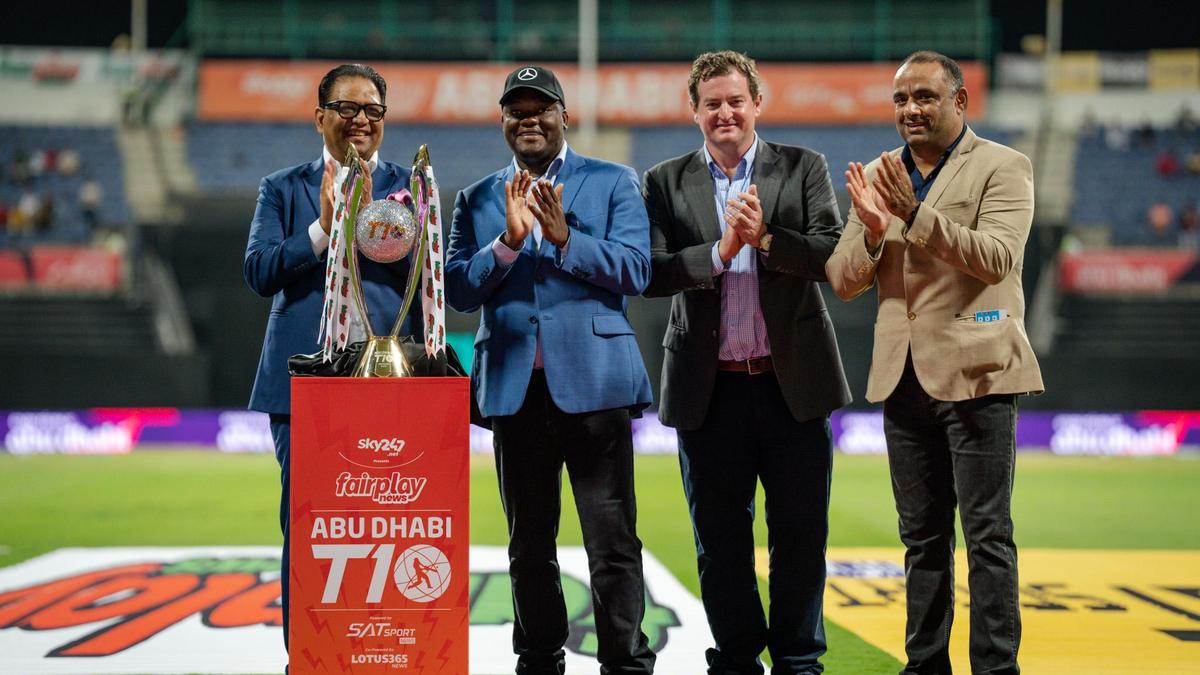
Abu Dhabi T10 is looking to attract new international franchises as part of a broader push to expand the competition’s global footprint, Chief Executive Matt Boucher said, with a focus on improving transparency and strengthening governance.
Abu Dhabi Cricket & Sports Hub assumed majority ownership and commercial control of the 10-overs-a-side competition last week, transitioning the league – launched in 2017 by Shaji Ul Mulk – into a government-owned and managed tournament.
Boucher said the move was aimed at creating long-term stability for teams and restoring confidence in a league that had faced concerns over financial practices and integrity in previous seasons.
“The new licence from the Emirates Cricket Board empowers us to offer new 10-year licences to a selection of existing teams and a suite of new international franchise partners,” Boucher told Reuters.
“We’re currently in detailed conversations with some existing Abu Dhabi T10 teams regarding the future and we will soon launch a global invitation to new teams.”
The eight-team tournament has seen frequent franchise turnover, with 18 different teams involved over nine seasons, reflecting instability under the previous model.
With sponsorship value estimated at $512 million, the new structure aims to provide financial certainty, with each franchise guaranteed a share of central revenue.
“On the financial model, each franchise will receive a guaranteed share of the Central Pool Income annually for years one to 10, giving owners a foundation of revenue certainty,” he said.
WAGE ISSUES
The league has previously faced criticism over delayed and unpaid wages, with players and officials often registering complaints about the governance.
A 2020 report by the Federation of International Cricketers’ Associations said some players and coaches were still owed up to half their salaries from the 2019 season months after it ended.
Integrity also came under scrutiny, with players banned for spot-fixing in 2021 and several individuals charged in 2023 over attempts to manipulate matches during the 2021 edition.
In 2024, ICC anti-corruption officials warned of a high risk of corruption in the Abu Dhabi T10, with further bans imposed on players.
“The real focus is on much stronger player governance and player welfare – together with the respective global governing bodies who oversee this,” Boucher said, adding that strengthening oversight would be central to the league’s overhaul.
Changes to squad composition have also been introduced, with teams now limited to two direct signings – an icon and one platinum player – and the remaining squad selected through a draft, replacing earlier systems that allowed multiple pre-signings.
The 2026 edition features one icon, two platinum players, including one from the draft, three each across categories A, B and C – ranked according to international stature and salary – along with UAE and associate players, with nine overseas and at least two UAE players required in the playing 11.
Boucher also welcomed the growth of cricket across the Middle East, including emerging competitions in neighbouring countries.
“Cricket in the Middle East has really taken off in the last 10 years, with the UAE leading the way,” he said.
“If our neighbours are now entering this cricketing ecosystem and developing their own products, then that’s fantastic for our residential populations and for our governing bodies.”
The tournament is scheduled to run from November 7 to 20.
Published on May 29, 2026