





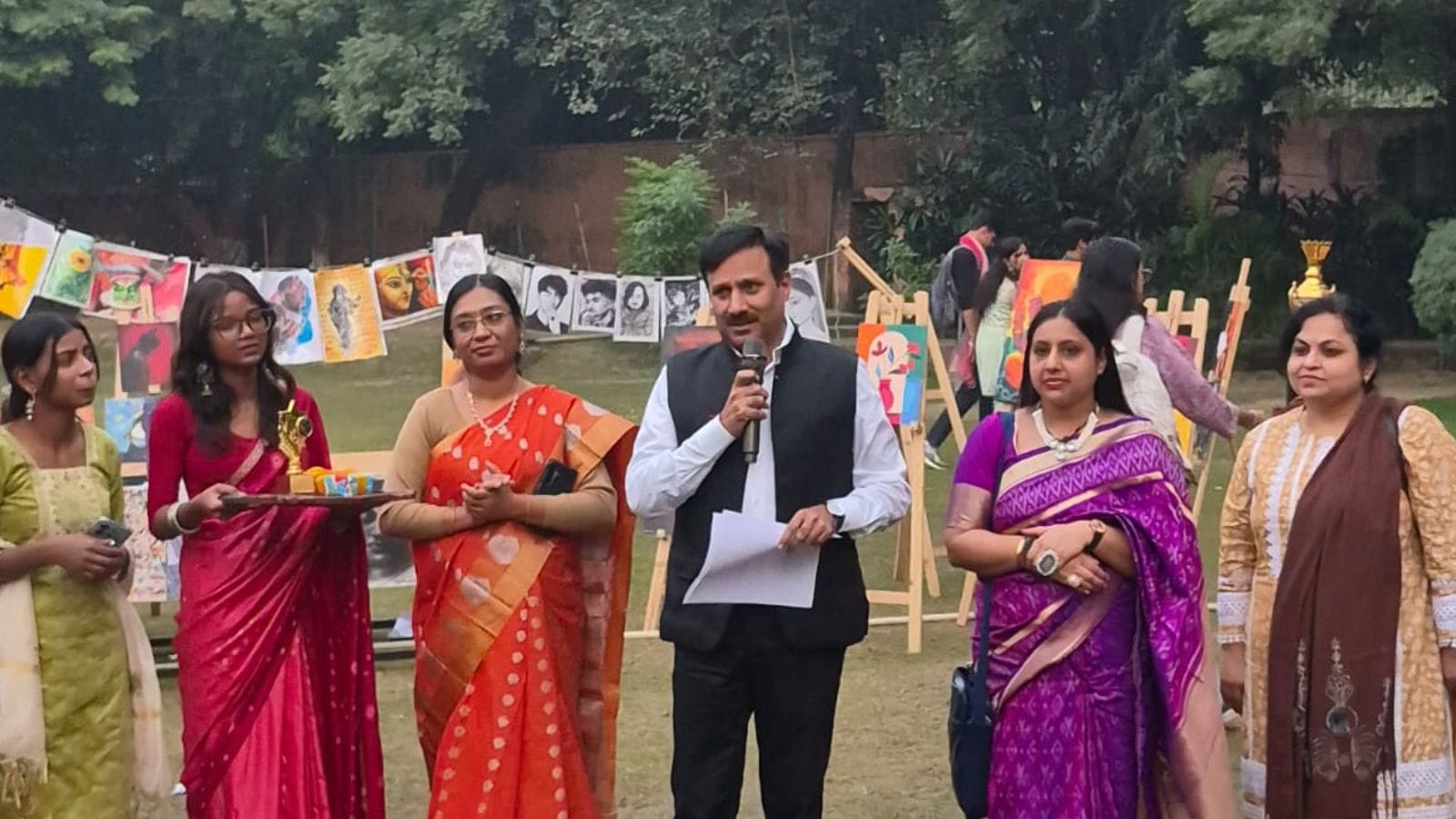
Garg, an Assistant Professor in the Department of Zoology, was preparing for a trip to Kashmir. Paul spoke about her own plans. She wanted to take her elderly parents back to West Bengal, to her maternal grandfather’s home near Bardhaman, where her mother loved spending summers.
“Now I am like a parent to my parents,” she told Garg. The two women then drifted into a conversation about sarees. Both were fond of handlooms and often exchanged recommendations from places they travelled to.
Story continues below this ad
“We all called her Debo,” Garg told The Indian Express. She jokingly asked Paul to bring her a Kantha-work saree from Bengal and Paul promised she would.
But the trip never happened and the dozens of plans that Paul had been making for the next academic year would remain unfinished.
On June 4, Paul, a 35-year-old Assistant Professor of English at Shivaji College, was found murdered inside her apartment in East Delhi’s Vasundhara Enclave. She lived alone; her husband was in Bengaluru.
But who killed her?
It was CCTV footage that gave police their clue and led them to the accused — a couple from West Bengal and their 13-year-old son, who allegedly travelled nearly 1,400 km to Delhi to carry out the crime.
Police arrested them and apprehended their teenage son. And when they questioned them, a motive emerged — a property dispute.
Story continues below this ad
Police said the couple wanted to acquire a house from Paul’s ancestral property in Bardhaman. They had been living on that property as tenants, paying a monthly rent of Rs 11,500. Paul, however, refused to sell and gave the couple an ultimatum to vacate the house by June.
The crime has shocked colleagues across DU. In a condolence message issued on June 5, Shivaji College described her death as “an irreparable loss not only to her family but also to the entire academic community and the Shivaji College fraternity.”
Paul was a member of the college’s cultural committee, the Women’s Development Cell, and the editorial board of the college magazine. She mentored students and organised programmes.
Story continues below this ad
For Shivaji College Principal Virender Bharadwaj, the loss is difficult to comprehend. “She was like my daughter,” he said.
Murder they wrote
As police investigated the case, several chilling details emerged. The crime, they said, appeared pre-meditated.
The accused husband, aged 42, managed a sanitary goods business in Bardhaman and frequently travelled to Delhi for work. During these visits, he allegedly conducted reconnaissance of Paul’s residence and took photographs of her house and vehicle, police said.
Story continues below this ad
They hatched their plan and arrived in Delhi, bringing with them a mortar and pestle, and a razor.
On the afternoon of June 4, footage from a CCTV camera in Paul’s apartment complex showed three people — a couple and a child — in surgical masks entering her flat. Police said the man decided to bring his wife and son along so that they could enter the residential society without arousing suspicion.
According to investigators, Paul offered the trio water. During their conversation, she once again asked the couple to vacate her property in Bardhaman. This reportedly led to an argument, after which the couple allegedly attacked her.
Story continues below this ad
Police said the man repeatedly struck the teacher on the head with the mortar and pestle. To ensure that she was dead, he allegedly attempted to cut her wrists with the razor.
Then, the couple changed their clothes and took away Paul’s mobile phone in an attempt to erase chats and messages that could link them to the crime.
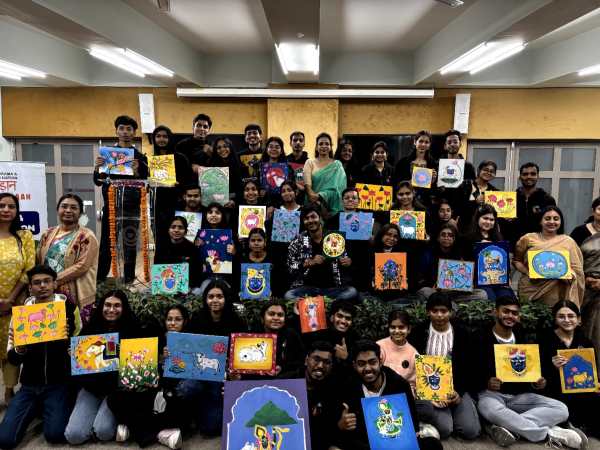 Debosmita (top row, brown sweater and sari) with students at an Udaan cultural event. (Express Photo)
The family headed to New Delhi Railway Station, where they changed their clothes again, before boarding the New Delhi-Howrah Poorva Express, which left at 5.40 pm. They had taken off their masks, and police were able to see their faces clearly in CCTV footage from the station.
Story continues below this ad
Meanwhile, police had discovered that the suspects had been staying at a guest house in Dallupura since June 2. The guest house records showed Aadhaar cards with a Bardhaman address.
Using the address on the card and CCTV footage collected during the investigation, police traced and arrested the accused in Bardhaman on June 7.
‘Teacher, mentor’
At Shivaji College, where Paul spent the last two-and-a-half years of her life as a permanent faculty member, conversations have turned away from the investigation and towards the woman they knew.
Story continues below this ad
Principal Bharadwaj had watched Paul become an integral part of campus life after she joined in December 2023. Before that, she had spent several years teaching at Maharaja Agrasen College as an ad hoc faculty member.
Bharadwaj spoke of her temperament, describing Paul as sensitive, responsible. “I never heard any complaint from any student or teacher about her,” he said. “Nor did she ever complain about anyone.”
An English literature scholar, Paul became an active member of the cultural committee and worked closely with student theatre groups and cultural societies. Whenever student teams travelled for performances or competitions, she was often among the faculty members willing to accompany them.
Story continues below this ad
Garg recalled how she first met Paul during the recruitment process at Shivaji College in late 2023. Both were selected and soon found themselves working closely together in the college’s Fine Arts Society.
Garg was the convener and Paul became the co-convener and what began as professional collaboration gradually evolved into friendship.
For two years, the women organised workshops through Udaan, a cultural initiative with which Paul was deeply involved. Together, they introduced students to traditional Indian art forms, including Madhubani painting and other indigenous artistic traditions. “It was through Debo that I got to know so much about Udaan,” Garg said.
The workshops became some of their proudest projects. Students produced work that drew appreciation from visitors to the college, and the two teachers spent long hours discussing new initiatives they hoped to launch.
Garg recounted Paul’s enthusiasm. “Many teachers spend years pursuing permanent appointments and eventually settle into routine once they achieve them. Not Paul… she was always thinking… now we’ll do this, now we’ll do that.” she added.
Though deeply involved in college life, Paul remained intensely private.Colleagues knew little about the difficulties she carried beyond campus. “I knew she was married but living separately from her husband. She had no children. She had an elder sister with a son and a brother who worked as a doctor,” Garg said
But colleagues knew how devoted she was to her elderly parents. They were the centre of her world. “Now it is our turn to take care of them,” she would often say.
Their health frequently worried Paul, and conversations with friends were often about doctor’s appointments, caregiving responsibilities and family travel plans.
“A few weeks ago, Debo took her parents to Ayodhya,” Garg said. “The next one was supposed to be to Bengal.”
“I always used to tell her that she was earning a lot of blessings,” Garg recalled. “It is not easy being a single woman and taking care of elderly parents.”
The tragedy of her death feels particularly cruel to those who understand how long she had worked to build the life she was finally beginning to enjoy. For academics in India, a permanent faculty appointment often comes after years of uncertainty, temporary contracts, doctoral research and repeated interviews.
“It takes a lifetime to become an assistant professor,” Garg said. “It is not a small achievement.”