





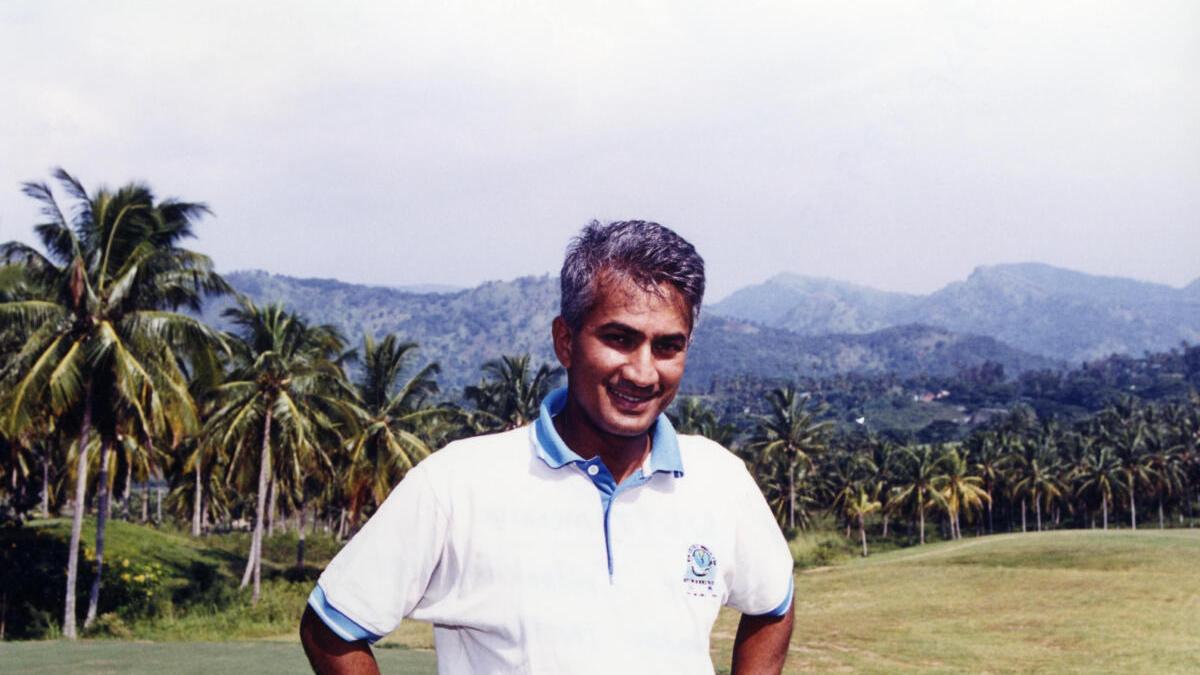
There are few people better placed than Sidath Wettimuny to reflect on where Test cricket has been, and where it is headed.
Sri Lanka’s first Test centurion has witnessed the game’s evolution from close quarters, first as a player and now as a chairman of Sri Lanka Cricket’s Cricket Committee. As the sport grapples with the growing influence of franchise leagues and the changing demands of the modern era, Wettimuny believes Test cricket must evolve without losing its essence.
In a wide-ranging conversation with Sportstar, he speaks about the changing face of the longest format, why India has surged ahead of the rest of South Asia, the challenge of nurturing young talents like Vaibhav Sooryavanshi, and why Sri Lanka’s biggest concern isn’t a shortage of talent but the systems needed to develop it.
He also reflects on the friendships that defined his generation, the commercialisation of the game and what cricket must do to ensure Test cricket continues to thrive.
ALSO READ | Aravinda de Silva: Test cricket can be promoted like Grand Slam tennis tournaments
Q: As Sri Lanka’s first Test centurion, how do you look at the evolution of Test cricket?
Like all things, Test cricket has also changed a little bit. There’s a lot more aggression now compared to the days we played, and I think that’s a byproduct of T20 cricket, and maybe even 50-over cricket. T20 has influenced both one-day cricket and Test cricket.
But other than that, the biggest change I see is in the quality of fielding. When I look at a guy bowling or batting, I think, okay, he’s a bowler, he’s a batsman. But the fielding standard is something else. It’s like acrobatics now. The catches you see on the boundary line—going out, coming back—we could never have done that or even thought of it. So, for me, the biggest change is the incredible improvement in fielding.
Of course, with the advent of T20 cricket, the mindset of players has changed. They are much more aggressive. The main change comes in the mind. There were great players who played Test cricket, one-day cricket and T20 cricket. The mindset is what has changed.
The bats have changed too. I remember the breadth of a bat in my time—it was like my little finger (laughs). Now it’s like three fingers. It’s like golf clubs. I remember Colin Montgomerie saying, “When I was a young man, I used to hit the ball 250 yards. Today I still hit it 250 yards because the clubs have changed so much.”
ALSO READ | ‘Life has surprised me’: Ruturaj Gaikwad reflects on his journey
I think we see the same thing in bats. I’m not demeaning the batters at all, but the quality of the bats has changed. Then you look at the strength levels of players today because of the immense emphasis on physical training and preparation. They are much stronger athletes.
Look at a young batsman today—his body movements, his swing of the bat—it all shows that he has been trained to play that sort of game. When we were young, we were told to stay there, occupy the crease, build the innings. But this is a different game.
I guess it is supply and demand. T20 has become hugely popular around the world. My hope is that if 1,000 new spectators come to watch T20, maybe 50 per cent of them will watch one-day cricket and the rest will start watching Test cricket as well.
I would hate to see Test cricket disappear because, maybe I am old-fashioned, but I still think the real quality of cricket comes at Test level.
Q: The World Test Championship was introduced to give context to Test cricket. Do you think it still needs some tweaking to stay relevant?
To tell you the truth, I haven’t thought through it enough to give you a proper answer.
But what I will say is this: Test cricket must survive. Whatever tweaking they do, that should be the priority. I like the idea of the championship. I think it is good for cricket because otherwise you are just playing bilateral series without any larger purpose.
We’ve seen some exciting finals and I think that is important. Maybe they need to look at certain aspects, but it has only been around for a few years. I’m sure, with time, the ICC will think of ways to make it even more exciting and create greater spectator interest.
Q: South Asian cricket once thrived on fierce rivalries. Today, India seems to have pulled well ahead. Do you think the region needs to regain that competitiveness, especially in Test cricket?
Yes, but I don’t look at the IPL as something that has brought negativity. I think it has brought a lot of positivity.
In my day, if I remember correctly, you had the best chance of playing for India if you were from Bombay, then Delhi, Calcutta and Madras. That was the system.
Today, even if you’re from Timbuktu, if you’re good enough, you’ll be brought into the system. They are churning out amazing talent. India could probably field three international teams.
ALSO READ | No extra T20Is as India keeps Sri Lanka tour to two Tests
The positive side is that every other country now has to raise its standards to reach that level. So I don’t think the overall standard of cricket will drop. The other Asian countries simply have to try and match what India is producing through the IPL.
Where I think we need to be careful is with Test cricket. India will lead that charge, and we must all ensure we continue producing good Test cricketers. Bangladesh, Pakistan, India and Sri Lanka should all produce more competitive Test teams.
But these are cycles. We’ve all had good times and bad times. We hope our rise comes again. I’m all for getting Test cricket back into a really strong position.
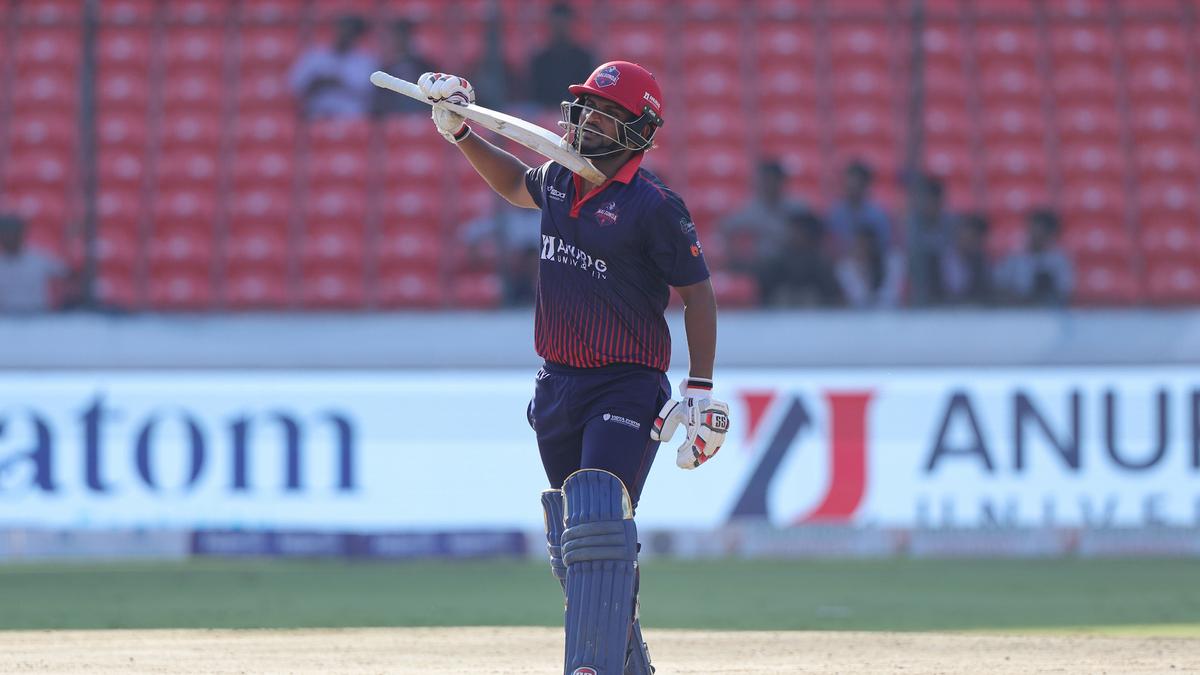
Q: Having watched Vaibhav Sooryavanshi closely, how should a once-in-a-generation talent like him be handled?
That’s a difficult question because nobody has really seen a talent like this doing so much so soon.
Yes, he will have to be nurtured. I would love to see him playing Test cricket for two reasons. One, he will bring so much attraction to the game. Two, he will learn that the mindset required for five-day cricket is very different.
We can only hope he learns to play with more restraint in Test matches and develops into a complete cricketer. At the end of the day, he’ll bring spectators into the game. Just imagine him in the Test team—people will come to watch and see whether he’ll score another blistering hundred.

It’s too early to say where he’ll end up because Test cricket and one-day cricket are different challenges. But he is certainly exciting for the game.
Q: So, a talent like Sooryavanshi is important not just for India but for the future of cricket itself?
Correct. That’s what I think. He has to be nurtured. How that happens will be up to Indian cricket. But absolutely—he is an exciting prospect not just for India, but for cricket.
ALSO READ | PowerPlay promise, middle-over drift: How India lost its way at the Women’s T20 World Cup
Q: Young stars today carry enormous expectations and have to deal with social media. How difficult is that?
It must be tough—for the player, the coaches and the parents.
But one thing cricket teaches you is how to deal with ups and downs. You learn very quickly how to take things in the right spirit and move on.
The way India is going, I won’t be surprised if the next thing we hear is about a 12-year-old playing for India. You never know. That’s the trend now. Players are coming into the game younger and younger.
Q: Why has India managed to build such a deep talent pool while countries like Sri Lanka have struggled?
I don’t think Sri Lanka is short of talent.
When Gary Kirsten came, one of the first things I asked him was about that. He said, “Look, I don’t think you’re short of talent at all.” Look at our emerging team. There’s a youngster who has scored three hundreds in three innings, and he’ll probably play for Sri Lanka A.
Where I think we haven’t done well enough is nurturing players.
Our school cricket is extremely strong, but between school cricket and club cricket, I think we have an issue. In countries like England, school cricket may not be as strong, but once they identify talent, they have an excellent system of nurturing players.
We need to improve that in Sri Lanka.
ALSO READ | Ben Stokes ‘content’ after extraordinary England exit
After winning the 1996 World Cup, cricket exploded across the country. Earlier, it was largely concentrated in Colombo. Suddenly it spread everywhere, but we didn’t have the coaching systems or infrastructure to support that growth.
One thing we’re trying to address now is improving coaching standards. We’ve brought together the Under-19 coaches from 36 schools and exposed them to Gary. We’ll continue running coaching programmes to improve their knowledge.
Most of them have passed coaching exams, but they haven’t had enough exposure. We are trying to give them that experience so they develop a more rounded understanding of the game.
That’s where Sri Lanka has fallen behind—not because of a lack of talent, but because we haven’t developed enough quality coaches across the country. The game expanded faster than our coaching structure could keep pace.
Q: Why did Sri Lanka return to a foreign coach in Gary Kirsten?
To be honest, I can’t answer that directly because I wasn’t involved when Gary was appointed.
But we do have a few issues. Some of our best coaches and former cricketers are involved with IPL teams and other commitments. They may not be interested in working with Sri Lanka Cricket for various reasons, including the instability.
Personally, I’m happy Gary is here. I think he brings a calming influence and we can learn a lot from him. I also believe he can help change the mindset of our players.
ALSO READ | Ben Stokes captaincy record: Win-loss percentage, best wins, how he ranks for England all-time
For some reason, our local coaches haven’t been able to deliver consistently with the national team. At the end of the day, results matter. I’m glad Gary is here and I hope he’ll do well.
Q: Your generation shared great friendships despite fierce on-field rivalries. Do you miss that era?
To be honest, I feel sorry for the younger generation because they don’t have time to enjoy one of the best parts of cricket that we did—the friendships and camaraderie with opponents.
We used to go out together, meet after many years, have a laugh. Today’s players are more interested in their phones and social media. That’s the world they live in.
I wouldn’t exchange what I experienced for what is happening today.
Times have changed and they’ll keep changing. There are good sides and bad sides to every era. But I wouldn’t want to exchange what I experienced.
Q: Are there friendships from your playing days that you still cherish?
Absolutely. Even today, if I go to India, I meet old friends. I enjoyed Sunny (Sunil Gavaskar)’s birthday last year, or maybe the year before. Recently I spoke to Kapil (Dev) about the ‘83’ movie and we chatted about Mohinder (Amarnath). I’m still very good friends with Krishnamachari Srikkanth, Ravi Shastri and many of the players I played against.
Whenever we meet, we have a great chat, laugh about the old days and share a meal.
That’s what cricket gave us. Wherever you played, you built friendships and memories that have lasted a lifetime.
I don’t know whether today’s players get that opportunity because they’re playing so much cricket. They’re constantly moving from one match to another.
Even in domestic cricket, at the end of a game we would sit with the opposition, have a beer, share a laugh and then go home. Today, they finish the match, put on their earphones and walk away. That, for me, is one of the biggest differences.
Published on Jun 29, 2026