





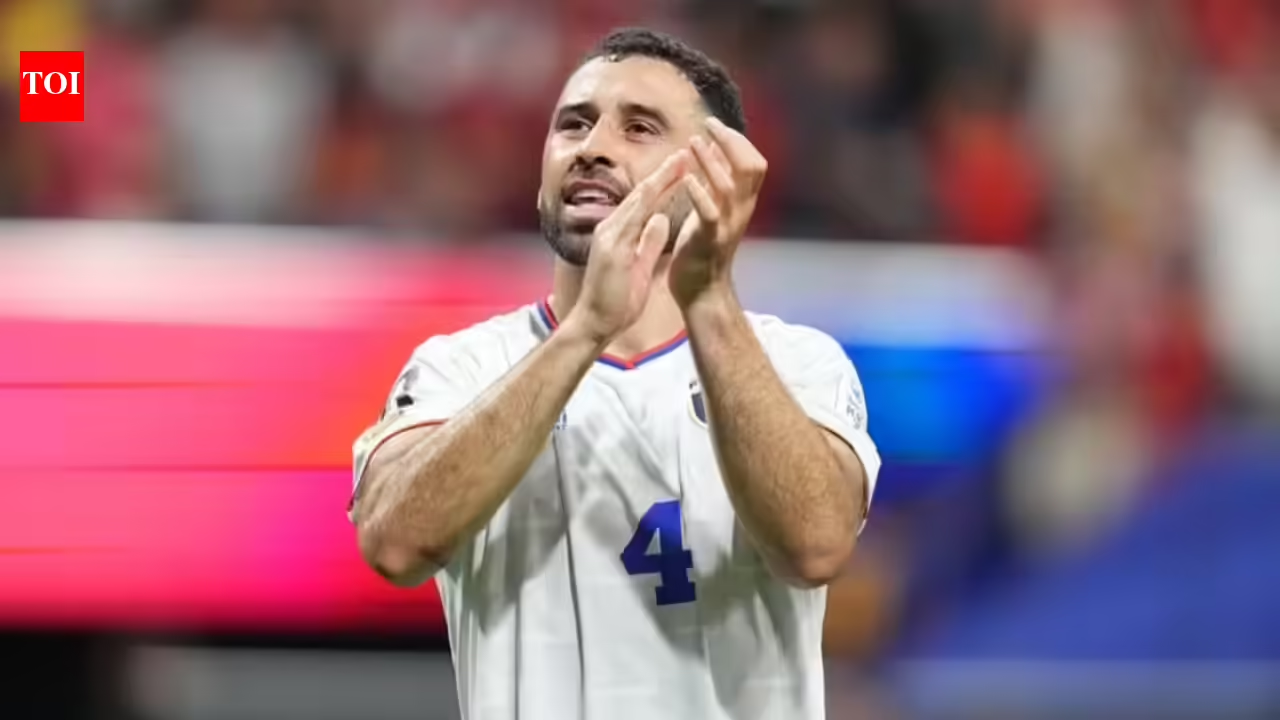
Cape Verde’s historic 0-0 draw against Spain at the 2026 FIFA World Cup produced several unlikely heroes, but few stories are as remarkable as that of defender Roberto Lopes, whose international career almost never happened because he ignored a message on LinkedIn.While much of the attention after the result focused on goalkeeper Vozinha’s seven-save masterclass, Lopes played an equally important role in one of the biggest surprises of the tournament’s opening week. The central defender helped marshal a disciplined back line that frustrated the 2010 world champions and reigning European champions throughout 95 minutes in Atlanta.Spain arrived as one of the favourites to lift the trophy and largely controlled the match from start to finish. Luis de la Fuente’s side completed 734 passes compared to Cape Verde’s 205, dominated possession by a 74-26 margin, registered 27 shots to six, and spent long periods camped inside the debutants’ half. Spain also produced seven shots on target, won 11 corners and completed 593 passes in the attacking half alone.Yet despite wave after wave of pressure from a squad filled with stars from Europe’s biggest clubs, Cape Verde held firm.
The LinkedIn message that changed everything
At the heart of that defensive resistance was Lopes, whose route to international football began in the most unexpected way.Speaking to Reuters before the tournament, the 33-year-old revealed that the Cape Verde Football Association first contacted him through LinkedIn because officials struggled to reach him through conventional channels.The problem was that the original message arrived in Portuguese.Born in Ireland to a Cape Verdean father and an Irish mother, Lopes did not understand the language and assumed the message was spam. He ignored it completely.“Nine months later they messaged me back in English asking if I had thought about the proposal, and it was only then that I did what I should have done originally and Google-translated the original message asking if I would be interested in declaring for Cape Verde,” Lopes told Reuters.“It was a weird angle to come at (via LinkedIn); it was explained to me afterwards that they had difficulty contacting my club, but when I saw the opportunity was there in front of me, I was 100% behind it from minute one, and we got working on getting all the necessary documentation across.”
From Irish football to the World Cup
Known throughout football by his nickname “Pico”, Lopes has spent his entire professional career in Ireland.He began his youth career with Lourdes Celtic before making his senior breakthrough with Bohemians. Long before becoming a World Cup defender, Lopes spent around two years balancing part-time football with a career as a mortgage advisor at a bank in Blanchardstown, Dublin. He eventually left his desk job behind to pursue football full-time, joining Shamrock Rovers and continuing a career that would ultimately take him to the biggest stage in the sport. Before Cape Verde came calling, his international experience consisted of a single appearance for Ireland’s Under-19 team.The LinkedIn message eventually connected him with the country of his father’s birth and opened a door he never expected would lead to football’s biggest stage, with the defender never having earned a senior cap for Ireland before committing to Cape Verde.Lopes made his Cape Verde debut in a 2-0 victory over Togo in 2019 and gradually became one of the cornerstones of a team that continued exceeding expectations.“When I came into the squad in 2019, I felt there was a great group of players there,” Lopes explained. “The goal at the time was to get to the AFCON, which we did, and we were mixing with some of the best teams in Africa.”As more dual-nationality players committed to Cape Verde, the squad continued to strengthen. After narrowly missing out on the 2022 World Cup, the Blue Sharks built momentum by topping their group ahead of Egypt at the 2023 Africa Cup of Nations before reaching the quarter-finals.
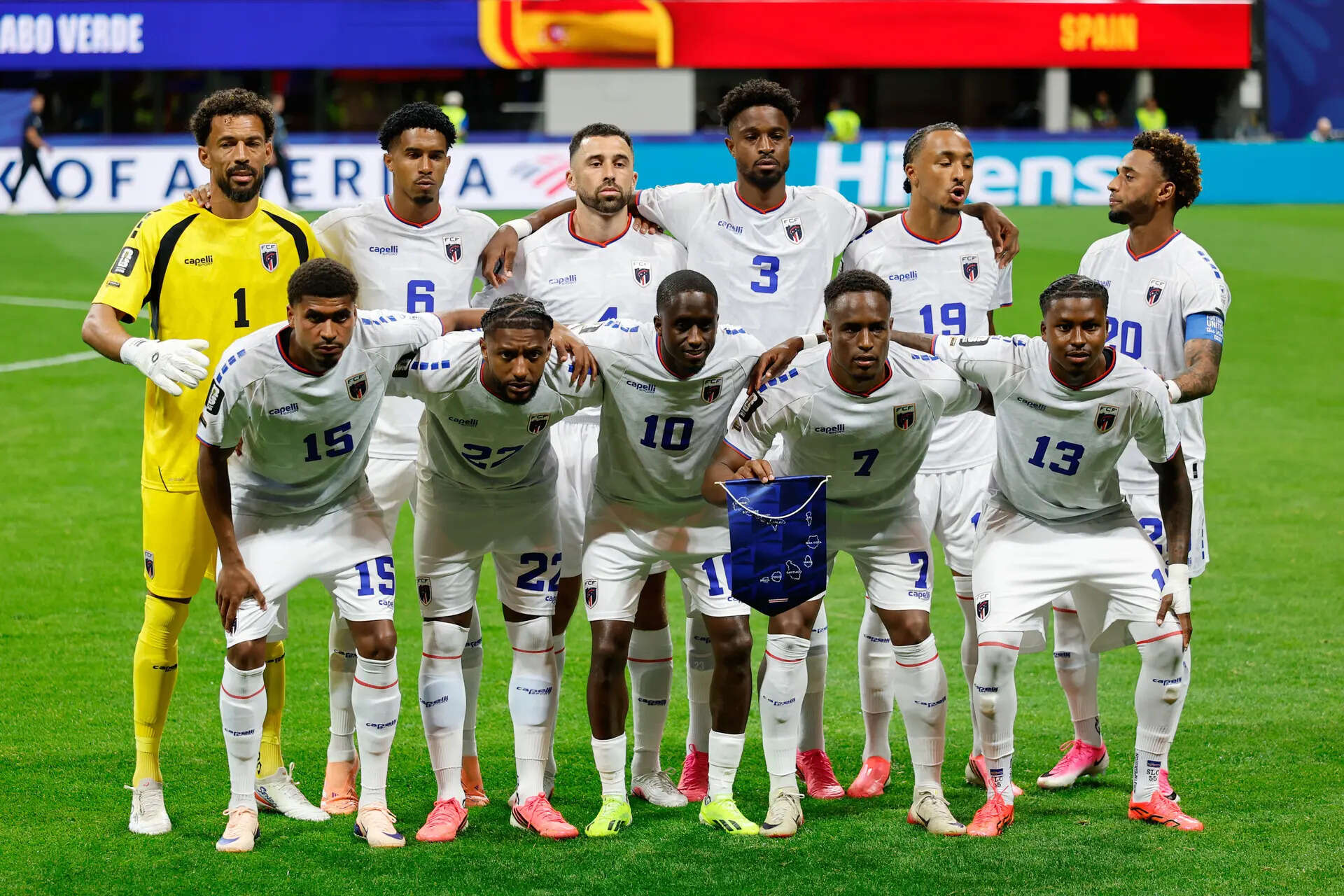
Cape Verde players pose before the World Cup Group H soccer match between Spain and Cape Verde in Atlanta, Monday, June 15, 2026. (AP Photo/Erik S. Lesser)
“We just felt like we were up there with some of the best teams in Africa,” Lopes said. “With the new format that FIFA introduced and more teams in Africa that can qualify for the World Cup, the extra little bit of motivation was there for us to say, ‘let’s do everything we can to qualify and create history.'”
A small nation making a big statement
That ambition eventually carried Cape Verde to its first World Cup appearance.With a population of roughly 530,000 people, the island nation became one of the smallest countries ever to reach the men’s World Cup. Many members of the squad were born abroad, but together they helped build a team capable of competing on the biggest stage.Their World Cup debut could hardly have been more demanding. Spain entered the tournament as one of the favourites and called upon attacking stars such as Lamine Yamal, Dani Olmo and Nico Williams from the bench as they searched for a breakthrough.
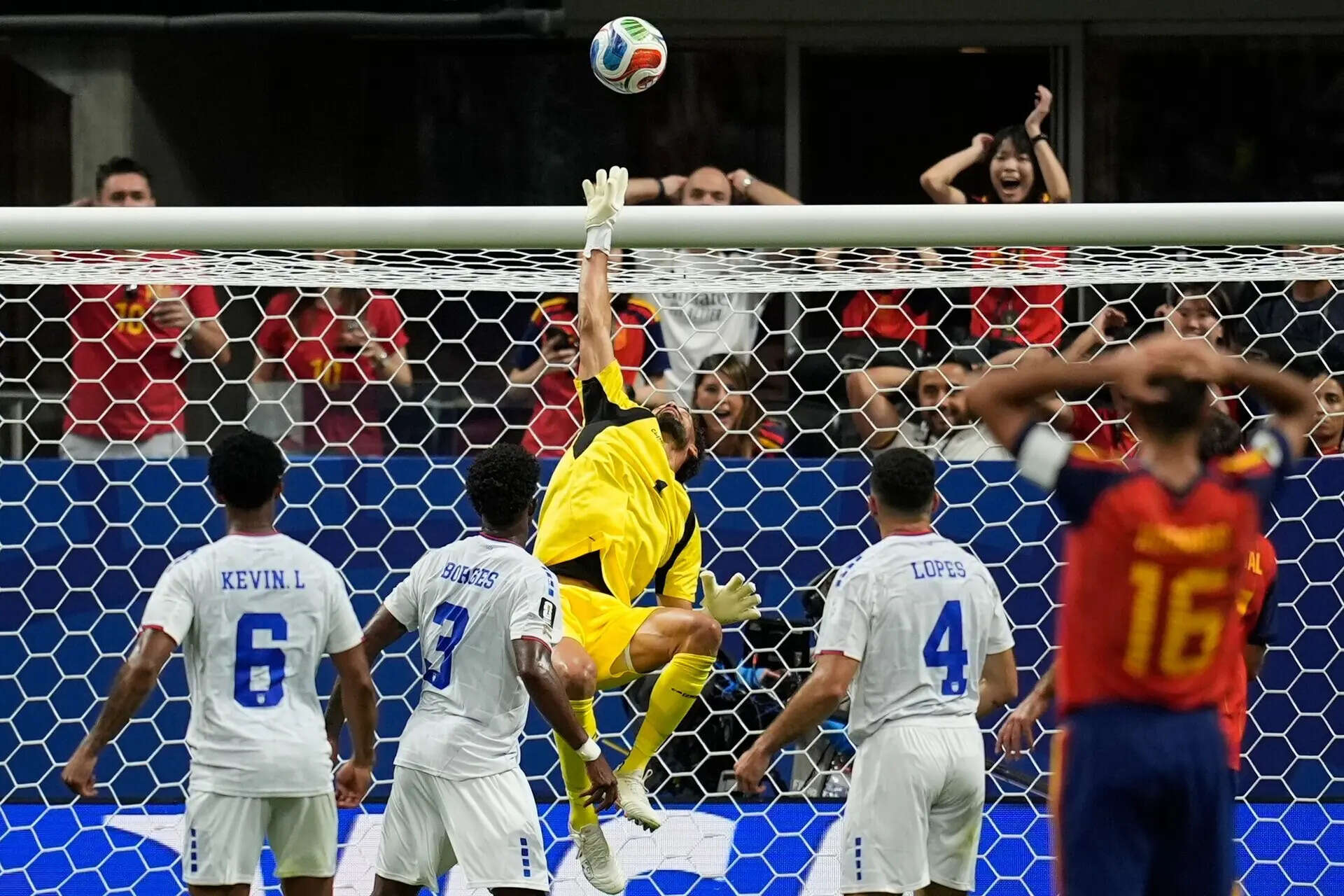
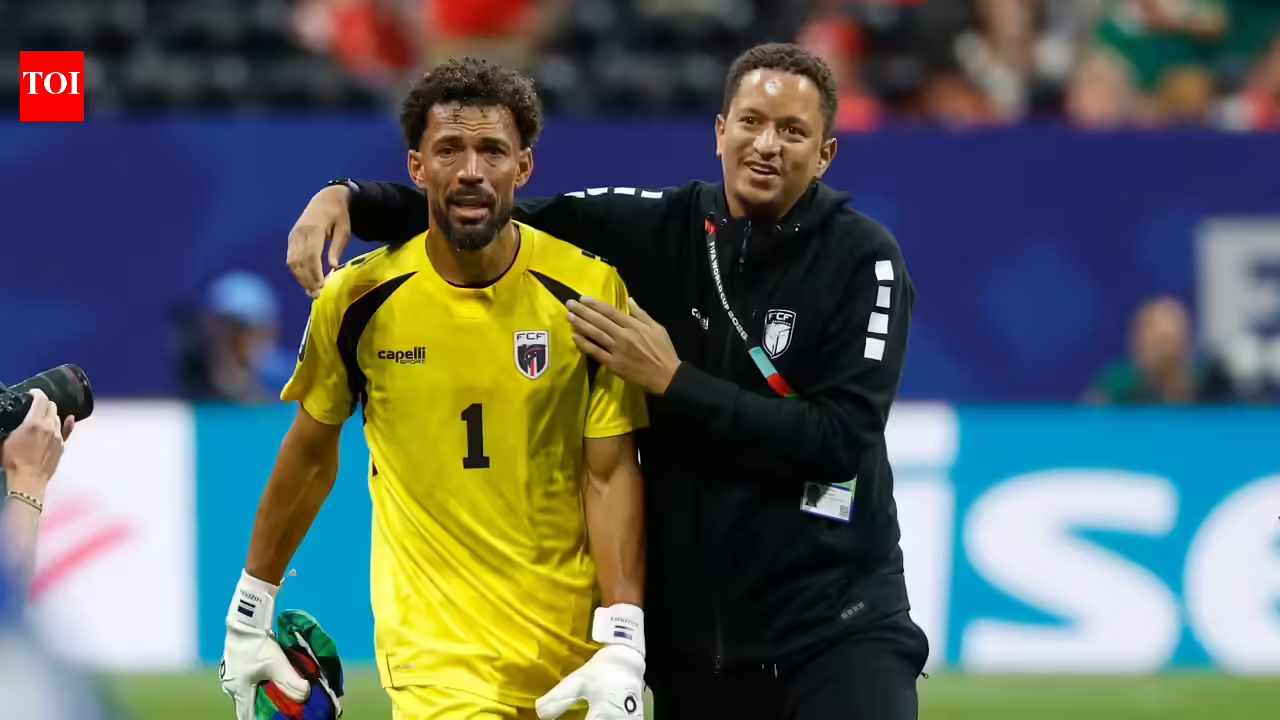
Cape Verde goalkeeper Vozinha (1) makes a save during the World Cup Group H soccer match between Spain and Cape Verde in Atlanta, Monday, June 15, 2026. (AP Photo/Mike Stewart)
Nothing worked.Vozinha delivered a heroic clean sheet, Lopes anchored the defence, and Cape Verde secured a point that dramatically improved their chances of progressing from a group that also includes Uruguay and Saudi Arabia.“We know it will be difficult, we’re in a tough group, but we have to believe we can do it,” Lopes said before the tournament. “We got here on merit, and we have to be competitive now.”After helping shut out Spain on Cape Verde’s World Cup debut, that belief suddenly looks far more realistic than anyone outside the dressing room imagined.